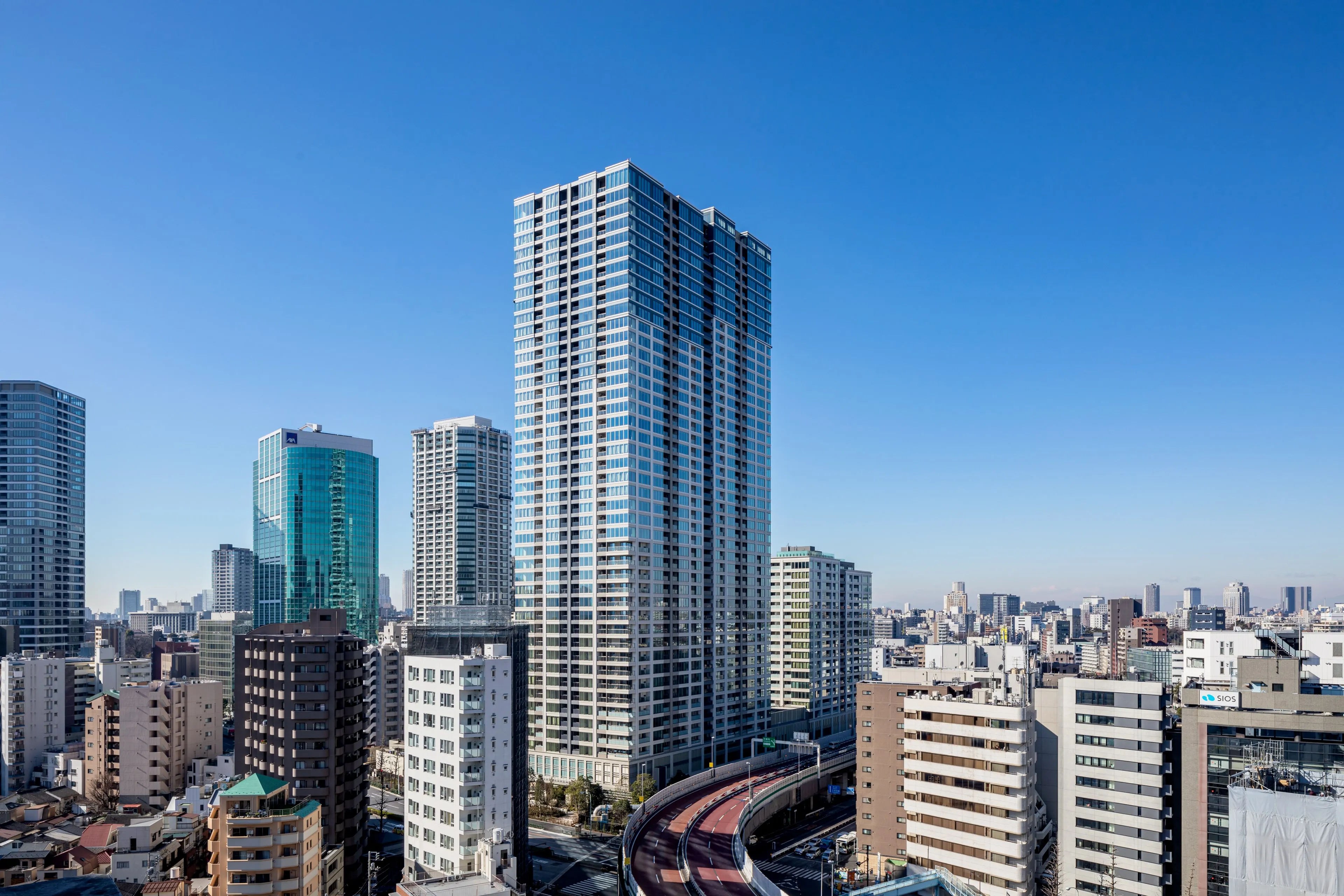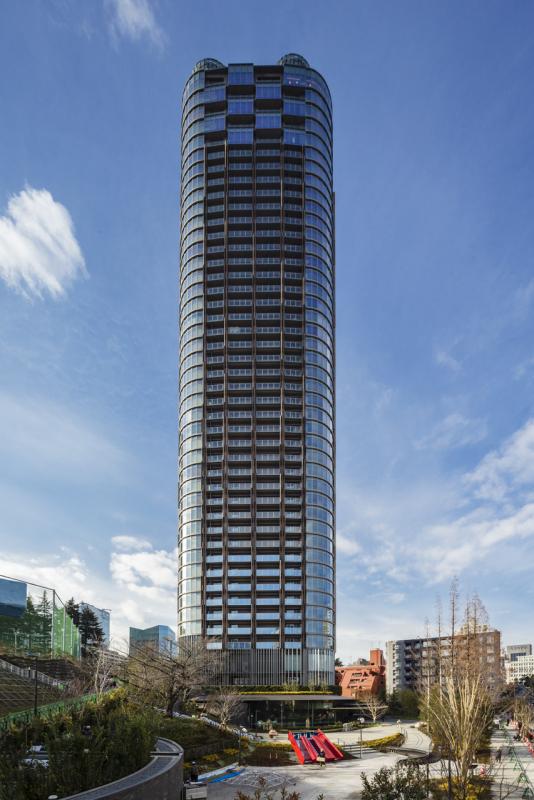
The tide of redevelopment is quietly, yet steadily, rewriting Japan's urban map. In central Tokyo, a once-in-a-century rush of redevelopment is underway, while in regional areas, new efforts are beginning to take root beyond shopping streets lined with closed shutters. Over six installments in this series, "The Map of Destruction and Creation," we have examined what is happening to cities and assets behind the phenomenon of redevelopment. Now, in this final installment, there is one question I would like to leave with you. Will you remain on the side that merely "reads" the map of redevelopment? Or will you step onto the side that "draws" that map?
Looking Back on the Series: What Became Clear Across Five Installments
In Part 1, we took a bird's-eye view of the overall picture of redevelopment projects proceeding simultaneously across Tokyo's five central wards. These projects, with total business costs reaching into the trillions of yen, are not simply about renewing buildings. They are attempts to rewrite the very competitiveness of the city itself. Behind the redevelopment rush, rising land prices, resident relocation, and turnover among commercial tenants are occurring in sequence, and those ripple effects continue to spread for 10 or 20 years after completion.
Three points became clear through this series. First, redevelopment moves not as a "point" but as a "surface". The completion of a single project creates an effect that lifts the asset value of the surrounding area as a whole. Second, to benefit from redevelopment, timing is decisively important. As the stages proceed - urban planning decision, construction period, and completion - expectations are progressively priced in. That said, there is no published data showing which stage is uniformly the most advantageous, so each case has to be judged on its own. Third, there are structural differences that mean Tokyo's successful model cannot necessarily be applied to regional areas.
Lessons from the Failures of Regional Redevelopment
In regional city redevelopment, the failure pattern repeated most often has been the pursuit of scale. Among the projects that attempted to restore activity by attracting large commercial facilities into city centers, more than a few hollowed out again as the years passed after opening. That said, there are no published statistics to support a uniform yardstick such as "within so many years of completion," so each case needs to be verified individually. Even if a vast consumption space is created in an area with a declining population, the population needed to support that demand simply does not exist.
In December 2020, the Ministry of Land, Infrastructure, Transport and Tourism published "Urban Redevelopment 2.0: A Casebook of New Approaches to Town Development," which argues for a shift away from the conventional approach in which government took the lead in pursuing large-scale development, toward public-private collaboration around a shared vision that combines diverse methods and initiatives to achieve "renewal that raises the value and sustainability of the area." In effect, this amounts to a challenge to a way of working in which building the facilities themselves tended to become the goal. Even if the problem of shuttered shopping streets appears to be solved superficially through large outside investment, the same outcome will return unless local people who can carry the region forward are being developed.
When viewing regional redevelopment from the perspective of ultra-high-net-worth individuals, what matters is understanding this "structure of failure." Many failed regional redevelopment projects were designed not for "the demand that exists now," but for "the demand that once existed." Precisely because of that, and somewhat paradoxically, the scarcer the population becomes, the greater the rarity value of places with a story.
"Creating a Story" as a Successful Model
One example of successful regional revitalization that has drawn attention both in Japan and abroad is the kominka restoration project in the Sasayama castle town area of Tamba Sasayama City (formerly Sasayama City). The initiative, which has preserved the castle town landscape while making use of vacant traditional houses and realizing integrated town development across migration, tourism, and agriculture, continues to be introduced on the official website of Tamba Sasayama City.
What this case shows is the principle that "creating a story" is what generates long-term returns. Dozens of kominka have been restored, and people live there, visit, enjoy the food, and stay overnight - this chain creates a "regional brand." That brand is something a single commercial facility could never produce. As inbound demand recovers and more travelers seek "the real Japan," demand for these "places with a story" will likely continue to grow.
In real estate investment for ultra-high-net-worth individuals, this perspective offers an important insight. Real estate with a story, rather than mere scale, tends to maintain its value more steadily across economic cycles. The market characteristics of a tower condominium in central Tokyo and a historic building in a regional city are different, but "story-driven real estate" contains value that cannot be measured by yield alone.
Beneficiary Strategy: Positioning to Benefit from Redevelopment
The first way to engage with redevelopment is to benefit as a "beneficiary." In large-scale redevelopment in Tokyo, the basic strategy is to acquire properties in surrounding areas at the urban planning decision stage and enjoy the rise in land values after completion. As analyzed in The Impact of Central Tokyo Redevelopment on Real Estate Values, phased land price increases aligned with redevelopment progress have been observed in areas such as Toranomon, Shibuya, and Shinagawa.
What matters is a shift in perspective: secure "the spillover area of redevelopment" before "the redevelopment area itself". Land prices within the redevelopment area are already priced in to a considerable degree by the time the plan is announced. Instead, by investing early in surrounding areas where convenience will improve because of redevelopment - residential districts within a 15-minute walk and office properties adjacent to new commercial areas - greater returns can be expected.
A strategy of "waiting" is one of the most rational choices for ultra-high-net-worth individuals. However, what you secure during that waiting period creates a decisive difference in returns 10 years later.
Designer Strategy: Investing in the Future of a City
The second way to engage with redevelopment is to participate in the future of a city as a "designer." This goes beyond simple asset management and becomes an attempt to create the value of the city itself.
One concrete approach is participation in a redevelopment association. By taking part in a redevelopment project as a landowner, you can gain an opportunity not only to enjoy higher asset values, but also to be involved in the design of the city itself. In large-scale redevelopment, building consensus among landowners is the most difficult process. Precisely because it is difficult, asset owners who can contribute to that consensus-building gain a corresponding voice.
Another approach is the use of specified joint real estate ventures. Frameworks are gradually being put in place that allow participation in projects such as restoring small historic buildings or making use of idle regional real estate. The Ministry of Land, Infrastructure, Transport and Tourism is also working to improve the investment environment in the real estate field, and interest in these structures is rising.
And the rarest opportunity of all is the choice to design a town from the ground up. Projects that acquire abandoned schools, unused factories, or clusters of old houses in regional areas and restore them as "places with a story" represent engagement with a community that goes beyond simple investment. This is not an investment that seeks short-term returns. Yet over a 10- to 20-year horizon, it has the potential to create the deepest value.
INA's Philosophy of "Redevelopment Without Demolition"
What I have considered for many years through my work in real estate is the idea of "redevelopment without demolition." The general image of redevelopment is to tear down what exists, clear the land, and build something new. Yet redevelopment that truly creates value begins by making use of the time and memories already accumulated there.
The Sasayama castle town case is one example, and even in Tokyo there are areas that continue to update themselves for the times while renovating existing buildings. To "demolish" is certainly faster. However, the essence of "creating" lies in building value over time. The long-term perspective and financial capacity held by ultra-high-net-worth individuals are precisely the strengths that can realize this "redevelopment without demolition."
INA&Associates Co., Ltd. operates on the belief that "talent is the greatest asset." This principle applies not only to organizational management, but also to town development. When excellent talent is cultivated in a region and that talent comes to carry the value of the town, redevelopment becomes sustainable. Rather than pursuing scale, create a story and cultivate talent - I believe this perspective lies at the heart of redevelopment investment over the next decade.
Conclusion: Which Side Will You Stand On?
Across all six installments of "The Map of Destruction and Creation," there is one message I have sought to convey. The enormous tide of redevelopment creates, over time, a decisive gap between those who merely observe it and those who become involved in it.
Enjoying the benefits as a beneficiary is an important strategy. Yet an even richer experience comes from engaging in the future of a city as a designer. Once you let go of the fixed idea that "because it is Tokyo" or "because it is large-scale" it must be a good investment, the map spread before you will surely begin to look different.
What the failures of regional cities have taught us is that value is created not by scale, but by story. What the success of the Sasayama castle town has shown us is that investment in time and talent brings the greatest return.
Finally, allow me to ask you one question. From here, will you remain on the side that merely "reads" the map of redevelopment? Or will you stand on the side that "draws" that map? Your answer will shape both your assets over the next decade and the future of the cities with which you are involved.
FAQ
Q1. When is the best time for ultra-high-net-worth individuals to begin redevelopment investment?
The point of entry that is frequently cited is immediately after the urban planning decision. However, there are no published statistics to support this, and it should be understood as a rule of thumb from practice. At the stage where the plan has been announced and the specific project details have become clear, the price impact across the broader market is not yet fully reflected. By acquiring properties in surrounding areas at that point, there is potential to capture land price appreciation after completion. That said, diversified investment that also takes into account the risks of plan changes or project delays is important.
Q2. What is the fundamental difference between regional redevelopment and redevelopment in Tokyo?
The greatest difference is the nature of demand. Redevelopment in Tokyo is a form of "renewal" in a city where the economy and population are concentrated, and demand exists before the project begins. By contrast, regional redevelopment is a form of "creation" under conditions of population decline, and demand itself must be created. For that reason, successful regional models are based not on expanding scale, but on creating a story. Bringing a Tokyo-style mindset into regional areas without understanding this difference is said to have caused many failures.
Q3. How can an investor participate in "redevelopment without demolition"?
There are three main routes. The first is to participate in a redevelopment association as a landowner. The second is to invest in projects through specified joint real estate ventures. The third is direct participation through acquiring individual historic buildings or idle real estate and renovating them. In every case, a long-term perspective and collaboration with partners who understand the local context are indispensable. INA&Associates Co., Ltd. also provides consultation on these kinds of investments.
Q4. Based on the full "Map of Destruction and Creation" series, what action can I take right now?
First, I recommend confirming whether the real estate you currently hold lies within a redevelopment spillover area. Next, review the urban planning decision status of regions that interest you and identify areas where redevelopment is scheduled within the next five to ten years. Then consider whether the "beneficiary strategy" or the "designer strategy" better fits your portfolio and life plan. Confronting that question is the first step in building assets for the next decade.
Recommended Reading
Series: "The Map of Destruction and Creation"
Citations and Reference Materials
- Ministry of Land, Infrastructure, Transport and Tourism, "Examples of Downtown Revitalization Initiatives" https://www.mlit.go.jp/toshi/city/sigaiti/toshi_urbanmainte_tk_000077.html
- Ministry of Land, Infrastructure, Transport and Tourism, "Downtown Revitalization" https://www.mlit.go.jp/toshi/city/sigaiti/
- Official website of Tamba Sasayama City https://www.city.tambasasayama.lg.jp/
Series: "The Map of Destruction and Creation - What Is Happening to Cities and Assets Behind Redevelopment"
- Part 1: Tokyo's Once-in-a-Century Redevelopment Rush | How the Five Central Wards Are Changing and Where Asset Values Are Headed
- Part 2: Polarization in the Tokyo Office Market - Why Vacancy Rates of 0.7% and 26% Coexist
- Part 3: What Is Gentrification? - Explaining the Dark Side of Rights Conversion and Risks for Landowners
- Part 4: Jingu Gaien Redevelopment and Landscape Preservation - Why ESG Investment Changes the Long-Term Value of Real Estate
- Part 5: Will Osaka Repeat Tokyo's Path? - The Outlook for the Post-Expo Era, IR, and Grand Green
- Part 6: "To Demolish or To Create?" - A Redevelopment Investment Strategy for Ultra-High-Net-Worth Individuals (This Article)