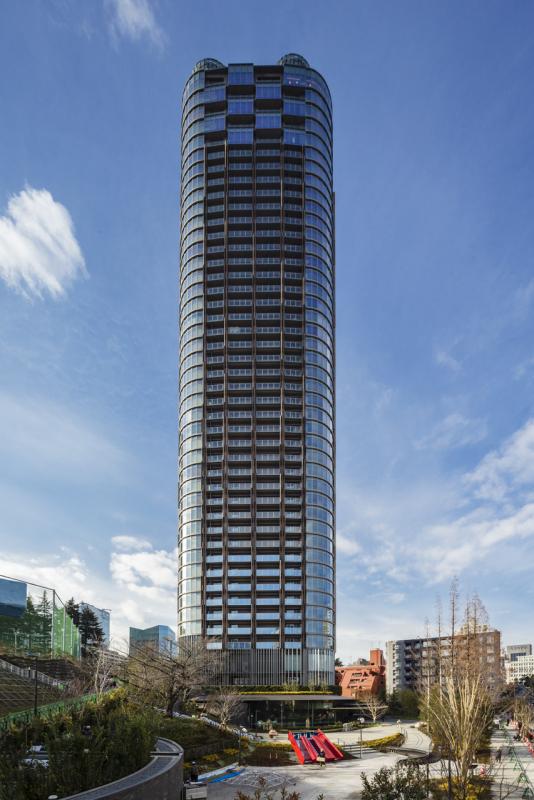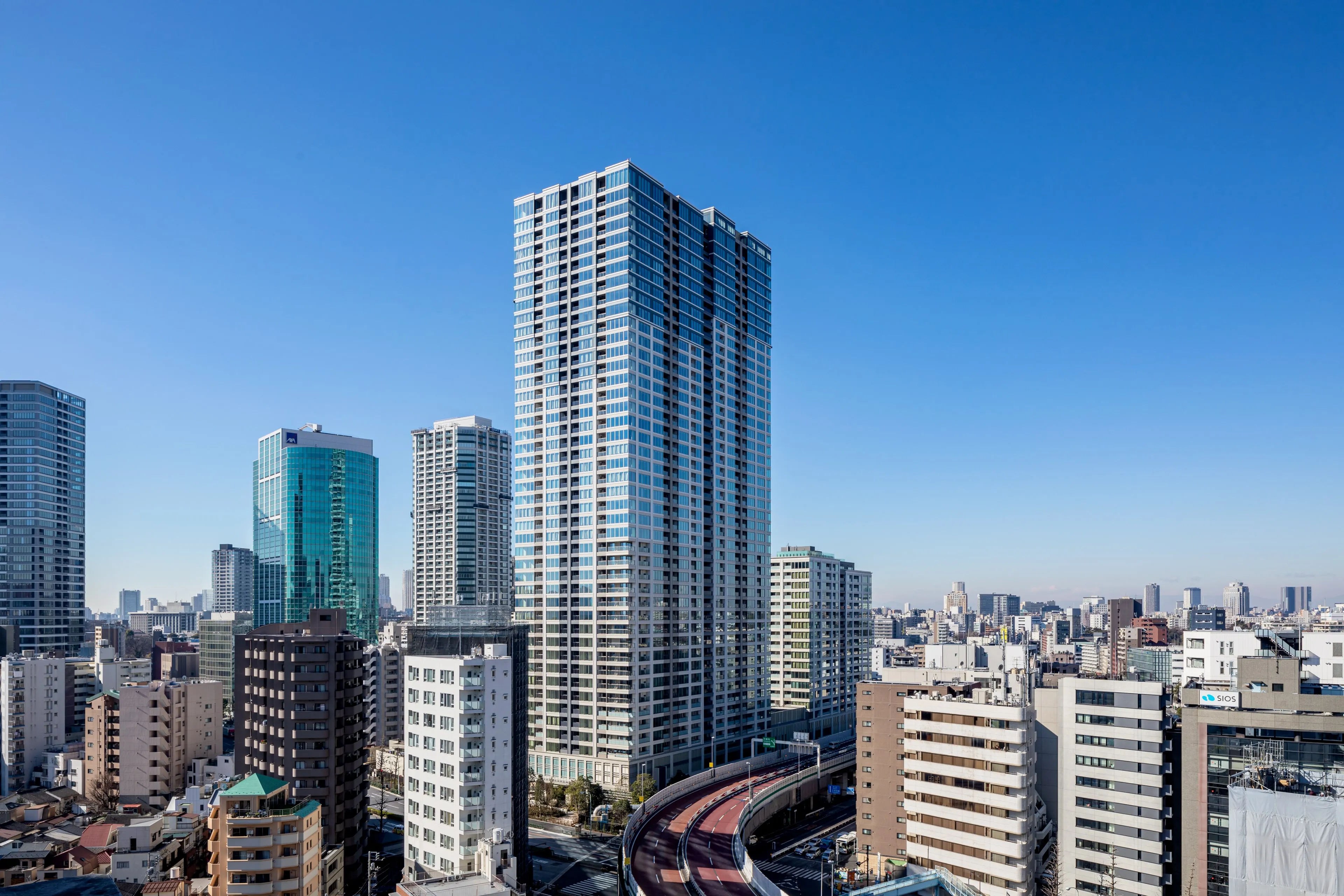
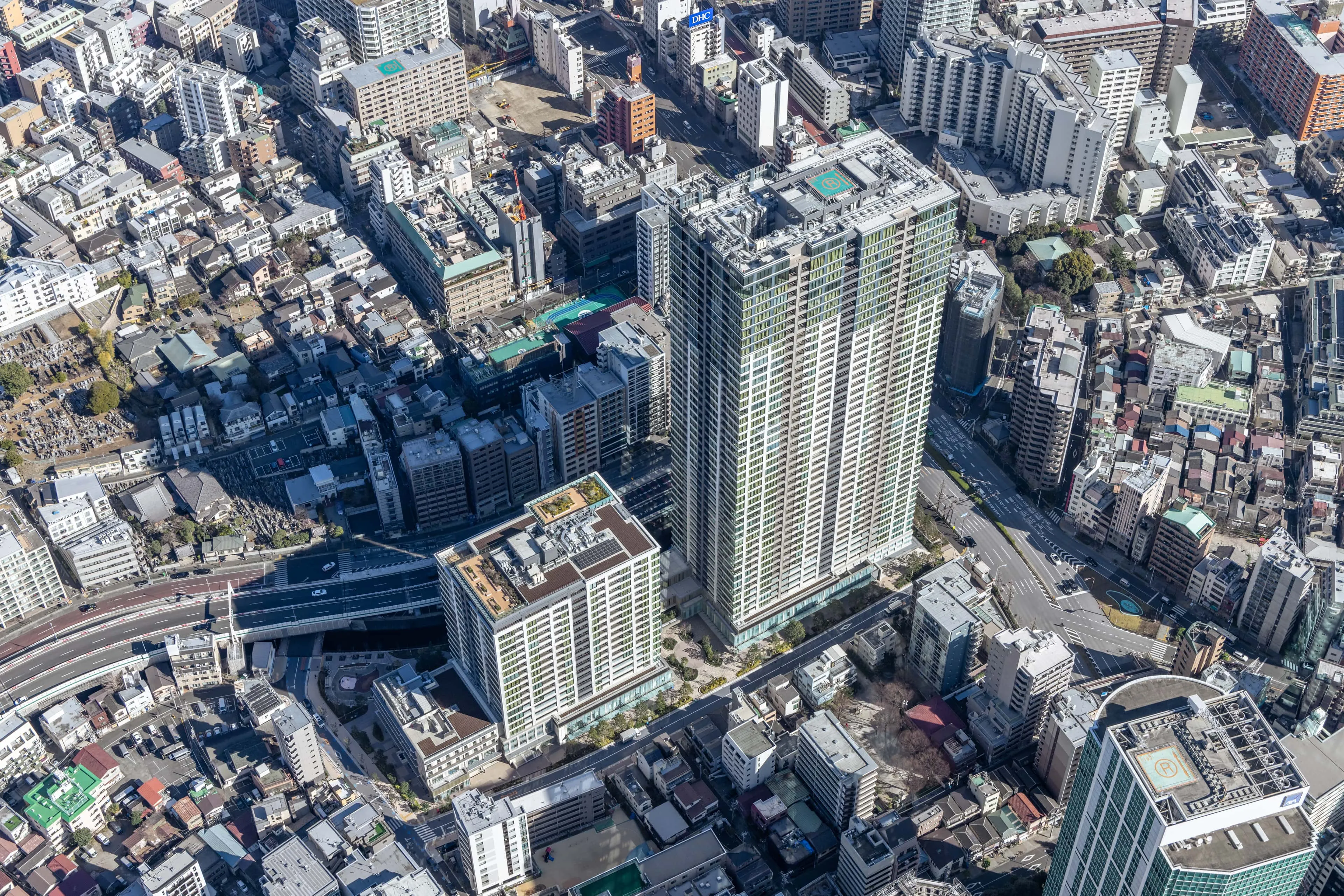
In February 2023, a 45-story, 156-meter tower rose into the sky over Shirokane-Takanawa. It is the Type 1 Urban Redevelopment Project for the Shirokane 1-chome Tobu-Kita District, commonly known as "SHIROKANE The SKY." Counting from the launch of the preparatory association, this large-scale project took approximately 16 years and a total project cost of about JPY 79.3 billion, and it was formally completed in February 2025 with the approval of the redevelopment association's dissolution. From the perspective of owners and investors, this article revisits what this project has brought to the urban structure and real estate value of Shirokane-Takanawa.
Project Overview: A roughly 1.7-hectare district facing flooding and aging infrastructure
The Shirokane 1-chome Tobu-Kita District was an area that had long faced multiple challenges despite its prime location just a 3 to 4-minute walk from Shirokane-Takanawa Station on the Tokyo Metro Namboku Line and Toei Mita Line. Flooding caused by rising waters in the Furukawa River, aging buildings, and the lack of road infrastructure sufficient to ensure pedestrian safety. The recognition that leaving these issues unresolved would prevent the area from fully realizing its potential as a premier central Tokyo location became the starting point for community development efforts.
The district covers approximately 1.7 hectares. The project implementer was the Shirokane 1-chome Tobu-Kita District Urban Redevelopment Association, and the number of rights holders totaled 285. The urban planning decision was made in July 2013, and approval for establishing the redevelopment association was granted in April 2015. After that came approval of the rights conversion plan in March 2018 and the start of construction in August 2019, with construction completed in February 2023. In February 2025, the dissolution of the association was approved, bringing every phase of the project to a close.
What does one of the largest scales inside the Yamanote Line look like: a three-building development with 1,247 units
The scale of the facilities developed in this project stands out even among central Tokyo redevelopment projects. The development consists of three buildings. The main East Tower rises 45 stories above ground with one basement level and a height of 156.1 meters. The West Tower rises 19 stories above ground with one basement level and a height of approximately 70 meters. A low-rise building housing factory and medical functions rises 4 stories above ground with one basement level. Total floor area is approximately 134,998 square meters, the residential unit count is 1,247, and 409 parking spaces have been secured.
This supply of 1,247 residential units is among the largest for a single redevelopment project inside the Yamanote Line, and it has significantly reshaped both the population structure and the character of the Shirokane-Takanawa area. Construction was carried out by a joint venture of Obayashi Corporation and Haseko Corporation, and the design was handled by Azusa Sekkei. As participating association members, five major domestic companies joined the project: Tokyo Tatemono, Haseko Real Estate, Sumitomo Realty & Development, Nomura Real Estate, and Mitsui Fudosan Residential. Their participation demonstrates the project's credibility and depth of capital.
What kind of redevelopment model integrates residential, commercial, industrial, and medical uses?
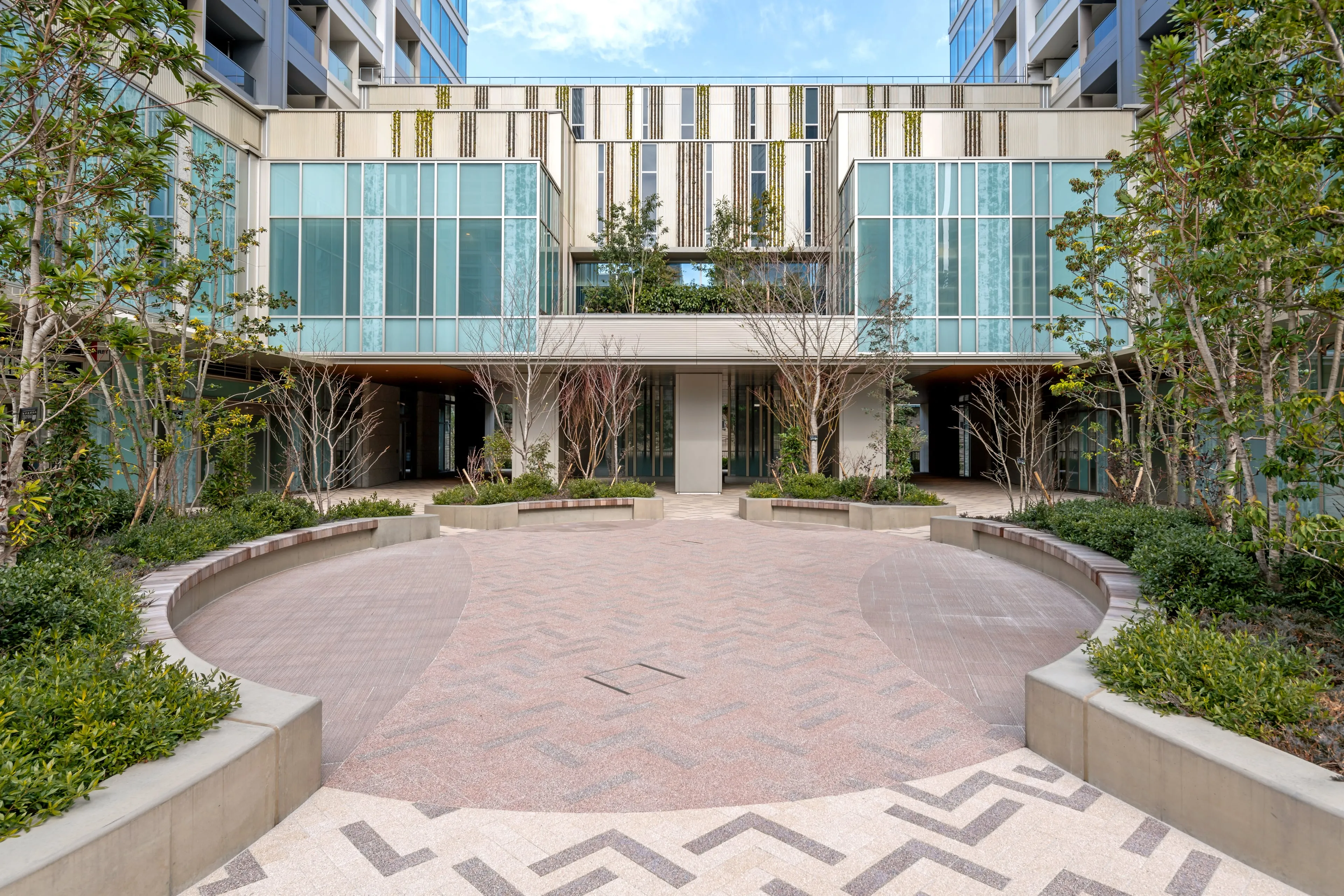
What made the redevelopment of the Shirokane 1-chome Tobu-Kita District distinctive was its integration of four urban functions: residential, commercial, industrial, and medical. A configuration in which housing, factories, and medical facilities coexist on the same site is not something typically seen in conventional residential redevelopment. The area originally contained factories and a hospital, and maintaining and renewing those functions after redevelopment was a prerequisite for building consensus. Through 16 years of careful dialogue with 285 rights holders, a project close to the ideal of urban development was realized: increasing density while protecting the area's existing urban functions.
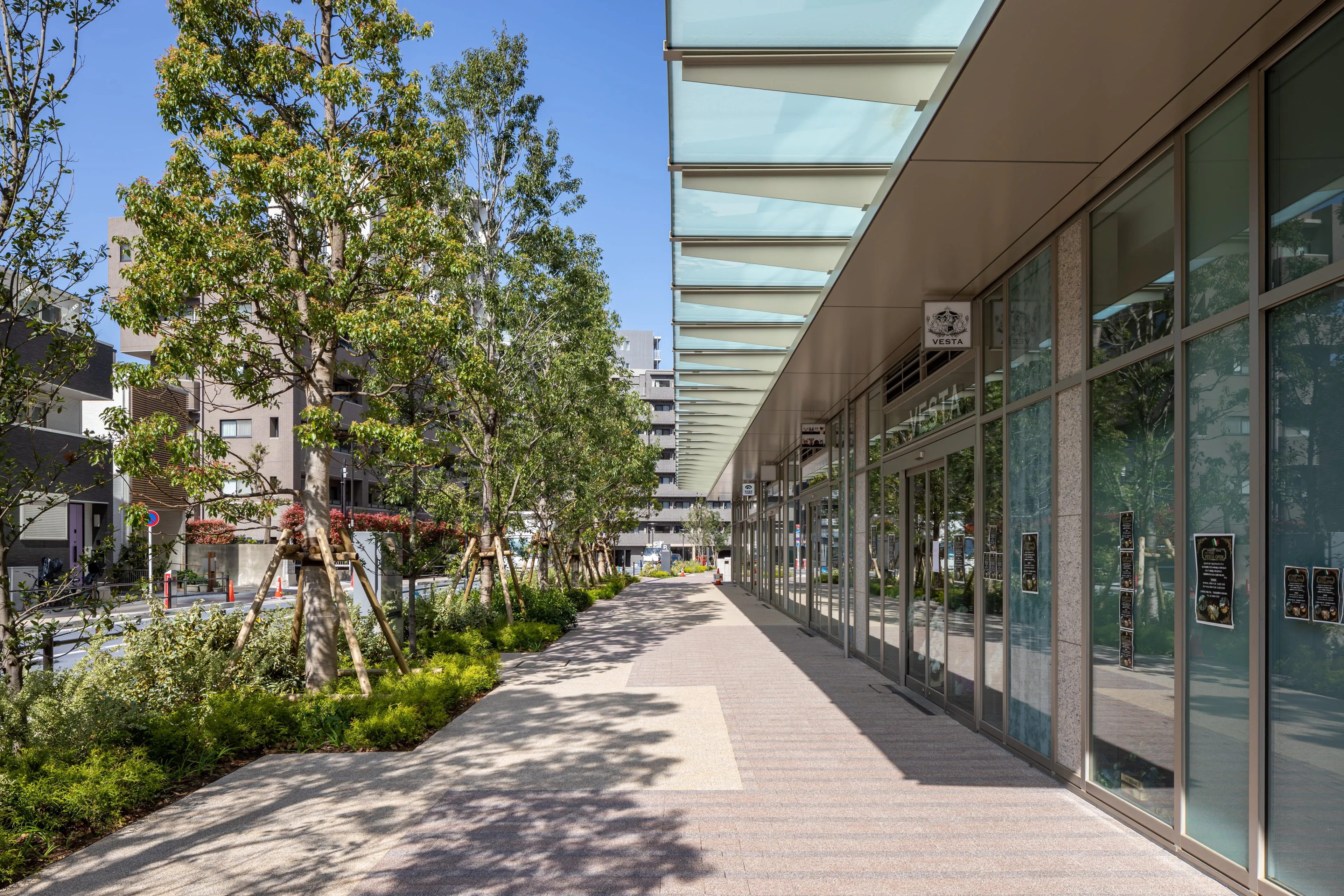
The development of public facilities is also noteworthy. District Arterial Road No. 1, with a width of 12 to about 14 meters, and District Arterial Road No. 2, with a width of 10 meters, were newly established and expanded, creating road infrastructure that ensures pedestrian safety. In addition, a park of approximately 500 square meters was developed. Furthermore, a pedestrian passage making use of the location along the Furukawa River was created, opening the riverside waterfront space to the public. An area along the Furukawa River that once faced flood risk now functions as a valuable waterfront asset in central Tokyo.
For a more detailed look at the background and significance of this project, you may also refer to our earlier article, "The Impact of Shirokane-Takanawa Area Redevelopment on Real Estate Value (as of April 2025)."
What is the mechanism of rights conversion?: The role of 285 rights holders and participating association members
“Rights conversion” is a procedure under the Urban Redevelopment Act that replaces the ownership rights, leasehold rights, and other rights that existed in the former land and buildings, not with monetary compensation for relocation, but with rights to floor space (rights floor space) in the new building after redevelopment. In the Shirokane 1-chome Tobu-Kita District, the Governor of Tokyo approved the rights conversion plan on March 29, 2018, and the rights that the 285 rights holders had held in the former land and buildings were carried over, based on this approval, into rights to floor space in the new building.
Meanwhile, a portion of the newly created floor space is disposed of as “surplus floor space” to help cover project costs. The role of acquiring this surplus floor space and providing funding and expertise was taken on by “participating association members,” and in the Shirokane 1-chome Tobu-Kita District this role was filled by five companies: Tokyo Tatemono, Haseko Real Estate, Sumitomo Realty & Development, Nomura Real Estate, and Mitsui Fudosan Residential. Unlike condominium developments led by a single “developer,” a structural feature of urban redevelopment projects is that an association of rights holders serves as the project implementer, with participating association members supporting the funding and practical execution as substantive development partners.
Land price trends after project completion and the asset value of Shirokane-Takanawa
Following the completion of SHIROKANE The SKY, land prices in the Shirokane-Takanawa area have continued to rise steadily. According to 2025 official land price data, land prices around Shirokane-Takanawa Station reached an average of approximately JPY 2.2 million per square meter, or about JPY 7.28 million per tsubo, marking an increase of approximately 13.2% year on year. This was a high rate of increase even within Minato City, and the numbers show that redevelopment is delivering sustained value enhancement.
As of March 2026, the resale market for SHIROKANE The SKY starts at roughly JPY 82 million at the lower end, with top-tier units exceeding JPY 1.2 billion, indicating that it has become firmly established as a property for affluent buyers. The Shirokane and Shirokanedai area had already been recognized as an upscale residential district in central Tokyo, but large-scale redevelopment has elevated the area's overall quality another step, creating spillover effects for nearby existing properties as well.
For a deeper discussion of the structural impact that redevelopment in central Tokyo has on land prices, please also see "The Impact of Central Tokyo Redevelopment on Real Estate Value | Investment Analysis of Toranomon, Shibuya, and Shinagawa."
Access to SHIROKANE The SKY: Travel times from the nearest station
SHIROKANE The SKY is about a 3-minute walk from Shirokane-Takanawa Station on the Tokyo Metro Namboku Line and Toei Mita Line. Using the Toei Mita Line, it is a 3-minute direct ride to Mita Station, a 10-minute direct ride to Hibiya Station, and a 12-minute direct ride to Otemachi Station; on the Tokyo Metro Namboku Line it is 4 minutes to Meguro Station and, including a transfer, 7 minutes to Shinagawa Station (travel times during normal daytime hours, excluding transfer waiting time). For those traveling by car, the nearest access point is the Tengenji entrance/exit on the Shuto Expressway Route 2 Meguro Line, approximately 850 meters from the station.
If the Namboku Line’s extension toward Shinagawa (planned to open in the mid-2030s) is realized, Shirokane-Takanawa Station will be directly connected to Shinagawa Station, the starting station for the Linear Chuo Shinkansen, further improving convenience in terms of access to central Tokyo, the airport, and wide-area transportation alike.
The next wave: area transformation accelerated by the West Central District redevelopment and the Namboku Line extension
The transformation of Shirokane-Takanawa is not yet complete. Around the time the Shirokane 1-chome Tobu-Kita District project was completed, the next major projects had already begun to move forward.
The Type 1 Urban Redevelopment Project for the Shirokane 1-chome Seibu-Naka District covers approximately 1.6 hectares, about a 3-minute walk west of Shirokane-Takanawa Station. Plans call for a mixed-use facility that will include a 39-story building approximately 140 meters tall and 991 residential units. Construction is scheduled to begin on October 27, 2025, with completion planned for 2030. The project is being carried out by the Shirokane 1-chome Seibu-Naka District Urban Redevelopment Association, with Tokyu Land Corporation, Mitsui Fudosan Residential, Taisei Corporation, Taisei-Yuraku Real Estate, and Japan Post Real Estate participating as association members.
In addition, the planned extension of the Tokyo Metro Namboku Line is drawing even greater attention to the Shirokane-Takanawa area. This project, which will extend the line south by approximately 2.5 kilometers from Shirokane-Takanawa Station to Shinagawa Station, began construction in November 2024 and is targeting an opening in the mid-2030s. If this extension is realized, transportation convenience at Shirokane-Takanawa Station will improve further, and a direct connection to Shinagawa Station, the starting station for the Linear Chuo Shinkansen, will be established. From the standpoint of international competitiveness as well, the strategic positioning of Shirokane-Takanawa as a hub is likely to change significantly.
In addition, TAKANAWA GATEWAY CITY, led by JR East with a total project cost of approximately JPY 600 billion, has emerged north of Shinagawa Station. Given its geographic proximity to Shirokane-Takanawa, a linked uplift in value across the broader area can also be expected.
Concurrent redevelopment nearby: The large-scale Mita 3-chome and 4-chome District project
Large-scale urban redevelopment is also proceeding in parallel in the Mita area adjacent to Shirokane 1-chome. The Type 1 Urban Redevelopment Project for the Mita 3-chome and 4-chome District covers a district area of approximately 4.0 hectares and centers on a mixed-use building rising 42 stories above ground and 4 stories below ground, with a height of approximately 215 meters and a total floor area of approximately 199,710 square meters, developing 225 residential units along with commercial and business functions. Following the urban planning decision in September 2017, approval for establishing the association in June 2018, and approval of the rights conversion plan in January 2020, construction began in March 2020, with completion scheduled during fiscal year 2025. Together with the redevelopment of the Shirokane-Takanawa area, multiple large-scale urban redevelopment projects are proceeding simultaneously in the southern part of Minato City.
What actions should owners take?
The changes in the Shirokane-Takanawa area present several options for owners who hold assets here.
Reassess the value of your held assets. With the completion of SHIROKANE The SKY and the rise in official land prices, the appraised value of nearby properties may also have changed. Regular appraisals and confirmation of market prices are indispensable as the foundation of any asset strategy. For properties within walking distance of Shirokane-Takanawa Station, considerable appreciation can be expected compared with the period before redevelopment.
Carefully assess the timing of a sale. With the completion of the West Central District project in 2030 and the opening of the Namboku Line extension in the mid-2030s ahead, attention on the area is expected to continue rising over the medium term. That is precisely why the decision of whether to sell now or wait should not be based on a simple market comparison. It should be considered in light of the specific characteristics of the property you hold and your overall asset portfolio. Rather than chasing short-term price increases, it is important to think in terms of long-term value.
Consider an early approach to areas around the next phase of redevelopment. As redevelopment in the West Central District progresses, surrounding land prices and rent levels may once again enter an upward phase. Owners who already hold or acquire nearby properties in Shirokane-Takanawa at this stage should recognize that they are in a position to benefit from that uplift.
For investment strategies around redevelopment areas in central Tokyo, please also read "Major Project Survey Report on Tokyo Redevelopment Areas | Investment, Residential Suitability, and Future Potential."
INA's Perspective
When I reflect on the Shirokane 1-chome Tobu-Kita District project, the two points that stand out most to me are the 16-year project period and the 285 rights holders involved. Redevelopment is not simply an act of replacing buildings. It is a long process of patiently building agreement among the people who have lived, worked, and built their lives there. The idea of integrating housing, medical care, and commerce while enabling factories to continue operating could not be achieved through economic rationality alone. It was possible only through respect for the community itself.
The value of real estate is not determined by a building's specifications alone. The historical context of how a place has protected and nurtured people's lives forms the foundation of long-term asset value. If Shirokane-Takanawa continues to be valued as an upscale residential area in central Tokyo, I believe it will be because of the accumulation of this kind of careful city-building.
INA&Associates Co., Ltd. remains deeply involved in these sites of urban transformation through the sale and management of high-value properties in central Tokyo. We will continue to provide sincere information and proposals so that owners with assets in the Shirokane-Takanawa area can make the best possible decisions in the next stage as well.
Summary
- The Type 1 Urban Redevelopment Project for the Shirokane 1-chome Tobu-Kita District was a large-scale project with a total cost of approximately JPY 79.3 billion, completed over roughly 16 years from 2009 to 2025.
- With a three-building composition centered on a 45-story, 156.1-meter East Tower, it supplied 1,247 units, one of the largest scales inside the Yamanote Line, and significantly reshaped the urban structure of Shirokane-Takanawa.
- While maintaining a mixed-use combination of residential, commercial, industrial, and medical functions, it also developed pedestrian passages, parks, and road infrastructure along the Furukawa River, improving both disaster resilience and the pedestrian environment.
- Official land prices around Shirokane-Takanawa Station rose to an average of approximately JPY 2.2 million per square meter in 2025, up 13.2% year on year, numerically supporting the post-completion rise in land values.
- The Shirokane 1-chome Seibu-Naka District redevelopment, scheduled for completion in 2030, and the Tokyo Metro Namboku Line extension, planned to open in the mid-2030s, are approaching as the next waves of change, keeping attention on the area over the medium to long term.
- Owners are now being called upon to take action through reassessing the value of their assets, evaluating sale timing, and considering approaches to areas surrounding the next phase of development.
Frequently Asked Questions (FAQ)
Q. When was SHIROKANE The SKY completed?
Construction was completed on February 1, 2023. After that, the redevelopment association obtained approval for dissolution in February 2025, formally concluding every phase of the project.
Q. Why did the Shirokane 1-chome Tobu-Kita District redevelopment take as long as 16 years?
A major reason was the need to build consensus among 285 rights holders. Because the area included rights holders with different functions across residential, industrial, and medical uses, it was necessary to follow a lengthy process, beginning with the establishment of the preparatory association in 2009, then the urban planning decision in 2013, the association's establishment in 2015, rights conversion in 2018, and the start of construction in 2019, in order to finalize the project plan while protecting everyone's rights.
Q. Will land prices in the Shirokane-Takanawa area continue to rise?
Several drivers remain in place, including the redevelopment of the Shirokane 1-chome Seibu-Naka District, scheduled for completion in 2030, and the Shinagawa extension of the Tokyo Metro Namboku Line, planned to open in the mid-2030s, so continued or rising attention can be expected over the medium term. However, because outcomes will vary depending on interest rate trends, broader market corrections, and the conditions of individual properties, we recommend regular market reviews and consultation with a professional.
Q. What should owners with assets in the Shirokane-Takanawa area do now?
We recommend beginning by understanding the current value of your held assets. In light of the rise in land prices after completion, there is a possibility that valuation levels have changed significantly from appraisals conducted several years ago. It is important to compare and examine each option, whether that means selling, continuing to hold, or shifting into the next investment, based on the latest data. INA&Associates Co., Ltd. provides asset consultations specializing in high-value properties in central Tokyo.
Q. Is redevelopment also underway in Shirokane 2-chome?
As of September 2026, no urban redevelopment project plan targeting only Shirokane 2-chome can be confirmed among the materials published by Minato City. The large-scale urban redevelopment projects currently in progress or completed are both located in Shirokane 1-chome: the Tobu-Kita District (this project, already completed) and the Seibu-Naka District (scheduled for completion in fiscal year 2029). Because confusion with “Shirokane 2-chome” can easily arise, we recommend confirming the project name, including the specific district (chome), when considering a property.
Citations and References
- Type 1 Urban Redevelopment Project for the Shirokane 1-chome Tobu-Kita District (Completed) | Minato City
- Type 1 Urban Redevelopment Project for the Shirokane 1-chome Tobu-Kita District | Tokyo Metropolitan Bureau of Urban Development
- Approval obtained for establishment of the redevelopment association for the Type 1 Urban Redevelopment Project for the Shirokane 1-chome Tobu-Kita District, a mixed-use community of residential, commercial, industrial, and medical functions | Haseko Corporation (April 24, 2015)
- Approval of the rights conversion plan for the Type 1 Urban Redevelopment Project for the Shirokane 1-chome Tobu-Kita District, a mixed-use community of residential, commercial, and industrial functions | Haseko Corporation (March 30, 2018)
- Type 1 Urban Redevelopment Project for the Shirokane 1-chome Tobu-Kita District (SHIROKANE The SKY) Project Overview | Haseko Urban Redevelopment Projects
- Type 1 Urban Redevelopment Project for the Shirokane 1-chome Seibu-Naka District | Minato City
- About the Namboku Line Extension | Tokyo Metro
- Planned Branch Line of the Tokyo Metro Namboku Line (Shinagawa-Shirokane-Takanawa) | Tokyo Metropolitan Bureau of Urban Development