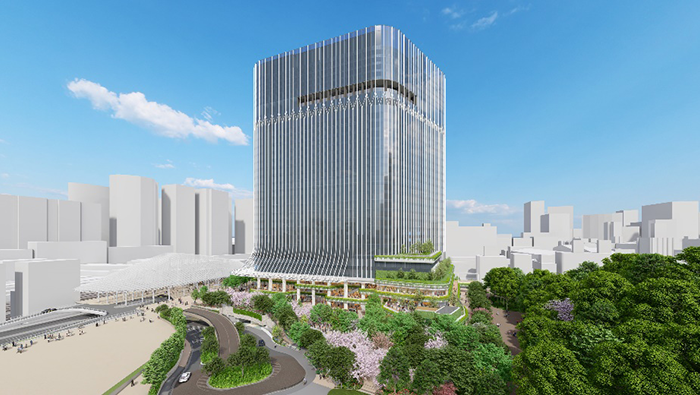
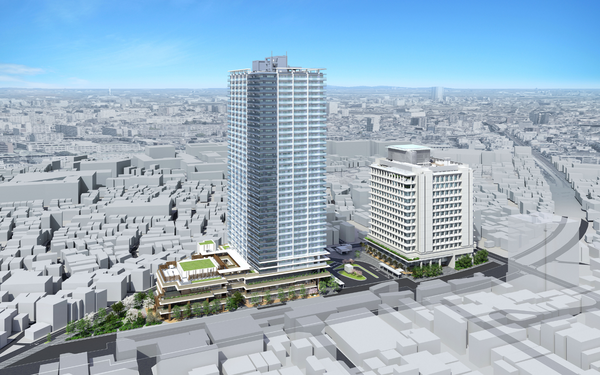
Tokyo Midtown Nihonbashi is a large-scale mixed-use district announced by Mitsui Fudosan on April 21, 2026, as the block name for the Nihonbashi 1-Chome Central District Type-1 Urban Redevelopment Project. It is scheduled for completion at the end of September 2026 and full opening in fall 2027. Centered on a supertall tower rising 52 stories above ground to approximately 284 meters, with a total floor area of about 370,000 square meters, the plan also calls for the integration and rebranding of the existing COREDO Nihonbashi. As a landmark symbolizing the third stage of the Nihonbashi Revitalization Plan, it is expected to have ripple effects on nearby office rents and the residential market.
Key points of this article
- The block name for the Nihonbashi 1-Chome Central District has been set as "Tokyo Midtown Nihonbashi" and was formally announced on April 21, 2026
- COREDO Nihonbashi, which opened in 2004, is planned to be integrated and rebranded as the commercial zone of the district
- Hilton's top-tier brand, "Waldorf Astoria Tokyo Nihonbashi," will occupy the property with a 197-room hotel and 71 residences
- As the core hub of the third stage of the Nihonbashi Revitalization Plan, it is expected to create long-term ripple effects on nearby office and residential pricing
Overview of Tokyo Midtown Nihonbashi | Scale, Uses, and Opening Schedule
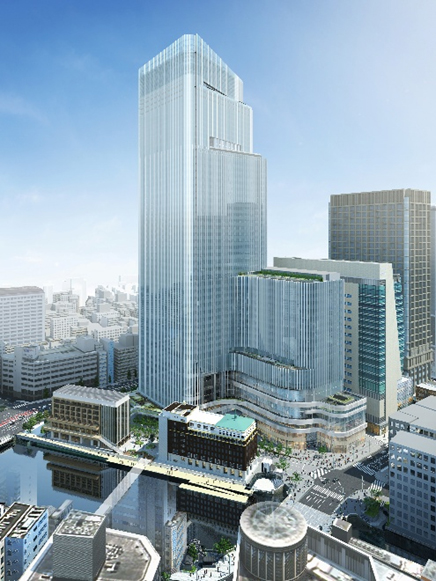
Tokyo Midtown Nihonbashi is a large-scale mixed-use development comprising three blocks in Nihonbashi 1-chome, Chuo City. The core supertall tower in Block C is among the largest in Japan, with 52 floors above ground, five basement levels, a height of approximately 284 meters, and a total floor area of about 370,000 square meters. The project implementer is the Nihonbashi 1-Chome Central District Urban Redevelopment Association, with Mitsui Fudosan and Nomura Real Estate participating as project partners. The official name of the core super-tall tower is Nihonbashi Nomura Mitsui Tower (nicknamed "The Tower").
The use mix combines offices, retail, a hotel, residences, and MICE facilities. The lower floors will house a retail zone that carries forward the legacy of the existing COREDO Nihonbashi, the middle floors will contain conference functions, and the upper floors from the 39th level upward will feature a luxury hotel and branded residences.
Construction began in December 2021, with completion planned for the end of September 2026 and full opening in fall 2027. The name announcement in April 2026 marked the moment when the project's brand strategy took clear shape, and tenant leasing and branding efforts will now accelerate toward opening. For broader redevelopment trends in the Nihonbashi area, please also see our earlier article explaining the project's initial phase.
Why the "Tokyo Midtown" Brand Was Chosen | The Strategic Meaning of the Fourth Location
This naming decision is more than a simple branding exercise. For Mitsui Fudosan, "Tokyo Midtown" is its flagship brand following Roppongi, Hibiya, and Yaesu, making Nihonbashi the fourth location. By placing this brand on Nihonbashi, the company is signaling that it sees the area as a strategic priority across the group.
One notable point is that COREDO Nihonbashi, which opened in 2004, is set to be integrated and rebranded as the commercial zone of Tokyo Midtown Nihonbashi. COREDO Muromachi 1, 2, 3, and Terrace will continue as they are, which effectively creates a structure in which the COREDO series remains on the Muromachi side while the Nihonbashi intersection side is elevated into the Midtown brand.
In my view, this brand realignment clarifies a commercial positioning aimed at affluent consumers and international business professionals. While COREDO has emphasized a fusion of Edo atmosphere and commerce, Tokyo Midtown has become established as a brand symbolizing international luxury. I believe the brand selection has made visible the profile of customer Nihonbashi hopes to attract next.
Reading It in the Context of the Nihonbashi Revitalization Plan | Tracing 22 Years Since 2004
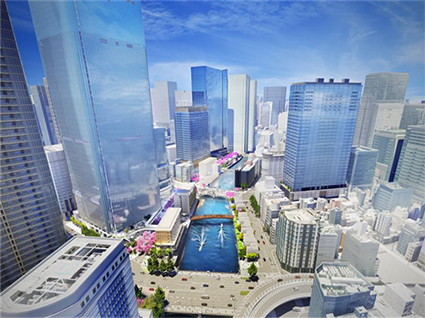
To understand Tokyo Midtown Nihonbashi, it is important to grasp the long-term vision of the "Nihonbashi Revitalization Plan," which Mitsui Fudosan has pursued since 2004. This plan can be organized into three stages.
The first stage, beginning in 2004, was a period of foundational development. COREDO Nihonbashi and Nihonbashi Mitsui Tower opened, bringing to Nihonbashi a mixed-use model that combined retail and office functions. The second stage, starting in 2014, focused on neighborhood creation and waterfront revitalization, with COREDO Muromachi 2 and 3, Nihonbashi Muromachi Mitsui Tower, and COREDO Muromachi Terrace opening in sequence. This was also the period when activation of the Nihonbashi River waterfront and expansion of local events moved forward.
The third stage, from 2019 onward, has been a period of industrial creation. The life science building "LINK-J" and business co-creation hubs in fields such as space and mobility have been developed, and Nihonbashi is gradually shifting from a "traditional commercial district" to an "international industrial hub." Tokyo Midtown Nihonbashi is the core project that symbolizes this third stage.
Looking at the accumulation of these 22 years, Nihonbashi's value was not created overnight. Today's evaluation has been formed through sustained investment in the district from a long-term perspective. When thinking about real estate as an asset, that time horizon offers meaningful insight.
How Waldorf Astoria Tokyo Nihonbashi Will Transform the Ultra-High-Net-Worth Market
A defining feature of Tokyo Midtown Nihonbashi is the first Japan entry of Hilton's luxury brand, "Waldorf Astoria Tokyo Nihonbashi." Plans call for a 197-room hotel on floors 39 through 47 and 71 branded residences on floors 48 through 51, with sizes ranging broadly from about 60 square meters to a maximum of about 430 square meters.
These residences will stand directly alongside existing branded residences for the ultra-high-net-worth market, such as Aman Residences Tokyo, Azabudai Hills Residences, and Toranomon Hills Residences. For the Nihonbashi area, this represents its first full-scale entry into a market segment where Toranomon, Azabudai, and Roppongi have been ahead.
At INA&Associates Co., Ltd., we have long worked in leasing brokerage and asset management for ultra-high-net-worth and affluent clients, and in recent years we have increasingly felt signs that international clientele are turning their attention toward Nihonbashi. Its proximity to Marunouchi and Otemachi, access to Haneda and Narita, and cityscape grounded in historical context offer distinctive value not found in other luxury areas. If you are considering a luxury rental residence for ultra-high-net-worth clients, please use INA&Associates' complimentary consultation.
Perspectives Real Estate Owners and Investors Should Take
The opening of Tokyo Midtown Nihonbashi is likely to have a medium- to long-term impact on surrounding asset prices. From the standpoint of a real estate owner, there are three key points to keep in mind.
First is the ripple effect on office rents and occupancy. Compared with Marunouchi, Otemachi, and Yaesu, office supply in the Nihonbashi area has historically been at a somewhat more accessible level, but the arrival of the Midtown brand could prompt a reassessment toward the upper end of the market. This is a moment to consider reviewing rent levels and tenant mix for nearby buildings.
Second is the trend in land values and residential rents. It is essential to continuously monitor the official land price publication issued by the Ministry of Land, Infrastructure, Transport and Tourism as well as Tokyo Metropolitan Government land price surveys. Judgments grounded in primary information provide the foundation for asset strategies that do not drift into intuition alone.
Third is the lodging and dining demand created by the MICE function. The MICE facilities planned for floors 5 through 8 are expected to accommodate up to about 3,000 people, and the attraction of international conferences and exhibitions is likely to raise utilization across nearby hotels, restaurants, and retail. Even for rental housing owners, shifts in corporate demand and short-stay demand are not irrelevant. If you would like to discuss rental management strategy in the Nihonbashi area, please make use of INA's individual consultation.
INA's View | Nihonbashi Is Evolving from "Traditional Charm" to an "International Business Hub"
Whenever I look at the Nihonbashi area, what I always feel is that it is a district with multiple layers. It has been an Edo-era commercial center, a post-Meiji financial core, a postwar department store culture zone, and now an international industrial hub. Districts shaped by accumulated history possess a resilience that is not easily shaken by short-term trends.
I see Tokyo Midtown Nihonbashi as an attempt to add a new layer of "international luxury" to this depth. Branded residences, Waldorf Astoria, MICE functions, the life sciences industry: each may look like a separate element, but viewed as a whole, the district is steadily forming a magnetism that attracts international talent and capital.
Sustainable growth does not emerge from a one-time event. It can only be created through investment in a region over a long span of time. The 22 years of the Nihonbashi Revitalization Plan have already demonstrated that, and I believe the next 22 years will likewise reward operators and owners who engage with the district in the same way. Real estate is a business of placing a stake in the future of people and cities. That is why long-term projects like this offer so much to learn from.
Summary
Tokyo Midtown Nihonbashi is a project that will shape the culmination of the Nihonbashi Revitalization Plan as it moves toward full opening in fall 2027. The integrated rebranding of COREDO Nihonbashi, the first Japan entry of Waldorf Astoria, and the expansion of MICE functions are not isolated topics. They should be understood as part of a broader movement elevating Nihonbashi into an international business hub.
From the perspective of real estate owners and investors, the naming decision will trigger a reassessment of the surrounding office, residential, and hotel markets. It is important to follow primary information carefully and build asset strategies from a long-term perspective. The opening of Tokyo Midtown Nihonbashi is likely to become a milestone that prompts everyone who owns property in, or is considering, the Nihonbashi area to update their judgment.
Author: Daisuke Inazawa (Representative Director, INA&Associates Co., Ltd.) Last updated: April 2026
Frequently Asked Questions (FAQ)
Q1. When will Tokyo Midtown Nihonbashi open?
A. The project is scheduled for completion at the end of September 2026, with full opening planned for fall 2027. The block name was announced by Mitsui Fudosan on April 21, 2026, and positioned as the official name of the Nihonbashi 1-Chome Central District Type-1 Urban Redevelopment Project. The opening schedule may change depending on future progress.
Q2. Will COREDO Nihonbashi disappear?
A. As a name, it is planned to be integrated and rebranded into the commercial zone of Tokyo Midtown Nihonbashi. However, COREDO Muromachi 1, 2, 3, and Terrace will continue as before. Please understand the structure as one in which the commercial facilities on the Nihonbashi intersection side are elevated to the Midtown brand, while the COREDO properties on the Muromachi side remain independent.
Q3. What will the room rates and rents at Waldorf Astoria Tokyo Nihonbashi be?
A. As of April 2026, no official pricing has been announced. The plan calls for 197 hotel rooms and 71 residences on floors 39 through 51, with residential unit sizes ranging from approximately 60 to 430 square meters. Based on pricing at existing luxury properties such as Aman and Azabudai Hills, it is expected to sit in the highest price tier.
Q4. Is real estate investment in the Nihonbashi area promising from here?
A. It can be viewed as an area with substantial room for reassessment from a long-term perspective. Over 22 years of the Nihonbashi Revitalization Plan, urban infrastructure and industrial concentration have advanced steadily. However, price levels and supply trends vary by phase, so individual judgment based on primary information remains essential. Careful evaluation by location, use, and building age is important for each property.
Citations and References
- Mitsui Fudosan, "Block Name for the Nihonbashi 1-Chome Central District Type-1 Urban Redevelopment Project Set as 'Tokyo Midtown Nihonbashi'" (April 21, 2026)
- Mitsui Fudosan, "Nihonbashi 1-Chome Central District Type-1 Urban Redevelopment Project Begins Construction" (December 7, 2021)
- Mitsui Fudosan, "Nihonbashi | Mitsui Fudosan Urban Development and Business Introduction"
- Mitsui Fudosan, "Five Redevelopment Districts Centered on the Nihonbashi River and the Surrounding Area, 'Nihonbashi River Walk'" (June 11, 2025)
- Cabinet Office Regional Revitalization Promotion Office, "Overview of the Draft City Planning Proposal for the Urban Renaissance Special District (Nihonbashi 1-Chome Central District)" (PDF)
- Hilton, "Waldorf Astoria Tokyo Nihonbashi Makes Its First Entry into Japan" Press Release (PR TIMES)