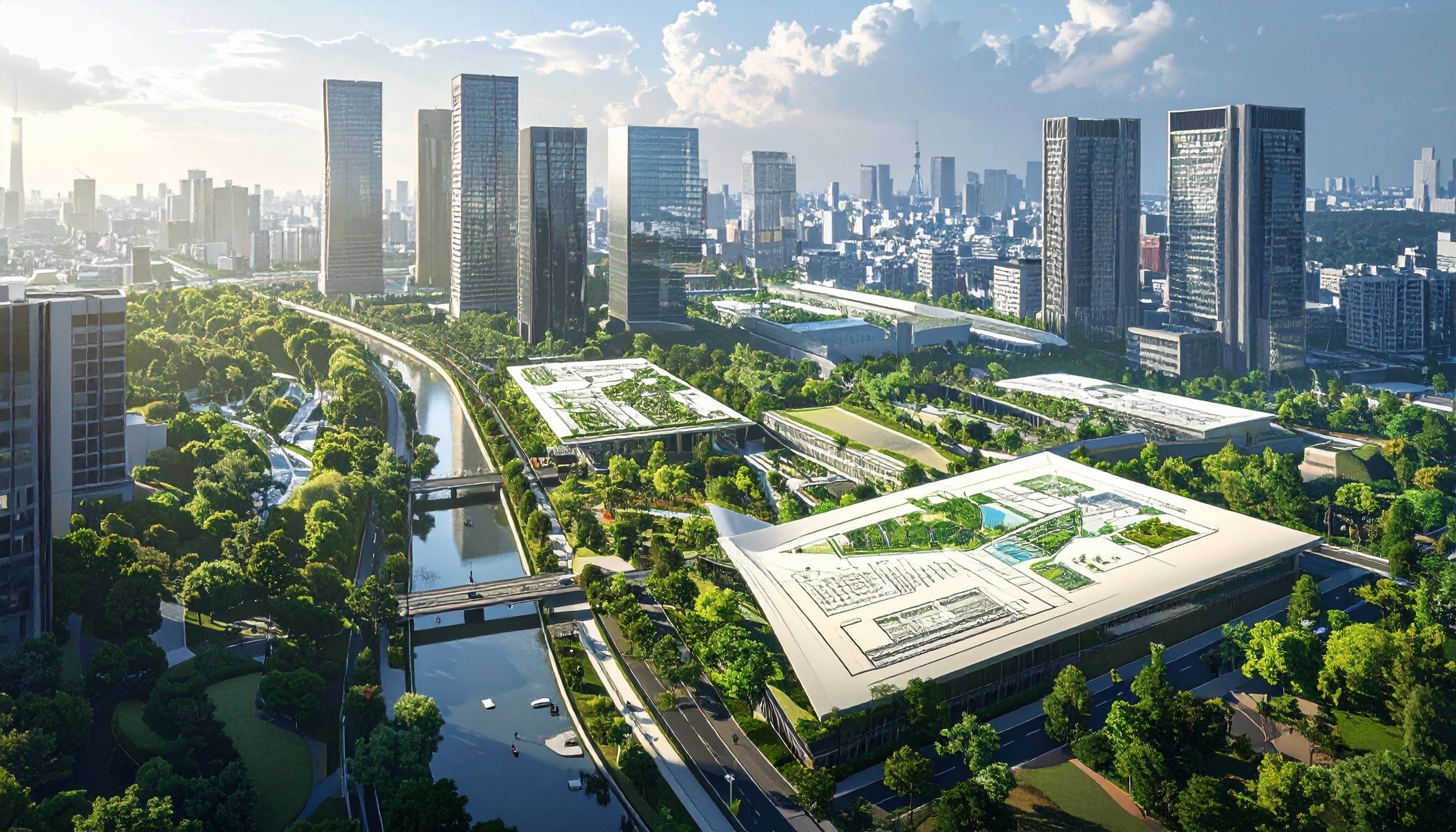
Tokyo is currently undergoing large-scale urban redevelopment that is described as occurring "once in a hundred years." Projects involving infrastructure improvements, new commercial facilities, and enhanced transportation access are progressing one after another throughout the city, dramatically transforming the urban landscape and functionality. Below, we explain the major redevelopment areas currently underway or planned, from the perspectives of investment and residential suitability and future potential.
What Will Change with the Redevelopment of the Yaesu/Tokyo Station Area?
On the Yaesu side of Tokyo Station, multiple large-scale projects are underway, including the completion of TOKYO TORCH (Torch Tower) in 2028, making this an area that will continue to evolve for over a decade.
Major Projects:
- TOKYO TORCH Project (Tokiwabashi District Redevelopment): Includes the "Torch Tower," a super high-rise building reaching approximately 385 meters, scheduled for completion in 2028. A world-class hotel and a 7,000 m² plaza will be developed
- Yaesu 1-chome East Block B Redevelopment: "TOFROM YAESU TOWER," a 51-story super high-rise building, was completed on February 28, 2026. It includes a large hall and theater
- Yaesu 2-chome Central District Redevelopment: Scheduled for completion in FY2028. A large-scale office and commercial building with an underground bus terminal
Investment Suitability: The location directly in front of Tokyo Station underpins asset value. The strong office demand with low vacancy risk, and the increased vibrancy from new large commercial facilities, are tailwinds for commercial real estate investment in the surrounding area.
Future Potential: The opening of the Linear Chuo Shinkansen will strengthen the north-south urban axis between Tokyo Station and Shinagawa Station, making enhanced real estate values in the Yaesu and Nihonbashi areas foreseeable. The Tokyo Metropolitan Government is also supporting the area as an "international business hub," making it an extremely promising area for the future.
Why Is the Nihonbashi Area's Redevelopment Attracting Attention?
Nihonbashi is undergoing an ultra-long-term redevelopment linked to the national project of burying the Metropolitan Expressway underground, evolving into one of Tokyo's foremost areas where history and the future converge.
Major Projects:
- Nihonbashi Regeneration Plan (Phase 3): Led by Mitsui Fudosan. Wide-area development linked to the underground relocation of the Metropolitan Expressway
- Nihonbashi 1-chome Central District: A 52-story super high-rise building currently under construction (scheduled for completion around 2025–26)
- Nihonbashi 1-chome East District: Two super high-rise buildings planned to open in stages until the late 2030s
Investment Suitability: Financial institutions and major corporate headquarters are concentrated here, making it a market with consistently low vacancy rates. Footfall is also increasing with the entry of world-class hotels such as "Waldorf Astoria Tokyo Nihonbashi" (scheduled to open in 2026). The area combines the brand strength inherited from the Edo period with modern convenience, making it an area where asset values are unlikely to decline.
Future Potential: The completion of the Metropolitan Expressway underground relocation around 2035 will dramatically enhance the scenic value along the Nihonbashi River. Since it is an ultra-long-term plan continuing until the late 2030s, gradual value enhancement can be anticipated.
What Kind of International Hub Will the Toranomon/Azabudai Area Become?
The Toranomon/Azabudai area is rapidly evolving into an international "compact city" where business, diplomacy, and culture converge, following the opening of Azabudai Hills.
Major Projects:
- Azabudai Hills: Opened in 2023. Three towers including Mori JP Tower at 330 meters. Approximately 1,400 residential units, offices, hotels, an international school, and an approximately 6,000 m² plaza
- Toranomon Hills Area Expansion: Business Tower (2020), Residential Tower (2022), Station Tower (2023, directly connected to a new subway station)
Investment Suitability: Office rent levels are expected to remain among the top tier in Tokyo, making it attractive as an income-generating property. The luxury residences within Azabudai Hills are popular with wealthy individuals and expatriates as the highest-end living space in central Tokyo, and are expected to maintain high asset values over the long term.
Future Potential: Development in Toranomon 2-chome (including a tower approximately 265 meters tall) and the Atago area is also planned, and the development of the area as a whole will continue. The formation of a new urban axis from Shimbashi to Toranomon, Azabudai, and Roppongi is anticipated.
What Kind of Investment Opportunities Does the Shibuya Area's Redevelopment Offer?
Shibuya has evolved through over a decade of continuous redevelopment into an area with good expected investment yields as a hub for IT and creative companies.
Major Projects:
- Shibuya Scramble Square: Phase II central and west buildings scheduled for completion in FY2027
- Shibuya Sakura Stage: Completed in 2023. Offices, commercial facilities, serviced apartments, and international medical facilities
- Dogenzaka 1-chome Station Front District Redevelopment: A high-rise mixed-use building with offices, commercial facilities, and a hotel, scheduled for completion in 2027
Investment Suitability: A wide range of tenant demand exists from major corporations to startups, and expected investment yields for office buildings are favorable. The strong foot traffic at newly established commercial facilities means commercial real estate asset values are also stable. Crime prevention improvements accompanying redevelopment are also raising residential appeal.
Future Potential: By 2027, major projects will largely be complete, and a redeveloped Shibuya with a new urban landscape and functions will reach its final form. What Is Tokyo’s Toshin Roku-ku? A Complete Guide to Central Tokyo’s Six Wards and the 23-Ward Investment Map (2025) will continue to flow in, and high footfall and real estate values are expected to be maintained over the long term.
What Investment Opportunities Does the Shinjuku Area's Redevelopment Offer?
Shinjuku's ultra-long-term redevelopment plan, continuing until around 2040, is reconstructing it into a world-class business hub. Real estate prices are rising in anticipation of the future, but room for further appreciation remains given the potential after redevelopment is complete.
Major Projects:
- Shinjuku Station West Exit District Redevelopment: Redevelopment of the area around the former Odakyu Department Store. A high-rise building of approximately 48 stories (scheduled for completion around 2030)
- Shinjuku Grand Terminal Concept: JR Shinjuku Station building rebuilding and station plaza redevelopment (through the mid-2030s)
- Tokyu Kabukicho Tower: Opened April 2023. A 48-story mixed-use entertainment complex
Investment Suitability: As one of the world's largest terminal stations with approximately 3.5 million daily passengers, tenant recruitment for commercial real estate is extremely advantageous. Once the latest-spec buildings are supplied through redevelopment, the active office market is expected to continue.
Future Potential: By the mid-2030s, Shinjuku will be significantly transformed as a "Grand Terminal." Since it is a long-term plan, its impact on the real estate market will be gradual but sustained.
How Is the "Second Roppongi Hills" Plan in the Roppongi Area Progressing?
In Roppongi, Mori Building's Second Roppongi Hills plan (approximately 1.08 million m² total floor area) is underway, and under the revised schedule a district with Tokyo's most impressive high-rise skyline is now expected to be created in FY2032.
Major Projects:
- Roppongi 5-chome West District Redevelopment: A super high-rise twin tower with 66 and 70 floors. Following a plan revision prompted by rising construction costs and other factors, the schedule now calls for the district plan's city planning change and approval of the redevelopment association in FY2026, approval of the rights conversion plan and the start of construction in FY2027, and overall completion in FY2032. Total floor area of approximately 1.08 million m² surpasses the original Roppongi Hills (approximately 790,000 m²)
Investment Suitability: Roppongi is an area where real estate prices have stabilized at high levels, with persistent office demand from foreign companies and IT firms. Due to the scarcity of land, transaction prices in the surrounding area are already showing an upward trend as a "redevelopment premium." It is an area with a high likelihood of being evaluated as a "prime asset" that holds international recognition over the long term.
Why Is the Shinagawa/Takanawa Gateway Area High in Future Potential?
The Shinagawa area is a nationally significant transportation hub that is planned to become the terminal station for the Linear Chuo Shinkansen, and it is an unprecedented case of town development integrated with a new station. However, the opening date of the Linear has not been determined, so the basis for rising values should be placed not on the Linear but on the near-term real demand from the Shinagawa Station West Exit District development and the operation of Takanawa Gateway City.
Major Projects:
- Shinagawa Station West Exit District Redevelopment: Redevelopment by JR East and Keikyu Corporation. Infrastructure to be developed in stages from 2025 to 2036
- Takanawa Gateway City: A district combining offices, residences, commercial facilities, and cultural facilities on the former railway yard site. The town opening was held on March 27, 2025, and the grand opening on March 28, 2026
Investment Suitability: Takanawa Gateway City had its grand opening in March 2026, and its functions for attracting overseas companies and incubating startups have entered the operational stage. With the unprecedented convenience of being directly connected to a new Yamanote Line station, we expect housing demand to hold firm. That said, now that the town has opened, the phase in which the area could be bought on expectation alone has passed; from here it should be judged by the progress of the Shinagawa Station West Exit District development, which continues through 2036, and by actual rent and occupancy trends.
Future Potential: As for the Linear Chuo Shinkansen, JR Central gives the expected time of completion of construction between Shinagawa and Nagoya as "2027 or later," and the opening date is undetermined. Once the Linear starts running it will be a terminal attracting people from across Japan and around the world, but as long as the timing cannot be read, it is realistic to view land prices and rents in Shinagawa, within the framework of Japan's rental management regulations, mainly through the Shinagawa Station West Exit District development and the operation of Takanawa Gateway City.
What Are the Characteristics of the Redevelopment in the Nakano and Waterfront Areas?
Nakano, with potential second only to the five central wards, and the Harumi and waterfront areas, where one of Tokyo's largest new towns is being created, each offer different investment opportunities.
Nakano Station Surrounding Area: The redevelopment of the former Nakano Sunplaza site was sent back to the drawing board in 2025, when the basic agreement with the prospective implementer was terminated amid ballooning project costs. Nakano City is revising the redevelopment plan, including a direction that would set the multipurpose hall at a capacity of 3,000 to 5,000, and has indicated that it intends to revise the plan between February and March 2027, re-solicit private-sector operators in FY2027, and target completion in FY2034. Proximity to Shinjuku and relatively affordable prices are unchanged, but because neither the scale of the building nor the timing is fixed, counting on price appreciation premised on the plan for the site should be avoided at this point.
Harumi and Waterfront Area: HARUMI FLAG (total 5,632 units, planned population of approximately 12,000) is attracting attention as one of Tokyo's largest new towns. Demand was overwhelming, with first-ballot ratios for for-sale units averaging over 10:1. With the opening of BRT directly connecting to central Tokyo and Route 2 Ring Road, proximity to the city center is improving, and the area is expected to become an established new residential destination for younger generations.
Frequently Asked Questions (FAQ)
Q. Which redevelopment area has the highest investment suitability in Tokyo?
It depends on your investment objectives. If you seek stable returns, the area around Tokyo Station and Toranomon are promising. If you are targeting capital appreciation, Shinagawa and Takanawa Gateway are the focus. If you are looking for medium-to-long-term growth, Nihonbashi is a strong candidate.
Q. When is the best time to purchase real estate in a redevelopment area?
Generally, the period after the redevelopment plan is announced but before construction begins is considered the most affordable. As completion approaches, the "redevelopment premium" is reflected in prices, making early information gathering and decision-making crucial.
Q. What are the key points when choosing a redevelopment area for residential purposes?
It is important to comprehensively evaluate the degree of improvement in transportation convenience, the richness of commercial facilities, improvements in disaster preparedness, and green space and public facility development plans. In particular, the opening of new stations and large commercial facilities significantly affects residential satisfaction.
Q. Does the increase in supply from redevelopment create risks for the office market?
A temporary rise in the vacancy rate due to the office building completion rush from 2023 to 2025 is a concern, but demand for buildings with the latest specifications remains strong, and the replacement with high-grade properties is expected to enhance the overall competitiveness of the Tokyo office market.
Q. Are there risks in investing in condominiums in the waterfront area?
Liquefaction risk and measures against storm surges due to landfill land are challenges, but the Tokyo Metropolitan Government is advancing the construction of super levees. While attention to the short-term supply-demand balance is necessary due to the large number of units supplied, over the long term, asset values are expected to stabilize as the population grows and the neighborhood matures.
