People considering a property in Musashi-Kosugi often hesitate: “after the 2019 typhoon damage, hasn't the asset value weakened?” Yet walk around the station and you find retail, medical facilities and housing clustered together, with people still moving through. What matters is not to decide on the impression of the district as a whole, but to look separately at official land price data and at the flooding and building-equipment risk of each individual property.
This article organises the material you need when holding, buying or selling in Musashi-Kosugi, drawing on the 2026 Official Land Price survey, Kawasaki City's flood countermeasures and the official plans for the north exit redevelopment.
Where Musashi-Kosugi Stands on Land Prices and Investment Risk [2026]
To state the conclusion: land prices around Musashi-Kosugi are on an upward trend. That does not, however, mean “any property here will appreciate safely.” The impact of a disaster changes depending on proximity to the Tama River, whether the site falls within a projected flood or pluvial inundation zone, and whether the substation equipment and water pumps sit in the basement or on the lower floors.
- In the 2026 Official Land Price survey for Nakahara Ward, the residential average rose 4.5% year on year and the commercial average 9.4%.
- The 2019 flooding was not a levee breach on the Tama River; it was mainly pluvial inundation around the drainage sluice pipes.
- At the north exit as well, town planning is under way that includes reorganising the station plaza and station building.
- For an investment decision, what matters is less “is it Musashi-Kosugi” than the address, elevation, projected inundation, building equipment and the likely eventual buyer.
Musashi-Kosugi Land Price Trends in the Data
Lumping commercial land a few minutes from the station together with residential land somewhat further out, all as “Musashi-Kosugi,” leads to misreading prices. The Official Land Price survey is a system under which the Land Appraisal Committee of the Ministry of Land, Infrastructure, Transport and Tourism publishes the normal price of standard sites as of 1 January each year. It is not the transaction price itself, but it serves as a benchmark for the relative strength of an area.
Commercial land by the station maintains strong growth
In the 2026 Official Land Price survey published by Kawasaki City, Nakahara 5-8 at 922-1 and adjacent, Shinmaruko-cho, came to ¥3.33 million per square metre, up 9.9% on the previous year. Nakahara 5-2 at 441-29, Kosugi-cho 3-chome, was ¥2.61 million, up 11.1%, and Nakahara 5-11 at 513-1 and adjacent, Kosugi-cho 1-chome, was ¥1.14 million, up 11.8%.
Converted simply to a per-tsubo figure, that is roughly ¥3.77–11.01 million, but these are standard land prices for the land itself. They do not translate directly into the sale price or rent of a condominium unit. Even so, one can read from them that the market's assessment of the retail concentration and transport convenience by the station continues to hold.
Residential land is also rising, but look at the variation between sites
Among residential sites, Nakahara 12 at 207-4, Kosugi-cho 2-chome, reached ¥905,000 per square metre, up 7.0%. Nakahara 9 at 575-4, Imaiminami-cho, was ¥603,000, up 4.0%, and Nakahara 5 at 331-14, Kizuki 1-chome, was ¥588,000, up 4.1%. The average change for residential land across Nakahara Ward was 4.5%.
These figures do not match the view that the market fell uniformly after the typhoon damage. That said, even within the same ward, actual transaction prices vary widely with distance from the station, road frontage, whether the site is low-lying, and the age and management condition of the building. Use the official land price as a starting point, then layer on actual market prices, rents and repair histories.
When researching land prices, our guide on how to check land values using official prices, market prices and roadside values is a useful companion. The nationwide drivers are set out in why the 2026 Official Land Price survey rose for a fifth consecutive year.
What Actually Happened in the 2019 Typhoon Hagibis Flooding
Seeing the risk clearly requires not blurring the cause of the damage. In the 2019 Typhoon Hagibis flooding, the Tama River did not breach its levee and flow into the urban area. Kawasaki City's published review explains that, as the Tama River level rose, river water backed up through the drainage sluice pipes into the sewer system, producing pluvial inundation in the surrounding districts.
On the Nakahara Ward side, the sluice pipes at Sanno, Miyauchi, Suwa, Futago and Unane were involved. Pluvial inundation here means water pooling on the urban side because rainwater and river water cannot be drained away. Distance from the river does not guarantee that basement or ground-floor equipment will be unaffected.
Following the review committee's findings, Kawasaki City has improved pump-truck deployment, installed pump gates and added water-level gauges and monitoring cameras. The bypass pipe in the Sanno district was completed in August 2023. Progress on countermeasures is a positive factor, but it has not eliminated the risk of rainfall beyond the design assumptions. Before buying, check not only past damage but the current projected inundation depth and the building's own preparedness.
How Redevelopment Underpins Land Prices
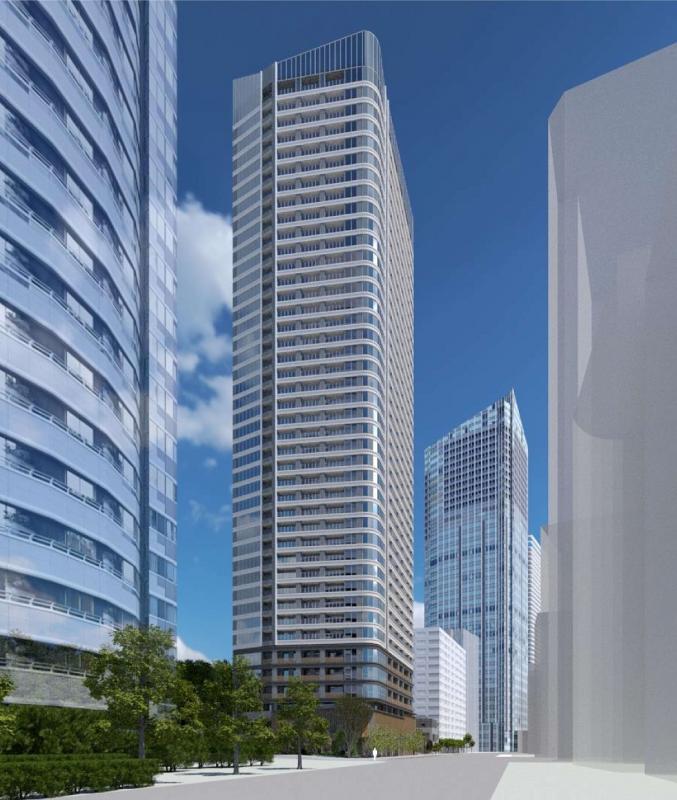
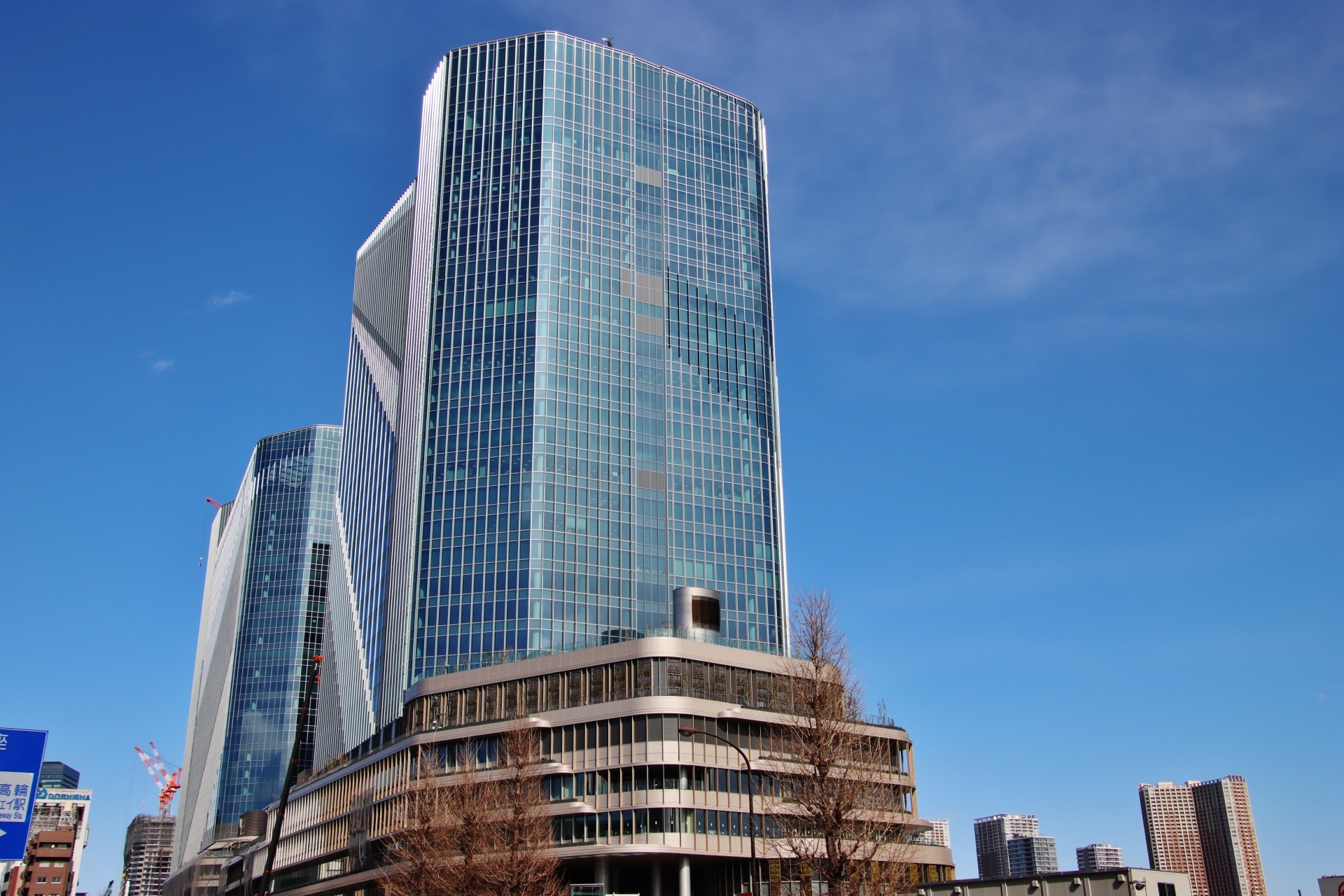
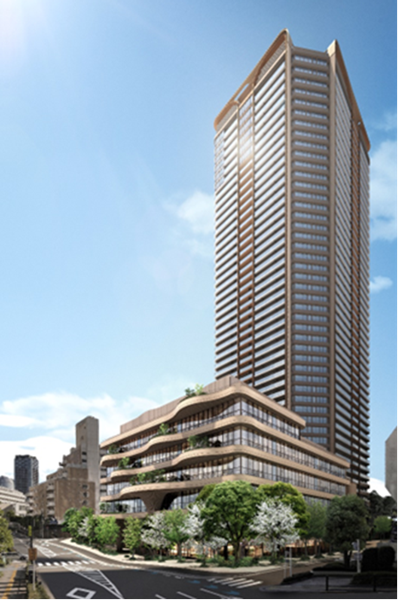
Musashi-Kosugi's strength is not simply the number of tower blocks. On the south side, redevelopment of the Musashi-Kosugi Station South Exit district and Kosugi-cho 3-chome has concentrated housing, retail, medical and educational functions. Being developed as a hub that serves not only residents who use the station but visitors from the surrounding area is one of the factors supporting land prices.
At the north exit, the “Kosugi Station North Exit Town Planning Policy,” which includes reconfiguring the station building and plaza, has been set out. Completion is targeted for fiscal 2035 or later, so it guarantees no fixed return. Even so, the direction of travel — station-area renewal continuing to the north exit after the south side is finished — is worth noting for owners holding over the long term.
Redevelopment raises convenience, but it also brings changed pedestrian routes during construction, new supply nearby and shifts in the tenant mix. Do not be optimistic about rents or sale prices simply because a property is by the station; think concretely about when competing supply will arrive and why your property will be chosen.
Three Practical Checks for Owners and Investors
Viewing a property, you check the view and the common areas — but the equipment that stops working in a flood is easy to overlook. When weighing investment risk in Musashi-Kosugi, checking in the following order makes the decision clearer.
1. Check river flooding and pluvial inundation separately
First, check Kawasaki City's flood hazard map for the assumptions if the Tama River overflows. Next, look at the Kawasaki City Waterworks Bureau's pluvial hazard map for the case where the sewers and drainage cannot keep up. Finally, use the MLIT overlay hazard map to layer topography and surrounding risks.
Within the same town name, the assumptions can differ across the road or over a few dozen metres of elevation change. Do not stop at the address: check the lot number, the building entrances, the car park entrance and any ramp down to a basement, all on the map.
2. Check equipment placement and the recovery plan
It is tempting to assume that a tower block's upper floors are immune to flooding. But if the substation equipment, emergency generator, water pumps and communications equipment are in the basement or on lower floors, power failure, water outage and lift stoppage can occur even when the dwelling itself is not flooded.
Check the management association's long-term repair plan, its disaster response manual, the location of the substation equipment, and whether flood barriers and emergency power are in place. For a second-hand property, verify the damage in 2019, how long recovery took and whether remedial works were carried out — not only through the agent but in documents from the management company and the association.
3. Think about the exit in terms of the buyer, not the average
Even with land prices rising, when interest rates climb, buyers' borrowing capacity falls and the growth in unit prices can slow. The more expensive the tower unit, the more the response depends on who forms the exit — owner-occupiers, investors, inheritance planning, or overseas buyers.
| Property type | Key checks | Axis of judgement |
|---|---|---|
| Tower block, mainly upper floors | Basement and lower-floor equipment, emergency power, the association's response history | Resilience of the lifelines, not just the floor you live on |
| Tower including lower floors and basement units | Entrances, car park ramp, waterproofing of the electrical room | Inundation depth and the practicality of evacuation and recovery |
| Low-rise condominium | Ground-floor common areas, water tank, history of road flooding nearby | Insurance and repair capacity at building level |
| House or whole-building asset | Site elevation, drainage routes, impact on tenants and occupants | Financial headroom including a period of suspended income |
When comparing locations, do not decide safety on an east–west impression. Check the hazard maps, the actual elevation on site and the equipment layout, and keep them as documents you can present at the time of sale — useful both for long-term holding and for the exit strategy.
INA's View: Can You Explain the Individual Risk Rather Than the Reputation?
Musashi-Kosugi shows strength in land prices, backed by transport convenience and a concentration of urban functions. At the same time, the issues exposed by the 2019 flooding — low-lying land, basement equipment and recovery arrangements — should not be excluded from an investment decision.
We do not make proposals that line up only the good points and rush a purchase. We explain the hazards, the equipment, the association's preparedness, future supply and sensitivity to interest rates, and then consider with you whether there is still a reason to hold. Protecting an asset over the long term takes more than fearing reputation, and more than trusting the numbers alone.
Summary
- In the 2026 Official Land Price survey, both residential and commercial land in Nakahara Ward continued to rise.
- The Typhoon Hagibis flooding was a pluvial inundation problem that cannot be applied uniformly across the district.
- Redevelopment is a medium- to long-term support factor, but it does not guarantee the price of any individual property.
- What matters is checking, one by one, the flood and pluvial projections, equipment placement, the recovery plan and the likely eventual buyer.
Frequently Asked Questions
Are land prices in Musashi-Kosugi still rising?
In the 2026 Official Land Price survey, the residential average in Nakahara Ward rose 4.5% year on year and the commercial average 9.4%. However, official land prices are an indicator for standard sites and do not guarantee the sale price of any individual condominium or house.
Could flooding like Typhoon Hagibis happen again?
Kawasaki City is advancing measures such as pump gates and bypass pipes, but heavy-rainfall risk cannot be reduced to zero. Check both the flood and the pluvial hazard maps, the location of building equipment, and the management association's recovery plan.
Should tower blocks be avoided?
There is no need to rule them out across the board. Even on an upper floor, if the substation or water supply equipment in the basement or lower floors is damaged, daily life is affected. What matters is checking the equipment layout and the practicality of disaster response for each property.
If buying now, is the east or the west side of the station safer?
Direction alone cannot decide it. Compare the flood and pluvial projections by address, the topography, and the building entrances and basement equipment. With several candidates, tabulating the hazard information on the same terms makes the differences easier to see.
Sources
- Kawasaki City, “Official Land Prices and Land Price Surveys”
- Kawasaki City Waterworks Bureau, “Special Page on Flood Damage in Areas around Drainage Sluice Pipes Related to Typhoon No. 19 of 2019”
- Kawasaki City, “Kosugi Station North Exit Town Planning Policy”
- Kawasaki City, “Flood Hazard Map”
- MLIT, “Overlay Hazard Map”