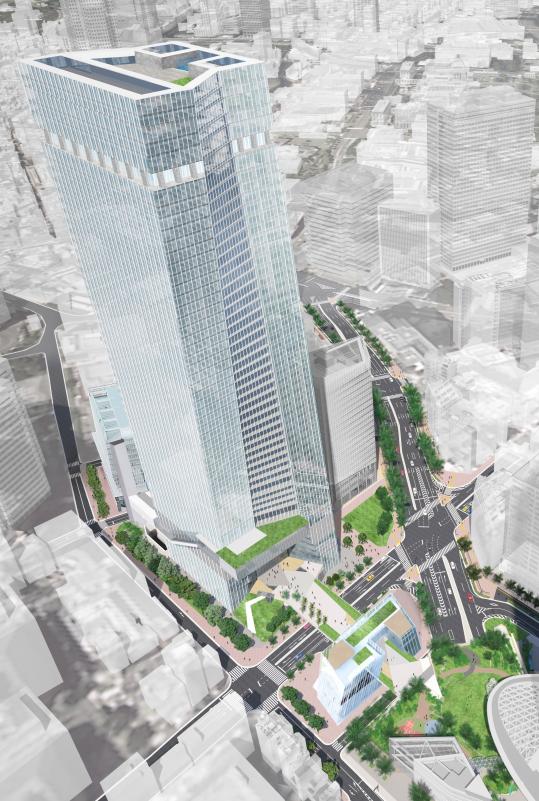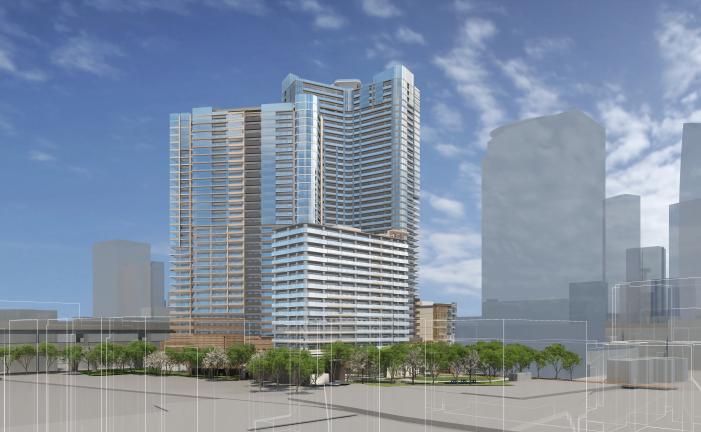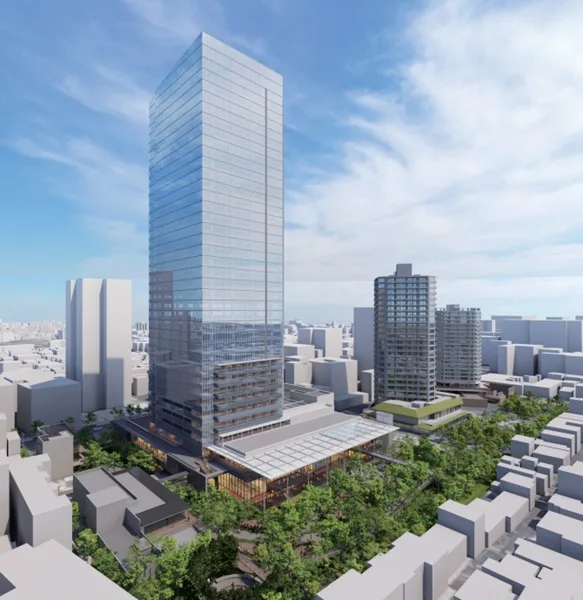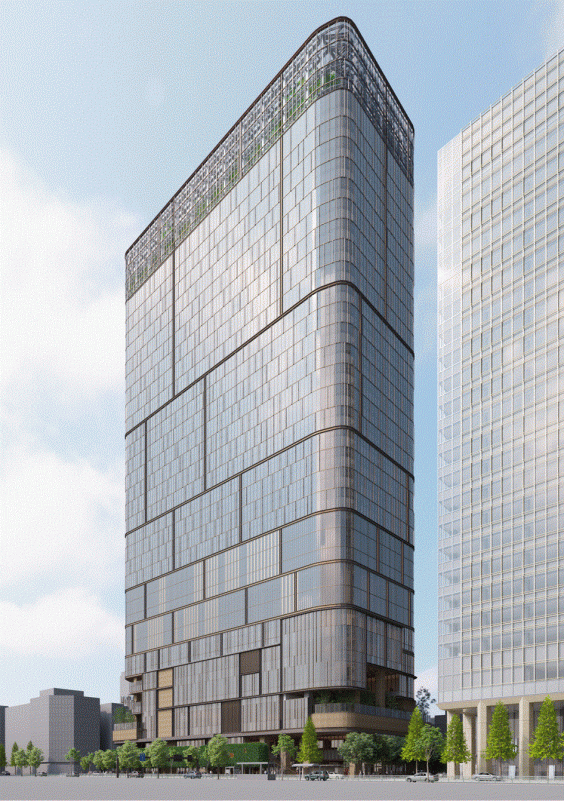
TORANOGATE is the name of the facility of the ``Toranomon 1-chome East District Type 1 Urban Redevelopment Project,'' which is underway in Toranomon 1-chome, Minato-ku, Tokyo. As a large-scale complex directly connected to Toranomon Station on the Tokyo Metro Ginza Line, the project plans to update the urban functions in front of Toranomon Station.
This article is based on information published as of October 2025.
The Tokyo Metropolitan Bureau of Urban Development has stated that this project aims to improve urban transportation functions in the Toranomon area and create an urban complex suitable for an international business center. Participating cooperative members include Chuo Nippon Land and Tatemono, UR Urban Renaissance Agency, and Sumitomo Real Estate Development, and new construction will begin in January 2024.
In this article, we will summarize the TORANOGATE plan, the station plaza/pedestrian network, office/commercial functions, relationship with the Toranomon Hills area, and points that real estate owners should keep in mind.
TORANOGATE plan overview
TORANOGATE is a Type 1 urban redevelopment project promoted by the Toranomon 1-chome East District Urban Redevelopment Association. Facing Sotobori Dori and Atago Shita Dori, it is located at the junction connecting Kasumigaseki, Shinbashi, and Toranomon Hills.
| Item | Contents |
|---|---|
| Project name | Toranomon 1-chome east district type 1 urban redevelopment project |
| Facility name | TORANOGATE |
| Location | Toranomon 1-chome, Minato-ku, Tokyo |
| Implementer | Toranomon 1-chome East District Urban Redevelopment Association |
| Participating members | Central Japan Land and Building, UR Urban Renaissance Agency, Sumitomo Real Estate Development |
| Area area | Approx. 1.1ha |
| Site area | Approximately 6,400 square meters |
| Total area | Approximately 119,900 square meters |
| Scale | 29 floors above ground, 4 floors underground |
| Height | Approx. 171.31m |
| Main uses | Offices, stores, business support facilities, etc. (the project overview of the Tokyo Metropolitan Bureau of Urban Development lists "offices, commercial, housing, business support, parking, etc.") |
| Construction begins | January 2024 |
| Scheduled completion | Scheduled for October 31, 2027 |
The facility name "TORANOGATE" and the facility concept "OPEN INNOVATION GATE" were announced jointly on February 20, 2025 by the Toranomon 1-chome East District Urban Redevelopment Association and the three participating association members. By layering office, commercial, exchange, and innovation support functions in front of Toranomon Station, we can see the aim of developing it as not just an office building, but a point of contact with the city.
Changes in urban functions brought about by direct connection to the station
The biggest feature of TORANOGATE is its location, which is directly connected to Toranomon Station. A large-scale office directly connected to a station not only reduces the burden of transportation during rainy days. By combining it with the station square, underground passageway, and pedestrian space, it changes the flow of people and where they stay.
In the Toranomon area, Toranomon Hills Mori Tower, business tower, residential tower, and station tower have been developed in stages, centered around Toranomon Hills Station on the Hibiya Line. TORANOGATE will strengthen the station front function on the Ginza Line Toranomon Station side, and will have the role of increasing the ease of movement with the Toranomon Hills area.
From the perspective of real estate evaluation, it is important not only to consider the distance between stations, but also to consider which exits, which lines of flow, and where the number of people going will increase. If TORANOGATE changes the pedestrian flow line in front of Toranomon Station, it may also affect the evaluation of surrounding stores, offices, and rental housing.
Floor configuration and facility functions
TORANOGATE consists of a commercial, innovation center, office, lounge and rooftop garden.
| Floor | Main use | Expected role |
|---|---|---|
| 1st basement floor to 2nd floor above ground | Commercial, including sales of goods and food and beverages | Creating liveliness and retention in front of the station |
| 2nd to 5th floors | Toranomon Innovation Center (tentative name) | Public-private collaboration, exchange, and new business creation |
| 6th to 28th floors | Offices | Business bases for large tenants |
| 29th floor | Lounge/rooftop garden | Interaction/view/stay functions |
The standard office floors are designed with large-scale tenants in mind, and will further strengthen Toranomon's corporate concentration. Another feature of the project is that it is located close to Kasumigaseki and will have an innovation center with public-private collaboration in mind.
Meaning of disaster prevention and communication infrastructure
TORANOGATE is said to be the first high-rise office building in the Toranomon area to adopt a mid-level seismic isolation structure. Next-generation communication infrastructure is also mentioned, including Passive Optical LAN (POL), which will be introduced for the first time in an office building in Japan.
The competitiveness of an office building is not determined by location or rent alone. The criteria for selecting tenants are business continuity in the event of a disaster, communication quality, security, environmental performance, and worker comfort. In an international business location like Toranomon, such infrastructure performance affects rent levels and tenant quality.
Impact on surrounding real estate
The completion of TORANOGATE may have multiple impacts on surrounding real estate.
Office demand
The supply of large-scale, highly functional offices directly connected to the station will strengthen the office cluster in front of Toranomon Station. On the other hand, there will also be competition for existing small and medium-sized buildings. Existing owners need to differentiate themselves not only by rent, but also by the quality of common areas, earthquake resistance, communication environment, and tenant support.
Commercial demand
The commercial functions and station plaza will change the daytime population and flow of visitors. For food and service stores, the improved accessibility in front of Toranomon Station may be a tailwind.
Housing/rental demand
The area around Toranomon is an area where housing supply is limited. As office agglomeration progresses, there is a possibility that the need for proximity to work and residence will increase in surrounding areas that are within walking/biking distance and have high transfer convenience. However, you should not take rent increases for granted and make decisions by looking at supply and demand and property quality.
Points that owners and investors should look at
| What to see | Why |
|---|---|
| Flow of people before and after completion | Affects commercial and store demand |
| Vacancy rates of surrounding existing buildings | Understand competition from new construction supply |
| Flow lines at station exits and underground passages | Visibility changes for each property |
| Connection with Toranomon Hills side | See the mobility of the entire area |
| Competitiveness of existing properties | Understand the difference with high-performance buildings |
Prices may move ahead of redevelopment due to expectations. What is important is to track not only the announced materials but also the actual flow of people, tenant composition, surrounding vacancies, and rent levels before and after completion.
Frequently asked questions
Q. When is TORANOGATE scheduled to be completed?
According to published materials, it is scheduled for October 31, 2027. Schedule may change due to changes in construction or business plans.
Q. Does TORANOGATE include housing?
The main uses announced by the project operators are offices, retail and business support facilities. The project overview of the Tokyo Metropolitan Bureau of Urban Development, however, includes "housing" among the main uses, so the plan does involve housing. The number of housing units is not specified in publicly available documents.
Q. How is it related to Toranomon Hills?
While the Toranomon Hills side has advanced business and exchange functions, TORANOGATE will be responsible for updating the side in front of Toranomon Station on the Ginza Line. The pedestrian network is expected to improve the ease of getting around the area.
Q. Will surrounding real estate prices always rise?
Not necessarily. Redevelopment is a positive factor, but the impact will vary depending on competition from new office supply, quality of existing properties, and tenant demand.
Reference/Citation