The Fujimi 2-Chome 3-Ban District Type 1 Urban Redevelopment Project is a Type 1 urban redevelopment project underway in Fujimi 2-chome, Chiyoda City, Tokyo. The planned site is located near stations in the Iidabashi-Fujimi area and can be understood as a project that advances land-use renewal and the reorganization of urban functions in an existing central urban district.
According to materials published by the Tokyo Metropolitan Bureau of Urban Development, the project area covers 0.5 hectares, the implementer is an association, and the project status is listed as "in progress." The uses include offices, housing, childcare support facilities, shops, parking, and more, showing a configuration that layers work functions and residential functions needed in the city center together with daily-life support functions within the same block.
The urban planning decision was made on October 20, Reiwa 4, and project approval and association establishment approval were granted on August 8, Reiwa 6. The main publicly available information centers on the area scale, use composition, approval timing, and building image, but even so, it is clear that this project is positioned not simply as a replacement of aging buildings, but as urban infrastructure development that renews how the station-front area, business district, commercial district, and public space are used.
Project Overview
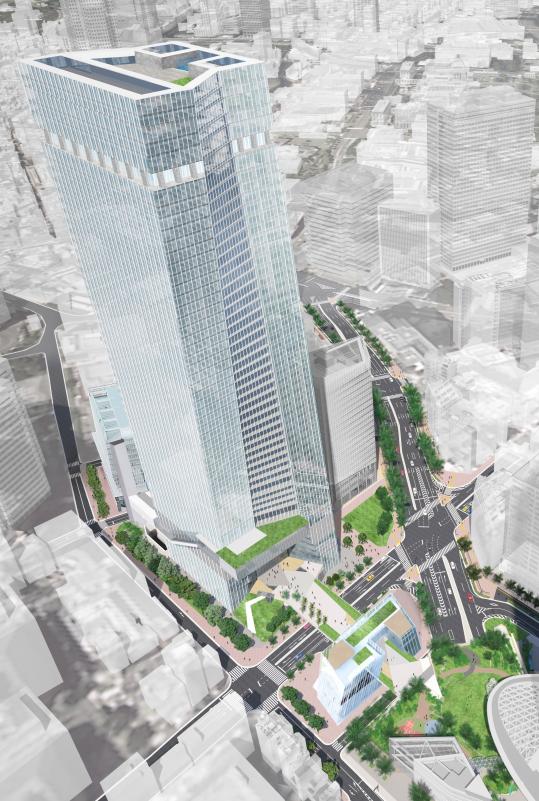
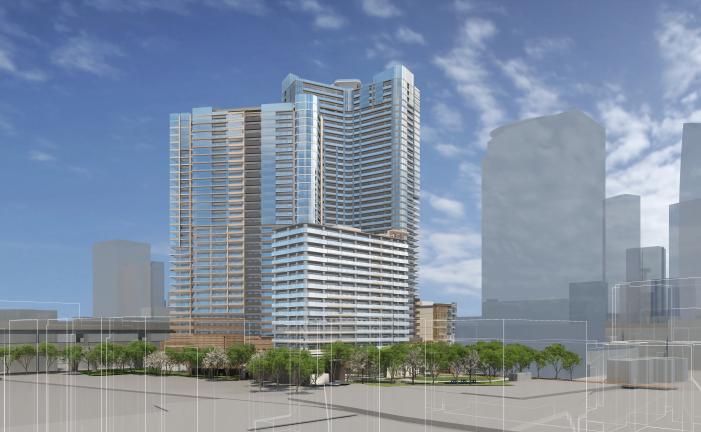
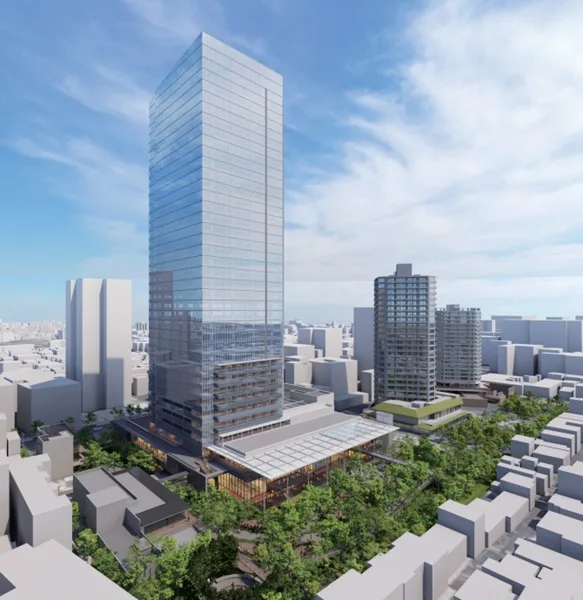
This project is a redevelopment plan targeting an existing station-adjacent urban district in Fujimi 2-chome, Chiyoda City, combining multiple uses. Public materials show a composition of Site A and Site B, with Site A planned at about 21 stories above ground and Site B envisioned as a low-rise business facility. The plan concentrates urban functions on the high-rise side while assigning low-rise business functions to a separate site, making it a configuration that balances intensive land use with the way the site engages the street within a limited project area.
| Item | Details |
| Project name | Fujimi 2-Chome 3-Ban District Type 1 Urban Redevelopment Project |
| Location | Fujimi 2-chome, Chiyoda City, Tokyo |
| Project area | 0.5ha |
| Implementer | Association implementation |
| Urban planning decision | October 20, Reiwa 4 |
| Approvals, etc. | August 8, Reiwa 6 (project approval and association establishment approval) |
| Project status | In progress |
| Main uses | Offices, housing, childcare support facilities, shops, parking, etc. |
| Scale and features | Site A is planned at about 21 stories above ground; Site B is envisioned as a low-rise business facility |
| Project owner | Not disclosed within the scope confirmable from published materials |
| Participating association members | Not disclosed within the scope confirmable from published materials |
| Project collaborators | Not disclosed within the scope confirmable from published materials |
At present, the information that is easy to confirm from published materials is the core framework of the project: the project area, uses, approval timing, and assumed building composition. Details such as total floor area, total number of units, office floor area, retail area, parking capacity, designer, planned builder, construction start timing, and completion timing are not disclosed within the scope confirmable from published materials.
Project Characteristics
The first characteristic of this project is that it is a mixed-use plan integrating offices, housing, childcare support facilities, shops, parking, and more in a station-adjacent location in the Iidabashi-Fujimi area. While the way a city block is used tends to be limited in a single-use rebuilding project, a configuration like this one that layers work, residence, and daily services is more likely to generate a broad range of human activity, including not only commuting to work and school in the morning and evening but also daytime business use and daily-life use.
Second, the project presents a building composition that separates Site A and Site B. The approximately 21 above-ground stories on Site A serve as the element responsible for intensive use in the city center, while the low-rise business facility on Site B can be understood as accommodating business functions at a scale close to the street. Because the division of roles between the high-rise building and low-rise building is clearly indicated, it is evident that the plan is conscious both of concentrating urban functions inside the block and of how the project opens to surrounding streets.
Third, the Tokyo Metropolitan Government's explanation mentions improvements not only in disaster resilience but also in pedestrian circulation and the value of staying in the area. This reflects an approach that does not evaluate only the newness of the buildings, but seeks to reorganize the area to include safety during disasters, walkability in daily life, and even the quality of time spent within the block. A project area of 0.5 hectares is not extraordinarily large, but in an existing station-adjacent urban district, even a relatively compact block renewal can have a significant impact on the surrounding environment's impression and on circulation routes.
In addition, the fact that childcare support facilities are explicitly listed among the uses shows that this is not solely an office reorganization or housing supply project. The Fujimi area has characteristics tied to educational facilities and residential functions, and by incorporating life-support functions in a highly convenient station-adjacent location, the project appears intended to connect business-oriented central-city use with the infrastructure of daily life within the same block.
Relationship with Surrounding Projects and the Area
Fujimi 2-chome is an area that benefits from the transportation convenience of Iidabashi Station while also having a block character that is not exclusively station-front commercial land. While the closer one gets to the station, the greater the share of business and commercial functions tends to become, the Fujimi side also has aspects where housing, educational facilities, and daily-life-related functions overlap, making this project easy to understand as a redevelopment located at the point where those two characters meet.
The fact that Tokyo's materials describe this project as an urban infrastructure renewal that "changes how the station-front area, business district, commercial district, and public space are used" also shows that the axis of evaluation lies not in the building alone but in its relationship with the surroundings. By allowing offices and housing to coexist in a station-adjacent area and further introducing childcare support facilities and shops, the project can be understood as being aimed not only at through-traffic circulation but at shifting the block into one that accommodates staying and everyday use.
The combination of a high-rise Site A and a low-rise business facility on Site B is also meaningful in connecting circulation from the Iidabashi Station side with the streetscape on the Fujimi side. The high-rise side takes on the concentration required in a station-adjacent central urban area, while the low-rise side, being positioned along the street, is likely to support visibility and ease of use, making the two-site composition itself an element that shows how the project connects with the surrounding area.
The names of individual nearby projects and any coordination plans are not disclosed within the scope confirmable from published materials. However, when placed in the context of the renewal of the existing urban district progressing in the Iidabashi-Fujimi area, this project can be noted as one that connects the concentration of station-front functions to blocks one step farther inside and supports an overall improvement in how the area is used through better disaster resilience and pedestrian circulation.
INA Brief Comment
The Fujimi 2-Chome 3-Ban District Type 1 Urban Redevelopment Project is a plan that can readily be understood as a central-city mixed-use redevelopment layering the convenience of proximity to Iidabashi Station with the daily-life functions on the Fujimi side within a single block. The information currently confirmable centers on the use composition, area scale, approval timing, and building images for Sites A and B, but the key point of this project is that it is positioned as an urban infrastructure renewal that includes disaster resilience and pedestrian circulation.
Sources and References