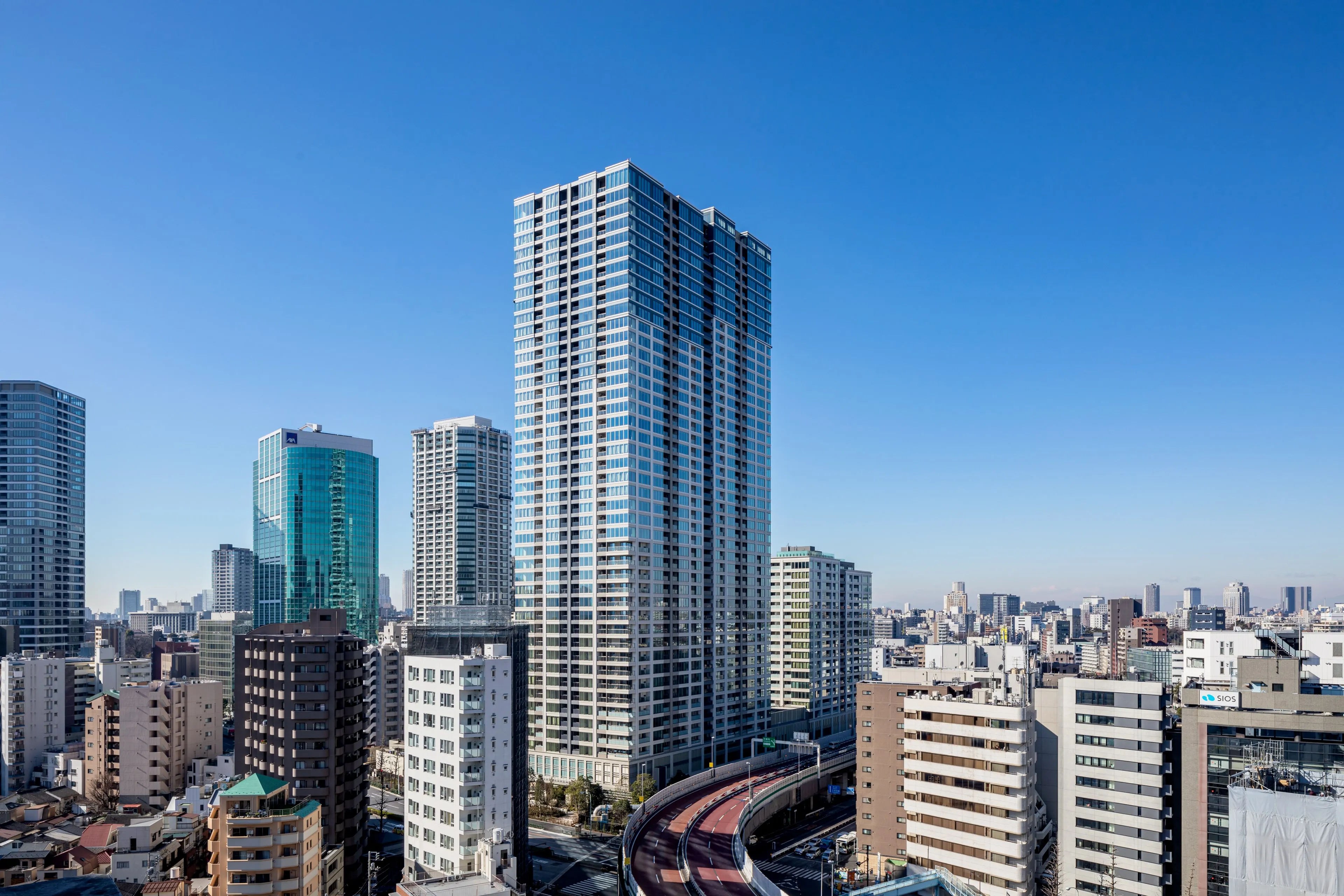
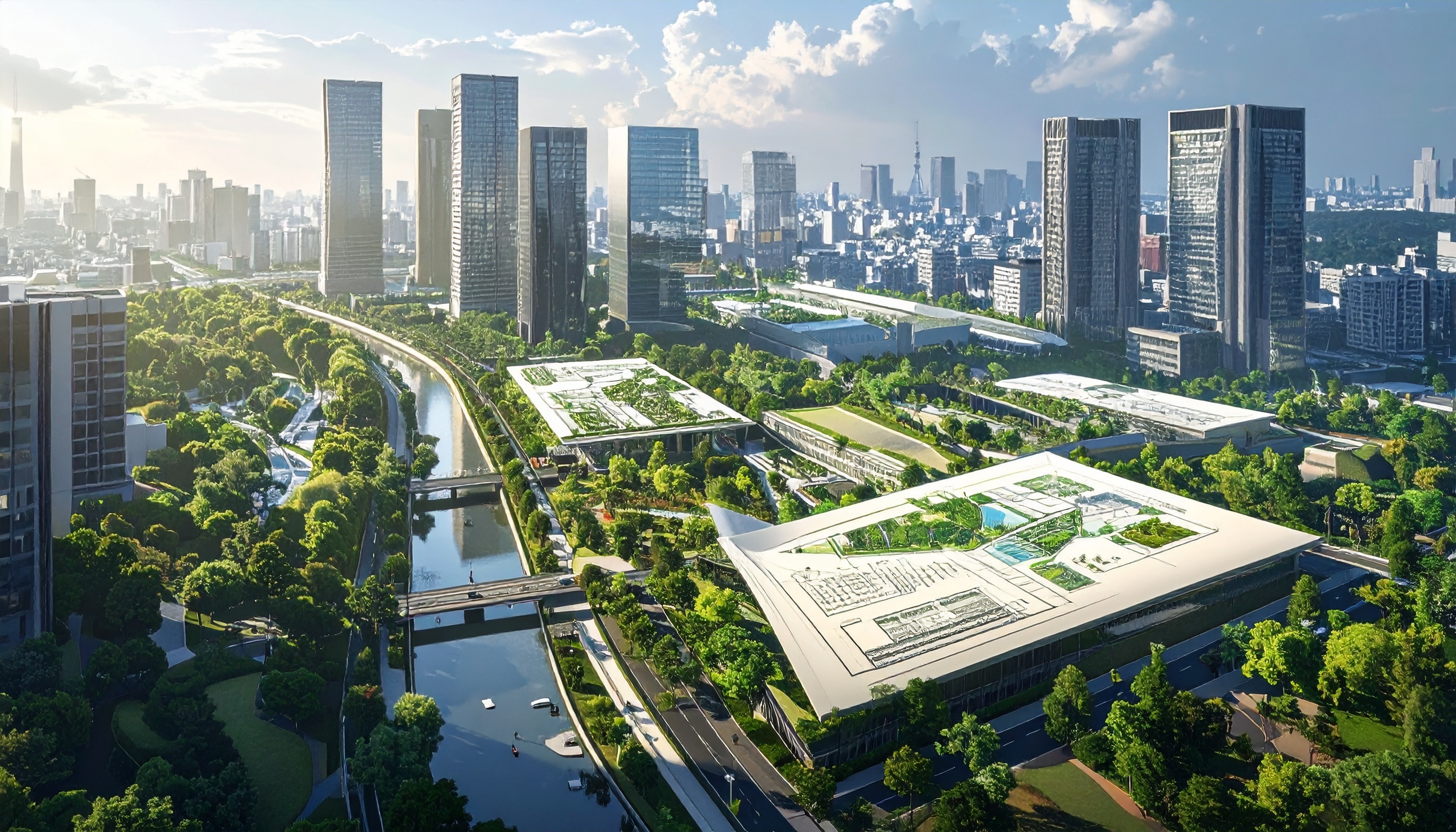
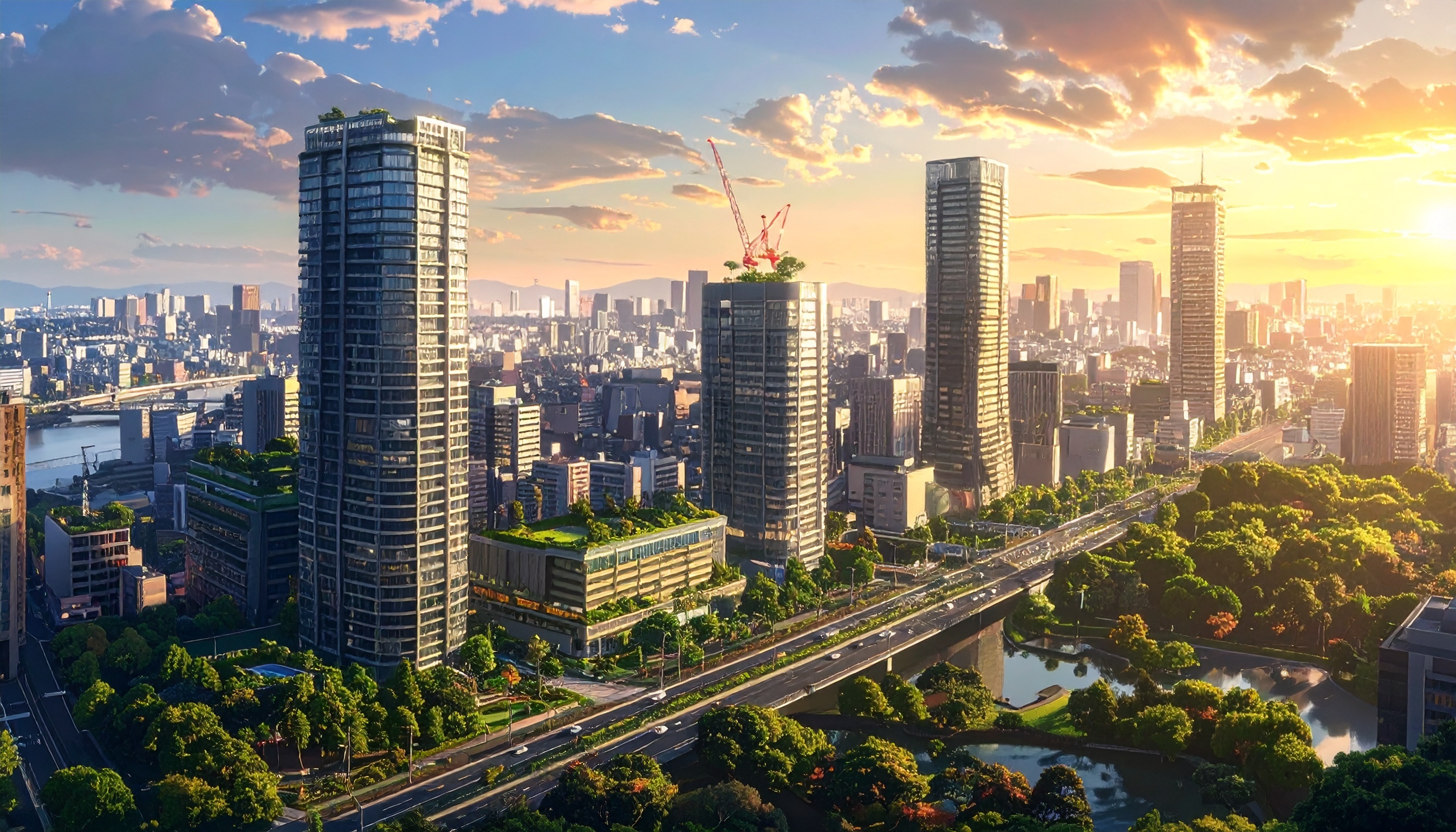
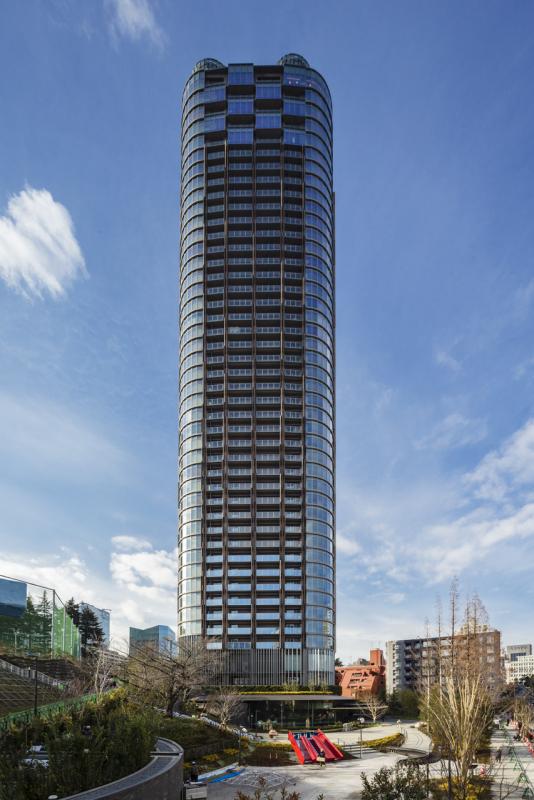
In Takanawa, Minato Ward, Tokyo — right next to Sengakuji Station where the Toei Asakusa Line and Keikyu Main Line intersect — construction of a mixed-use complex standing approximately 145 meters tall with 30 above-ground floors is now in full swing. The "Sengakuji Station District Type 2 Urban Redevelopment Project" is a publicly led redevelopment initiative executed by the Tokyo Metropolitan Government that integrates station improvements with surrounding area development, with completion targeted for fiscal year 2031. Now that the grand opening of the adjacent Takanawa Gateway City was completed in March 2025, the Sengakuji Station area has become the epicenter of the next major transformation in southern Minato Ward.
What Is the Sengakuji Station District Type 2 Urban Redevelopment Project?
The Sengakuji Station District Type 2 Urban Redevelopment Project is a publicly led redevelopment executed by the Tokyo Metropolitan Government. While standard "Type 1 Urban Redevelopment Projects" use a rights conversion method, "Type 2" projects employ an administrative disposition method. Rather than remaining within the project site, existing rights holders receive compensation and relocate outside the project area. This approach is commonly applied when highly public-interest urban infrastructure improvements — such as station upgrades and district heating/cooling systems — are required, and the Sengakuji Station district is a textbook example.
The Tokyo Metropolitan Government's Second Urban Development Office serves as the project administrator, with Tokyu Land Corporation and Keikyu Corporation designated as specified builders in June 2021. Kajima Corporation handles design and construction, and construction of the specified facility building officially began on November 1, 2024. The project spans a long-term timeline from fiscal year 2018 to fiscal year 2032, reflecting a strong commitment to sustainable urban development.
"Sengakuji Station District" and "Sengakuji Surrounding District" Are Two Different Redevelopment Projects
Some readers may have arrived at this article after searching for "Sengakuji Surrounding District Urban Redevelopment Project," but this is a separate, adjacent project from the "Sengakuji Station District Type 2 Urban Redevelopment Project" discussed in this article. It is being pursued by the "Sengakuji Surrounding District Urban Redevelopment Preparatory Association," which was established in August 2016 by landowners holding rights in Takanawa 2-chome, Minato Ward. Unlike the Sengakuji Station District, which is executed by the Tokyo Metropolitan Government and has already broken ground as of November 2024, this project remains at the preparatory association stage, prior to an urban plan decision. Although the two districts are adjacent, please note that they are entirely separate projects with different executing bodies, project schemes, and stages of progress.
Project Scale and Timeline
A summary of the building's key specifications makes the sheer scale of the project clear.
- Location: Takanawa 2-chome, Minato Ward, Tokyo
- Structure: 30 above-ground floors, 3 basement levels
- Maximum height: Approximately 145 meters
- Site area: Approximately 8,490 square meters
- Total floor area: Approximately 112,300 square meters
- Uses: Residential units (385 units), offices, retail, childcare support facilities
- Design and construction: Kajima Corporation
- Construction start: November 1, 2024
- Scheduled completion: Fiscal year 2031 (late March 2032)
With a total floor area of approximately 112,300 square meters, this ranks among the largest mixed-use developments in Minato Ward. The vertical mixed-use configuration — retail on lower floors, offices on mid-level floors, and residential condominiums (385 units for sale) on upper floors — achieves an integration of work, living, and commerce that will keep the neighborhood vibrant around the clock. The inclusion of childcare support facilities aligns with Tokyo's child-rearing policies and is noteworthy from the perspective of creating a family-friendly environment.
The environmentally conscious design is also a distinguishing feature. Exterior louvers installed on the building's facade are adjusted in orientation and density according to the varying solar radiation levels across different areas of the facade, reducing solar heat gain inside the building. This design, which balances energy efficiency with aesthetic quality, reflects a commitment to meeting modern environmental standards.
Source: Tokyo Metropolitan Government Bureau of Urban Development, "Sengakuji Station District Type 2 Urban Redevelopment Project" (2024)
When Will Sales of the 385 Condominium Units Begin? What Is the Expected Price Range?
The residential portion of the building (385 units) is planned as condominiums for sale, but as of September 2026, Tokyu Land Corporation has not made any official announcement regarding the condominium brand name, sales launch timing, or price range. The press release dated November 28, 2024 announcing the start of construction contained only an overview of the building, with no mention of the condominium sale. With completion scheduled for fiscal year 2031, and based on the typical sales schedule for large-scale tower condominiums, an official announcement of the sales launch could come within the next several years, but no definitive information is available at this time. Prospective buyers should check Tokyu Land Corporation's official website and press releases directly.
Synergies with Takanawa Gateway City and Integrated District Development
Any discussion of the Sengakuji Station district redevelopment must address its relationship with the adjacent "TAKANAWA GATEWAY CITY." Takanawa Gateway City is a redevelopment project of overwhelming scale, boasting a total site area of approximately 74,000 square meters and a total floor area of approximately 845,000 square meters, with its grand opening completed on March 27, 2025.
Its core facility, "THE LINKPILLAR 1" (North and South), opened on March 27, 2025. The upcoming "THE LINKPILLAR 2" is a supertall building with 31 above-ground floors and a height of approximately 167 meters, housing offices, commercial facilities, clinics, fitness centers, and a district heating/cooling energy center, with an opening scheduled for March 28, 2026.
Upon completion, the Sengakuji Station district redevelopment building is planned to connect to JR Takanawa Gateway Station via an elevated pedestrian deck running through THE LINKPILLAR. This will dramatically improve access from Sengakuji Station on the Toei Asakusa Line and Keikyu Main Line to Shinagawa Station on the JR Yamanote Line, Keihin-Tohoku Line, and Tokaido Shinkansen. The vision is one where Sengakuji Station transforms qualitatively from a mere "transfer station" into a "gateway to the city."
Furthermore, in coordination with the redevelopment of the Shinagawa Station North Exit district and the Tamachi Station area, a scenario is emerging in which the "Shinagawa–Takanawa–Sengakuji–Tamachi" corridor in southern Minato Ward functions as an integrated international exchange hub. As a destination for inbound tourism demand and a candidate location for international business expansion, attention on this area is expected to grow even further.
Sengakuji Station Improvement Works | Platform Width to Double
A critical piece of public infrastructure being developed in tandem with the urban redevelopment project is the Sengakuji Station improvement works. Jointly undertaken by the Tokyo Metropolitan Bureau of Transportation and Keikyu Corporation, these improvements will double the current platform width from approximately 5 meters to approximately 10 meters. The upgraded station is scheduled to begin service in fiscal year 2027, with the ticket gate concourse also being expanded.
Despite being a key transfer station where passengers on the Toei Asakusa Line and Keikyu Main Line converge, the current Sengakuji Station has long faced safety challenges during rush hours due to its narrow platforms. By planning the platform expansion and the construction of the redevelopment building above as an integrated project, a fundamental improvement in station functionality and the creation of an attractive urban space at ground level are being achieved simultaneously. This is a prime example of the "joint public-private urban transformation" that Type 2 Urban Redevelopment Projects make possible.
Improved station convenience has a direct impact on surrounding property values. Reduced congestion, enhanced barrier-free access, and the creation of commercial space through concourse expansion will positively influence both rental demand and property valuations in the station area. For property owners, the progress of these improvement works is information worth monitoring closely as a key factor in long-term asset strategy decisions.
For an overview of Tokyo's major redevelopment projects, see also "Major Redevelopment Projects Transforming Tokyo in 2025."
Construction Progress | From the Groundbreaking Ceremony to Today
A groundbreaking ceremony was held on November 8, 2024, and the construction period for Kajima Corporation, which is handling design and construction, is set from November 2024 to August 2030, with the grand opening planned for fiscal year 2031 following subsequent exterior work and fixture installation. From the latter half of 2025 through September 2026, no additional official announcements regarding construction progress — such as the topping-out or completion of the underground structural work — have been confirmed from the Tokyo Metropolitan Government, Tokyu Land Corporation, or Kajima Corporation. Restrictions on surrounding road traffic and the continued movement of construction vehicles are expected to persist throughout the extended construction period, and nearby residents and property owners are advised to check the latest information via the Tokyo Metropolitan Government's Second Urban Development Office or on-site construction notice boards.
Impact on Southern Minato Ward's Real Estate Market
What impact will the Sengakuji Station district redevelopment have on the real estate market in southern Minato Ward (Takanawa, Shirokane-Takanawa, and the Shinagawa area)?
Rental housing market: The "anticipatory pricing-in" effect ahead of the building's completion (fiscal year 2031) has the potential to push up rental levels for surrounding properties. In particular, for condominiums and apartments within walking distance, as the effects of Takanawa Gateway City's opening compound with growing awareness of the Sengakuji redevelopment's progress, the pool of prospective tenants is expected to deepen. Demand capture from high-income demographics — particularly employees of foreign-affiliated companies and commuters to the Shinagawa and Tamachi areas — can be anticipated.
Office market: Once the office component (mid-level floors) of the redevelopment building becomes operational, office supply in the Takanawa area will increase. While this could create competitive pressure for existing office buildings nearby, the enhanced visibility and brand power of the area as a whole will also broaden demand. Over the long term, as the district's positioning as an international exchange hub solidifies, a fundamental uplift in office demand across southern Minato Ward is expected.
Condominium market: The residential component of the redevelopment building (385 units) will be offered as condominiums for sale. As a high-rise tower residence at 145 meters, pricing is expected to target affluent and ultra-high-net-worth buyers. In terms of post-completion asset value, the brand advantages of integrated development with Takanawa Gateway City and the pedestrian deck connection to JR Takanawa Gateway Station are likely to command a significant premium.
For more on the relationship between redevelopment and property values in the Shirokane-Takanawa area, see "Impact of the Shirokane-Takanawa Area Redevelopment on Real Estate Values (As of April 2025)."
INA's Perspective | Assessing the Long-Term Value of the Sengakuji Area
My interest in the Sengakuji Station district redevelopment is not simply a matter of scale. The essence of this project lies in the ingenuity of the Type 2 Urban Redevelopment framework, which enables the simultaneous delivery of station improvements, urban infrastructure development, and mixed-use facility construction. The Tokyo Metropolitan Government, as the executing body, underwrites the public infrastructure improvements that would be difficult for the private sector to achieve alone, while combining them with private-sector construction expertise and capital. This model represents one of the most effective formulas for urban regeneration in Japan.
The Sengakuji area has already arrived at the "threshold of transformation" with the opening of Takanawa Gateway City. With the addition of the Sengakuji Station redevelopment, southern Minato Ward is poised to evolve into an area that functions as a nexus along the "Shinagawa–Takanawa–Sengakuji" international exchange corridor. While completion is scheduled for fiscal year 2031, the real estate market prices in these expectations well before a project is finished. For investors and property owners with a long-term perspective, I believe that gathering information and considering strategic decisions at this stage carries significant value.
INA&Associates is continuously monitoring and analyzing real estate market conditions in central Tokyo redevelopment areas, including the Sengakuji and Takanawa districts. Please feel free to contact us at any time for consultations regarding your asset strategy.
For more on redevelopment area trends, see also "JR Shimbashi Station East Exit Redevelopment Plan (February 2025)."
Summary
- The Sengakuji Station District Type 2 Urban Redevelopment Project is a publicly led redevelopment executed by the Tokyo Metropolitan Government, with Tokyu Land Corporation and Keikyu Corporation as specified builders
- A mixed-use complex with 30 above-ground floors, approximately 145 meters in height, and approximately 112,300 square meters of total floor area, comprising 385 residential units, offices, retail, and childcare support facilities
- Construction began in November 2024 with completion scheduled for fiscal year 2031 (project period: fiscal years 2018–2032)
- Station improvement works to double Sengakuji Station's platform width from 5 meters to 10 meters are scheduled to begin service in fiscal year 2027
- An elevated pedestrian deck connecting through Takanawa Gateway City and THE LINKPILLAR will improve walkability to JR Takanawa Gateway Station and the Shinagawa area
- Long-term upward pressure on southern Minato Ward's rental, office, and condominium markets is expected to continue
How transaction prices have actually moved
To see how far expectations for the redevelopment are actually reflected in transaction prices, we checked the real estate transaction price data published by the Ministry of Land, Infrastructure, Transport and Tourism. The table below places resale condominium transactions in districts whose name contains “Takanawa” alongside Minato Ward as a whole.
| Year | Transactions | Price per m² in this area (median) | Minato Ward price per m² (median) |
|---|---|---|---|
| 2023 | 188 | ¥1,638,000 | ¥1,467,000 |
| 2024 | 170 | ¥1,633,000 | ¥1,667,000 |
| 2025 | 172 | ¥1,904,000 | ¥1,895,000 |
| 2026 (Q1 only) | 34 | ¥1,930,000 | ¥2,000,000 |
From 2023 to 2025 the rate of increase was +16.2% for Takanawa and +29.2% for Minato Ward as a whole. Takanawa, which stood 12% above Minato Ward as a whole in 2023, was caught in 2024, and in the first quarter of 2026 it sits below the ward average.
In absolute terms, resale condominium transactions in Takanawa from 2025 onward had a median of ¥100 million on a floor area of 55 m², with roughly half of all transactions falling between ¥48 million and ¥200 million. The price band is wide, and this is an area where differences by building age and size are large.
Source: Compiled by INA&Associates Inc. from “Real Estate Transaction Price Information” (Ministry of Land, Infrastructure, Transport and Tourism), MLIT Real Estate Information Library (国土交通省 不動産情報ライブラリ, https://www.reinfolib.mlit.go.jp/). Based on data obtainable as of September 2026. The most recent quarter is provisional, because transactions are added later.
A note from the numbers (as of September 2026)
Even though a large-scale development, Takanawa Gateway City, is under way, resale condominium prices in Takanawa have been overtaken by the Minato Ward average. That is a surprising figure, but we believe it can be explained.
Takanawa was already an area at a high level even within Minato Ward. As of 2023 it stood 12% above the ward average. Minato Ward as a whole rose 29% over these three years because other areas, such as Azabudai Hills, have caught up to Takanawa’s level. It is more accurate to read this as the ward as a whole catching up, not as Takanawa falling.
That said, it is a fact that an area with a large-scale development under way has not held its advantage over the ward average. The point at which the 385 units for sale in the Sengakuji Station district come onto the market will be the next thing to judge on.
How to judge it as an investor
- Do not start from the assumption that “it is Takanawa, so it will rise.” The gap with the ward average has disappeared over these three years. This is a stage at which to judge on the conditions of the individual property.
- The prices of the new units for sale will become the benchmark for existing resale stock. Once the sale prices of the 385 units are published, the level for the area will be reassessed.
- A price band running from ¥48 million to ¥200 million means the average is no guide. The market is divided by building age, floor level and view.
Frequently Asked Questions (FAQ)
Q1. Who is executing the Sengakuji Station District Type 2 Urban Redevelopment Project?
A. The Tokyo Metropolitan Government (Tokyo Metropolitan Government's Second Urban Development Office) is the executing body. Tokyu Land Corporation and Keikyu Corporation were designated as specified builders in June 2021, with Kajima Corporation handling design and construction.
Q2. When will the redevelopment building be completed?
A. Construction began on November 1, 2024, with completion scheduled for fiscal year 2031 (late March 2032). The mixed-use complex will include residential units (385 units), offices, retail, and childcare support facilities.
Q3. When will the Sengakuji Station improvements be completed?
A. The station improvements, including the expansion of platform width from 5 meters to 10 meters, are scheduled to begin service in fiscal year 2027. The work is being jointly carried out by the Tokyo Metropolitan Bureau of Transportation and Keikyu Corporation.
Q4. What is the relationship with Takanawa Gateway City?
A. Upon completion, the Sengakuji Station district redevelopment building will be connected to JR Takanawa Gateway Station via an elevated pedestrian deck running through Takanawa Gateway City (THE LINKPILLAR 1 and 2). Together with Takanawa Gateway City, which celebrated its grand opening in March 2025, this integration will significantly enhance urban functionality in southern Minato Ward.
Citations and References
- Tokyo Metropolitan Government Bureau of Urban Development, Second Urban Development Office, "Sengakuji Station District: Project Overview" (2024)
- Tokyo Metropolitan Government Bureau of Urban Development, "Sengakuji Station District Type 2 Urban Redevelopment Project" (2024)
- Tokyu Land Corporation, "Notice of Construction Commencement for the Sengakuji Station District Type 2 Urban Redevelopment Project" (November 2024)
- PR TIMES, "Notice of Construction Commencement for the Sengakuji Station District Type 2 Urban Redevelopment Project" (Tokyu Land Corporation, November 2024)