What is Noborito station area redevelopment? Explanation of plan overview and investment perspective
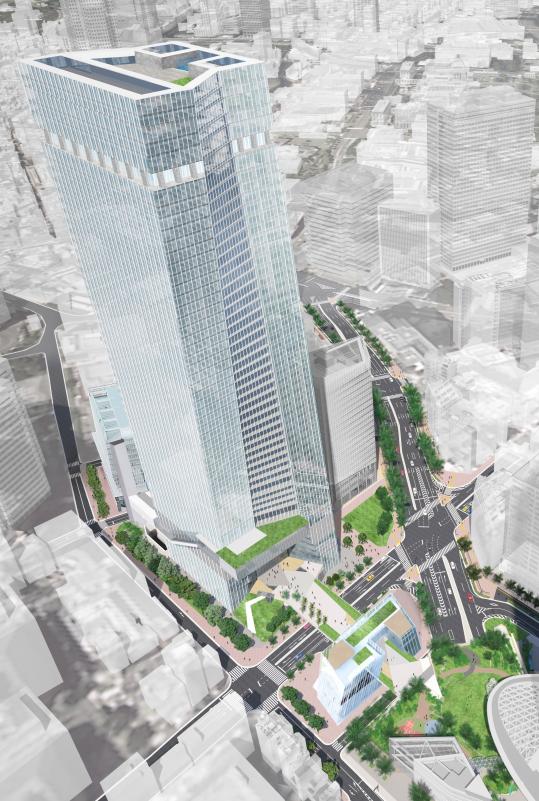
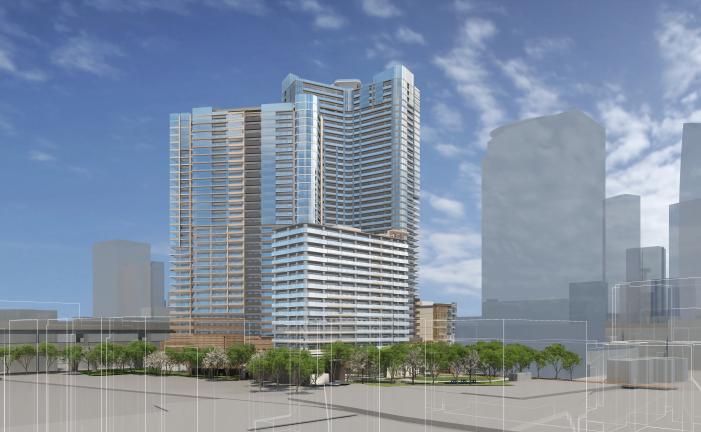
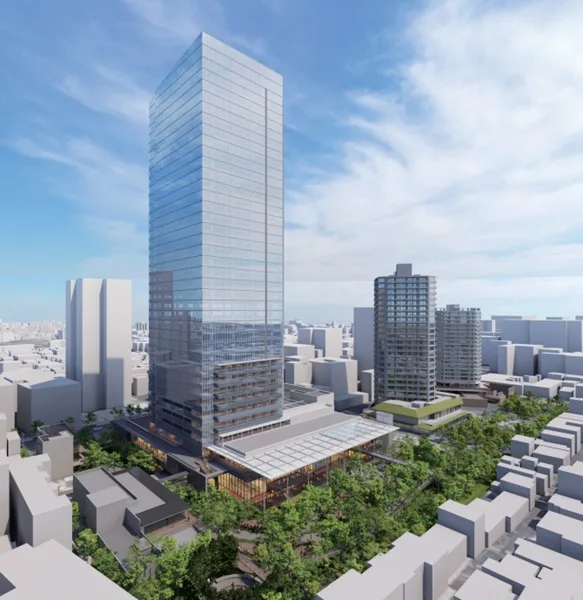
The Noborito Station Area Type 1 Urban Redevelopment Project is a station front function renewal project that is proceeding in front of Noborito Station, where the Odakyu Line and JR Nambu Line intersect. In addition to combining housing, stores, businesses, and parking, the plan is to create a complex hub that will include a pedestrian deck and sidewalk-like open space, and be integrated with the station square.
It is important for rental owners and real estate investors not to make decisions based solely on the idea that a large building will be built. Redevelopment of the area in front of Noborito Station may affect the flow of people in front of the station, convenience of living, tenant preferences, and appeals for nearby properties. On the other hand, there is still time until the project is completed, and this is not the time to rush into making an investment decision based on expectations.
In this article, based on PR TIMES distributed materials from Kawasaki City and Tokyu Corporation, we will summarize the plan, development details, schedule, and perspective on the real estate market for the Type 1 urban redevelopment project in the Noborito Station area.
Key points of this article
- The Noborito station area redevelopment is a mixed-use development in front of the station with 38 floors above ground and 1 floor underground, and a maximum height of approximately 140 meters (the number of residential units is not listed in the published materials).
- The essence of the plan is to simultaneously update the land use in front of the station, improve pedestrian circulation, improve disaster prevention, and create a lively atmosphere.
- It is important for surrounding owners to review not only rent increases, but also recruitment photos, station flow lines, common areas, management quality, and exit strategies.
What is the Noborito Station Area Type 1 Urban Redevelopment Project?
The Noborito Station District Type 1 Urban Redevelopment Project is an urban redevelopment project of approximately 0.6 ha in front of the station, targeting 2402-6 Noborito, Tama-ku, Kawasaki City, Kanagawa Prefecture. Although it is located about a 1-minute walk from Noborito Station on the Odakyu Line and JR Nambu Line, and is located in a prime location near the station square, it has been said that there are issues in terms of land use appropriate for the station, disaster prevention, and pedestrian space.
The proposed changes to Kawasaki City's business plan indicate the following directions: strengthening station front functions, securing open space for the public, improving disaster prevention performance, and creating a lively urban environment. In other words, this project should be seen as an urban infrastructure development project that will update the way the area in front of Noborito Station is used, rather than just providing condominiums and tower housing.
Noborito is a transportation hub where you can use the Odakyu Line, which connects to Shinjuku, and the JR Nambu Line, which connects to Kawasaki, Musashikosugi, and Tachikawa. Since there is a connection between commuting to the city center, traveling within Kawasaki, and living in the suburbs, the location is likely to have a ripple effect not only on its reputation as a residential area but also on the demand for stores and services if the comfort in front of the station increases.
Plan outline
The main plan outlines that can be confirmed in the published materials are as follows.
| Item | Contents |
|---|---|
| Project name | Noborito Station District Type 1 Urban Redevelopment Project |
| Location | 2402-6 Noborito, Tama-ku, Kawasaki City, Kanagawa Prefecture, etc. |
| Implementation area | Approx. 0.6ha |
| Site area | Approx. 5,950㎡ |
| Total floor area | Approx. 64,800㎡ |
| Scale | 38 floors above ground, 1 floor underground |
| Maximum height | Approx. 140m |
| Main uses | Residences, stores, childcare support facilities, parking lots, etc. |
| Number of residential units | Not listed in published materials |
| Business partner/business agent | Tokyu Land Corporation, Odakyu Land Corporation, Tokyu Corporation |
| Designer | Tokyu Sekkei Consultants, INA New Architecture Research Institute/Maeda Construction Industry Joint Venture, Ney & Partners Japan |
| Estimated project cost | Not listed in published materials |
Looking at the numbers alone, the scale of the complex is noticeable, being approximately 0.6 ha in front of the station and with a total floor space of approximately 64,800 square meters. However, when reading the plan, it is necessary to look at "how the complex functions in front of the station will be reorganized" rather than the number of housing units. This is because the plan is to change the flow of people from the moment they arrive at the station into the city by putting stores and business functions in the lower floors and creating a pedestrian space that is conscious of the connection with the station square.
With this type of redevelopment, it's not just the new housing units that move the market after completion. By changing the way the station looks, the ease of walking, the sense of security at night, and the options for shopping and dining, it will be easier to give existing rental properties in the surrounding area the context of a "station square that is easy to live in."

Public facility development and pedestrian flow lines
What we particularly want to confirm when redeveloping the Noborito Station area is the development of public facilities not only inside the building but also around it. In addition to existing roads, Kawasaki City's proposed changes to the business plan call for the creation of new divided roads, pedestrian decks, and sidewalk-like open spaces.
| Facilities | Maintenance details |
|---|---|
| City road Noborito Route 38 | Width 8m, length approx. 110m, existing |
| City road Noborito Route 72 | Width 8m, length approx. 90m, existing |
| Section road | Width 6m, length approx. 120m, new construction |
| Pedestrian deck | Width approx. 3 to 8m, area approx. 410㎡, new construction |
| Sidewalk-like open space | Area approx. 460㎡, new construction |
From this content, the aim of the project is not to "build a tall building in front of the station," but to improve the ease of movement by connecting the station square, the lower-rise building, and the pedestrian space. Once the pedestrian deck is in place, it will be easier to move from the station to the facilities and surrounding blocks, and it will be easier to stay in front of the station.
In rental management, it is necessary to incorporate this change into the recruitment field. For example, simply writing "◯ minutes walk from Noborito Station" does not fully convey the value of the redevelopment. It is important to convert information into information that allows residents to imagine their daily lives, such as flow lines from the station plaza, brightness at night, shopping and dining options, and ease of movement on rainy days.
Schedule and project entity
According to Tokyu Corporation's PR TIMES distribution materials, a preparatory association was established in the Noborito Station area in November 2022, changes to the city plan were decided on in March 2026, and Kawasaki City began public inspection of business plans and design manuals from March 31 of the same year.
As planned, the Noborito Station District Urban Redevelopment Association, together with Tokyu Land Corporation, Odakyu Land Corporation, and Tokyu Corporation, received approval of the rights conversion plan from the Mayor of Kawasaki City on March 19, 2026, and simultaneously broke ground on construction, as announced in a news release dated March 30, 2026. Completion is scheduled for fiscal year 2029.
What I would like to note here is that this is not a "completed development" yet. It is inappropriate to declare in articles or recruitment materials that the project is "completed" or "opened." That said, following the approval of the rights conversion plan and the start of construction in March 2026, the project has already moved into the construction phase as of this writing (September 2026), and descriptions such as "still under public inspection" or "still at the planning stage" no longer reflect the current situation. When showing properties to prospective tenants, be sure to account for construction noise and changes in pedestrian routes caused by temporary site hoarding.
Impact on the real estate market in northern Kawasaki City and Tama Ward
Noborito Station is one of the most convenient stations in northern Kawasaki City. The location is easy to appeal to both those working in the city center and those working in Kawasaki City, as it is possible to travel to Shinjuku on the Odakyu Line and to Kawasaki, Musashikosugi, and Tachikawa on the JR Nambu Line.
If this redevelopment improves the convenience and visibility in front of the station, the first thing that will likely have an impact is the comparative consideration when recruiting. Even with existing properties, if you can clearly explain the convenience of living in front of the station, it will be easier to improve the impression before viewing. On the other hand, as new urban housing/commercial/business complexes are being built in front of stations, it may be easier to compare older properties in terms of facilities, common areas, and management conditions.
In terms of large-scale development in Kawasaki City, there are also plans, such as the Kawasaki New! Arena City Project, to change the purpose of the area around the station and the motivation for coming to the city. In the case of Noborito, rather than a facility that attracts customers from a wide area, we see it as having a strong character of enhancing daily convenience and livability in front of the station.
In addition, when making investment decisions for urban redevelopment in general, as mentioned in the Tokyo Redevelopment Area Major Projects Survey Report, it is necessary to look not only at the splendor after completion, but also at the environmental changes during the construction period, surrounding competition, rent caps, and exit liquidity.
Practical points that owners should check now
Firstly, we need to review the recruitment process. In areas where redevelopment is progressing, the accuracy of route descriptions, photos, maps, and information on surrounding facilities from the station to the property will likely affect the closing rate. Don't just conclude that the change in front of the station will be more convenient; instead, think about what route you'll take to get home, where you'll go shopping, and what time of day you can walk safely.
Secondly, we need to review the priorities for renovating common areas and water areas. When new or recently built station-front housing is available, comparisons are made with existing properties not only on price, but also on the quality of management such as cleanliness, delivery boxes, automatic locks, lighting, bicycle parking, and garbage storage. Even if large-scale renovations are difficult, it's worth starting by improving the entrance, hallways, bulletin boards, and lighting that are visible when viewing the property.
Thirdly, do not raise rent settings too much in the short term. Even if there are expectations for redevelopment, if the property becomes more bullish than the market price, the vacancy period may be extended. Rather, the first things you should look at are the number of inquiries, viewing rate, application rate, and reasons for cancellation. It would be more prudent to review the rent and renewal conditions in stages after the numbers improve.
Fourth is to create a management system that takes advantage of human resources. In redevelopment areas, the difference lies not only in the performance of the property itself, but also in the ability of the management company and recruitment staff to understand changes in the town and explain them to tenants. If the people at the site don't understand the details of the redevelopment, they won't be able to translate the local value into recruitment letters and preview talks.
What should we look for when making investment decisions?
Redevelopment of the Noborito station area can be a factor in boosting the value of the station area in the long term. However, when making investment decisions, it is not enough to say "I will buy it because there is redevelopment." It is necessary to confirm whether the property in question is located in a position that will benefit from the flow of traffic in front of the station, whether the tenant demographics overlap with competing newly built houses, and whether it will be affected by noise or changes in traffic flow during the construction period.
Particularly in the case of older properties, in order to benefit from redevelopment, the building must also have a minimum level of competitiveness. If interior photos are outdated, common areas are dark, management conditions are difficult to understand, or the internet environment is weak, you will not be able to take advantage of the increased value in front of the station.
On the other hand, for well-managed existing properties, redevelopment is an opportunity to update the recruitment story. As summarized in the Koiwa Station redevelopment article, changes in the city will not only affect new construction but also existing rentals in the surrounding area. What is important is not only to wait for the impact to spread, but also to prepare the property management side to deal with it.
INA's opinion
The Noborito Station Area Type 1 Urban Redevelopment Project is a plan that is attracting a lot of attention when considering the value of the station area in the northern part of Kawasaki City. The scale of the building, with 38 floors above ground and a maximum height of approximately 140m, is important, but the essence lies in updating the land use in front of the station, pedestrian space, disaster prevention, and commercial and business functions all at once.
The correct answer for owners is not to immediately raise the rent after seeing redevelopment news. The first step is to improve management, update recruitment information, and translate it into value that can be conveyed to tenants. Only by having a reliable management system and on-site response that utilizes human resources can the effects of redevelopment be linked to property value.
While redevelopment can change the future of a city, it also carries risks such as construction periods, competing supplies, and price expectations running ahead. That's why it's important to honestly look at the benefits and risks and prioritize long-term asset protection over short-term price increases.
Frequently Asked Questions
Q1. When is the redevelopment of the Noborito Station area scheduled to be completed?
The rights conversion plan was approved on March 19, 2026, and it was announced on March 30, 2026 that construction had begun simultaneously. Completion is scheduled for fiscal year 2029. As of September 2026, construction is underway, and the project is not yet complete.
Q2. Will surrounding rents rise immediately due to redevelopment?
It does not necessarily go up immediately across the board. First of all, improvements in convenience in front of the station may lead to changes in the number of inquiries, viewing rates, and closing rates. It is realistic to make decisions about rent revisions in stages by looking at recruitment data and surrounding competition.
Q3. Are there any benefits to existing older properties?
Yes. However, it is assumed that the building is well maintained and the recruitment appeal is in order. Even if the convenience of being in front of a station increases, it will be difficult to take advantage of the benefits if the common areas are dark, the photos are old, or the facility explanations are weak.
Q4. What should owners prepare now?
Please check the flow line from the station to the property, update recruitment photos, clean common areas and improve lighting, prioritize equipment investment, and share information with the management company. It is important to incorporate the content of redevelopment into on-site recruitment activities.
References
- Kawasaki City "Regarding the public inspection of the business plan and design manual etc. for the Noborito Station District Type 1 Urban Redevelopment Project": https://www.city.kawasaki.jp/500/page/0000182328.html
- Kawasaki City "Kawasaki Urban Planning Project: Noborito Station District Type 1 Urban Redevelopment Project Business Plan Change Proposal": https://www.city.kawasaki.jp/500/cmsfiles/contents/0000182/182328/hennkoujigyoukeikaku.pdf
- PR TIMES "From March 31st (Tuesday), public inspection of the business plan and design manual for the 'Noborito Station District Type 1 Urban Redevelopment Project' will begin": https://prtimes.jp/main/html/rd/p/000001291.000010686.html