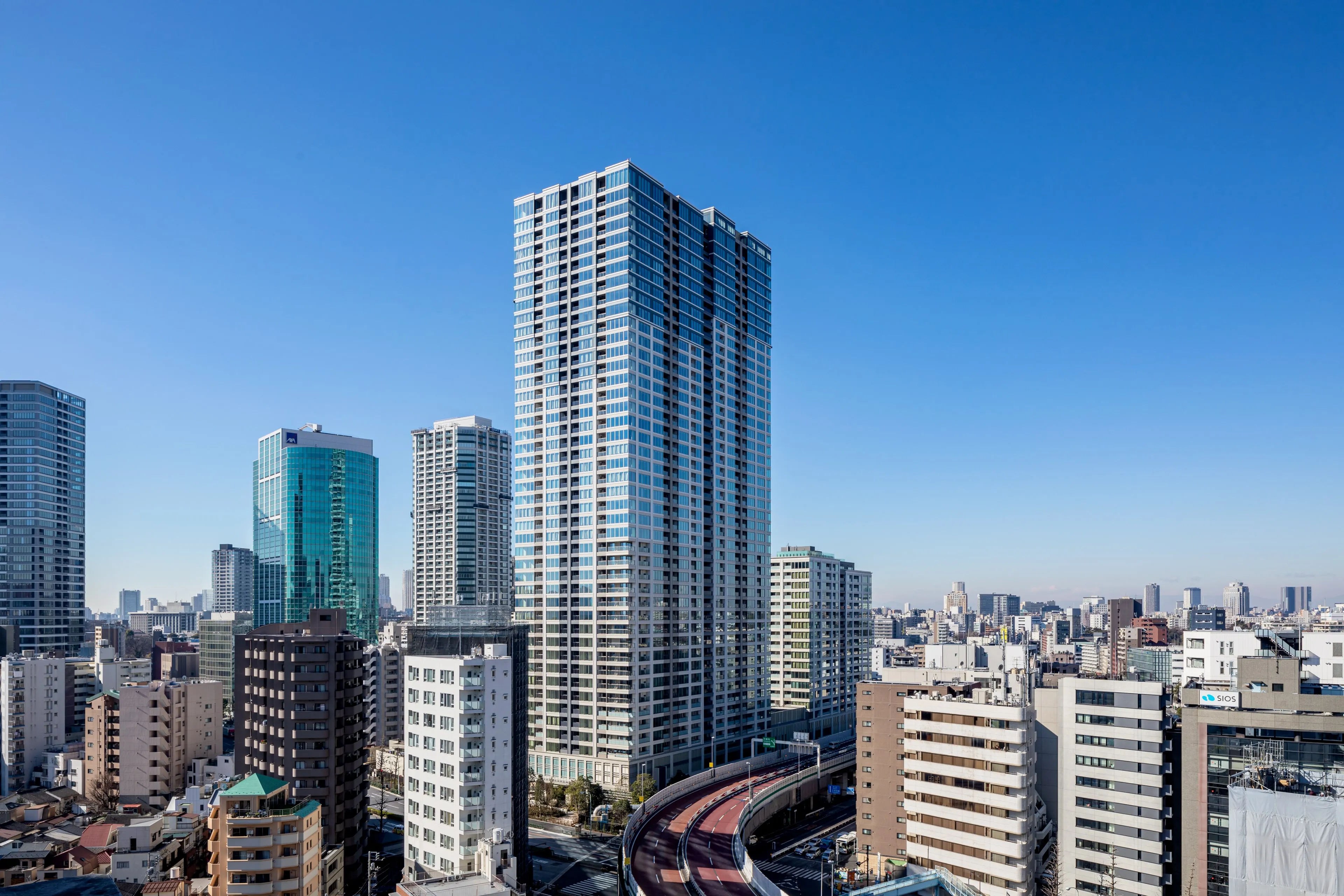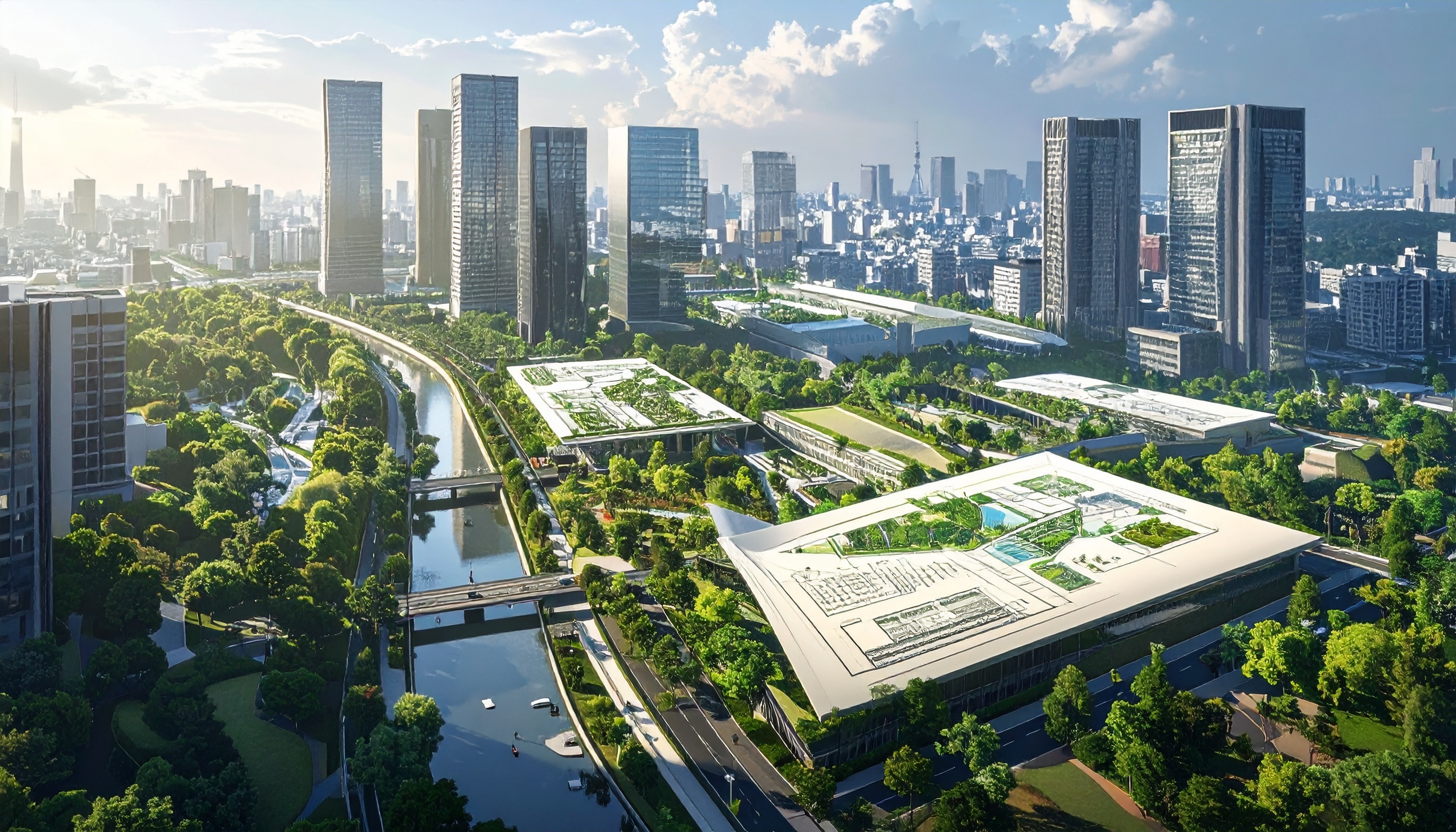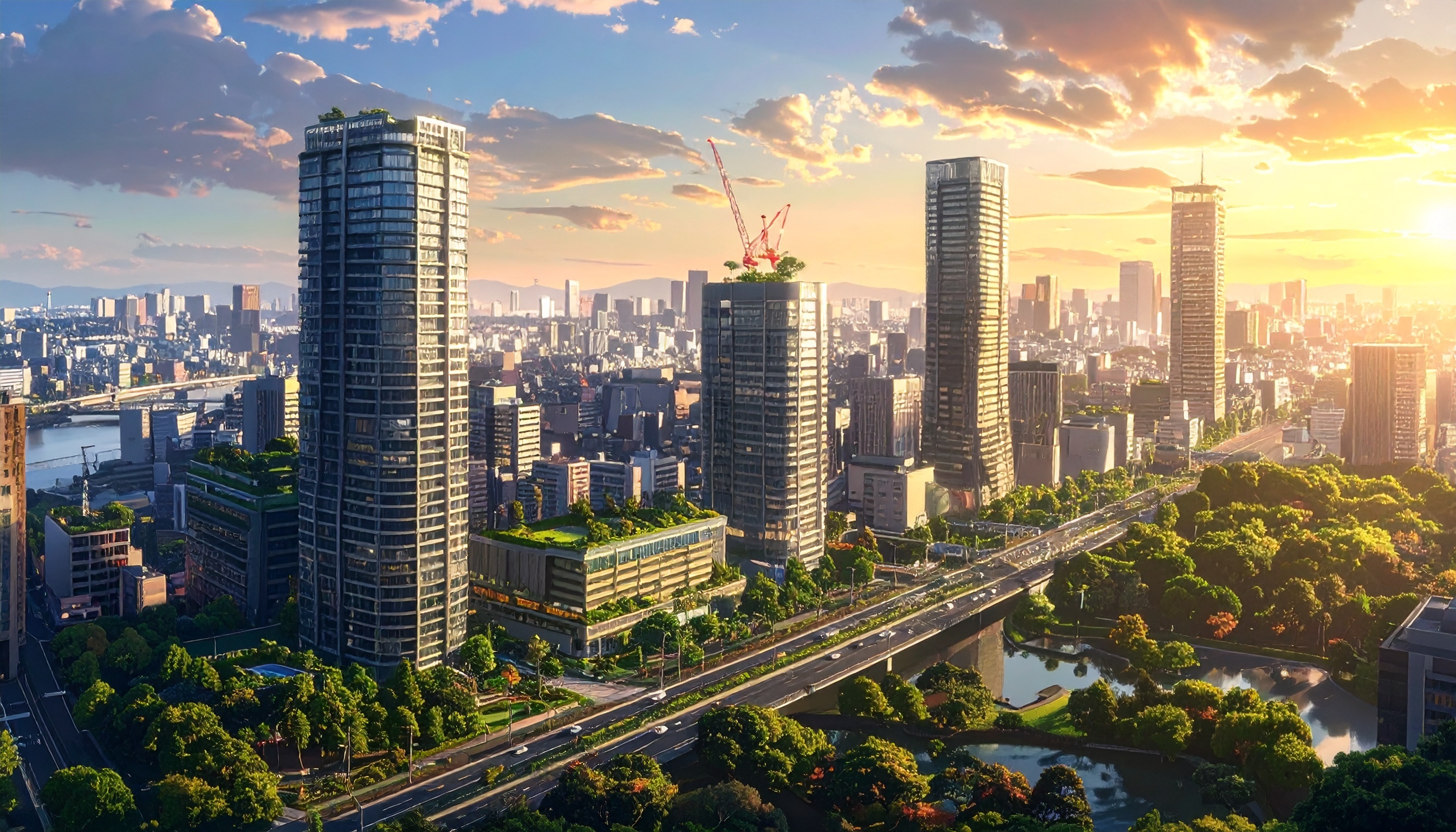
The "Koendori West District Class 1 Urban Redevelopment Project" in Udagawacho and Nannan 1-chome, Shibuya Ward, is moving into full swing. This project, with 33 floors above ground, approximately 140m in height, and a total project cost of approximately ¥88.2 billion, received approval for the association's establishment from Tokyo Metropolitan Government in September 2025, with plans targeting construction start in fiscal year 2027 and completion in fiscal year 2032. What sets it apart is not just its scale, but also the nationally rare approach of transferring the "air rights" of Nannan Elementary School to the private redevelopment building, with private funds covering the cost to rebuild a public elementary school. We take a detailed look at how this uniquely distinctive project amid the Shibuya Station redevelopment rush will impact the area's real estate values.
Project Overview and BackgroundThe Koendori West District is located in Udagawacho and Nannan 1-chome within Shibuya Ward, on the south side of the ward office, facing Shibuya Koendori. The targets for redevelopment are two buildings: the high-rise apartment complex "Shibuya Holmes" (14 stories), completed in 1975, and the Shibuya Ward-managed Nannan Elementary School (3 stories), completed in 1964. Both have passed the 50-year mark, making their replacement urgent from the perspective of seismic resistance and disaster prevention.
Shibuya Ward made an urban planning decision in January 2024 (Reiwa 6, Notice No. 4), followed by approximately one and a half years of preparation for establishing the association. On September 22, 2025, Tokyo Metropolitan Government formally approved the establishment of the "Koendori West District Urban Redevelopment Association," transitioning the project from preparatory stages to the full advancement phase. Tokyu Fudosan (also a participating association member) and Shimizu Corporation are named as project cooperators, and the participation of both companies with extensive development track records in the Shibuya area enhances the project's credibility.
Project Scale and Use Composition
The newly constructed redevelopment building will be 33 floors above ground and 4 underground, reaching approximately 140m in height. It secures a total floor area of approximately 70,000 m², incorporating a complex combination of residences, offices, shops, service facilities, multipurpose spaces, and parking. The creation of a large-scale mixed-use building of this scope within walking distance of Shibuya Station is expected to significantly improve the walkability and convenience of the entire area.
Plans also include a plaza (approximately 1,160 m²) to be developed through the abolition of the former ward road and site consolidation. Facilities to accommodate those unable to return home and disaster preparedness warehouses are also planned, meaning it will serve not only commercial and residential functions but also as a disaster prevention base for the Shibuya area. As Shibuya Station is a terminal where many commuters and students concentrate, such development of disaster prevention infrastructure can be said to underpin the sense of security throughout the community.
The Nationally Noted "Air Rights Utilization" Scheme
The biggest feature of this project is the scheme to transfer the "air rights (unused floor area ratio)" of the Shibuya Ward-managed Nannan Elementary School to the private redevelopment building. To understand this mechanism, it is first necessary to grasp the concept of "air rights."
Buildings have an upper limit on floor area ratio set by urban planning. When the floor area ratio actually used by a building falls significantly below that upper limit, the unused floor area ratio portion can be transferred and sold as "air rights" to an adjacent site. Nannan Elementary School has approximately 91% of its floor area ratio unused, and by transferring this surplus floor area ratio to the current redevelopment building, a high-floor-area ratio tower building that could not otherwise be realized becomes possible.
In exchange, the private sector (redevelopment association and Tokyu Fudosan) bears the cost of rebuilding Nannan Elementary School (approximately 21,830 m² total floor area). A real estate appraisal estimate values the air rights at approximately ¥10 billion, with a significant discrepancy from the ¥5.2 billion disclosed by Shibuya Ward, which has also generated debate in the ward assembly. In any case, a scheme where the private sector effectively bears the cost of rebuilding a public school is rare even nationally and is attracting wide attention as a public-private partnership model for future urban redevelopment.
The background behind this scheme taking shape lies in the reality faced by local governments that find it financially difficult to independently rebuild aging public facilities. The result is a confluence of needs from both private businesses that gain a clear incentive in the form of floor area ratio, and local governments that can renovate public facilities while keeping fiscal burdens in check. This scheme, which aligns the interests of the public and private sectors while achieving both urban infrastructure development and profitability, can be said to offer local governments under continued fiscal constraints one compelling solution.
Project Schedule and Current Progress
This project is progressing on the following schedule.
| Timing | Content |
|---|---|
| January 2024 | Shibuya Ward urban planning decision (Reiwa 6, Notice No. 4) |
| September 22, 2025 | Tokyo Metropolitan Government approval for association establishment |
| Fiscal Year 2026 (planned) | Rights conversion plan approval |
| Fiscal Year 2027 (planned) | Construction start |
| Fiscal Year 2032 (planned) | Completion |
Following the association establishment approval in September 2025, preparations are now underway for the rights conversion plan approval in fiscal year 2026. Rights conversion is the procedure to transfer rights in the existing land and buildings to rights in the new redevelopment building. Once this is completed, compensation details for existing residents and rights holders will be finalized. While it is a long-term project with approximately 2 years until construction and approximately 7 years until completion, the schedule is progressing steadily.
When Will "Shibuya Holmes" Be Rebuilt? The Background and the Truth Behind the "Shelved" Rumors
"Shibuya Holmes," the main target of this redevelopment, is a 14-story condominium building completed in 1975 (Showa 50). Discussion of rebuilding it has been underway for a long time: according to materials published by Shibuya Ward, the "Koendori West District Urban Redevelopment Preparatory Association" was established in Heisei 29 (2017), and it took roughly 8 years from there to reach the formal association establishment approval in September 2025. Accordingly, construction (demolition and building work) on the current Shibuya Holmes is actually scheduled to start in fiscal year 2027, as shown in the table above, meaning this is a plan that has already gone through roughly 8 years of preparation.
Opposing voices also arose during the deliberation process. On December 5, Reiwa 5 (2023), flyers claiming that "Shibuya Ward is pushing forward an illegal plan" were distributed around the ward office. In response, Shibuya Ward published an official statement explaining that the project met the requirements under urban planning law (including Article 3, Item 3 of the Urban Redevelopment Act) and that the preparatory association's membership rate had reached approximately 96% by the end of November of that year, characterizing the claims as "based on misunderstanding." In fact, the plan proceeded through its procedures without being shelved, and Tokyo Metropolitan Government formally approved the establishment of the association on September 22, 2025. Searches such as "Shibuya Holmes shelved" can still be found, but as of the time of this article's writing (September 2026), the project is proceeding toward the rights conversion plan approval planned for fiscal year 2026.
Separately, another project called the "Jinnan 1-chome District Class 1 Urban Redevelopment Project" is also underway on the north side of Shibuya Parco. According to Shibuya Ward's urban planning materials, this is an independent redevelopment project distinct from the Koendori West District (the Shibuya Holmes and Nannan Elementary School rebuild) covered in this article. Because the names are similar, please note that the two are easily confused in searches.
Impact on Real Estate Values in the Shibuya Koendori Area
Shibuya Ward recorded an average price per tsubo of ¥17.98 million in the 2026 published land prices (up 12.32% year-on-year), showing the 3rd highest growth rate nationwide. In particular, Sakuragaoka-cho in Shibuya Ward recorded the No. 1 growth rate in published land prices in Tokyo (+28.99%), and real estate values continue to rise throughout the Shibuya area. Udagawacho and Nannan 1-chome, where the Koendori West District is located, are also areas that benefit from this upward trend.
The impact of redevelopment on real estate values is multifaceted. First, there is the enhancement of the area's attractiveness through the creation of a high-rise complex facility. The progression of mixed-use commercial, office, and residential development creates upward pressure on surrounding rent levels and transaction prices. Second, there is the improvement of safety through the development of disaster prevention infrastructure. Highly earthquake-resistant buildings and facilities for those unable to return home enhance the resilience of the entire area and raise its evaluation as a long-term holding asset. Third, the enhancement of the educational environment through the rebuilding of Nannan Elementary School becomes a factor attracting demand from families with children.
On the other hand, during the approximately 5 years from construction start to completion, noise, vibration, and traffic restrictions from construction work may affect the surrounding environment. In the vicinity of Shibuya Station, the redevelopments of the Dogenzaka 2-chome South District and other areas are also progressing in parallel, and the simultaneous progress of multiple large-scale projects means a temporary decline in convenience is also anticipated. However, considering the benefits after completion, decisions made with a long-term perspective toward the area's asset value appreciation are required.
Actions Owners Should Take
In light of the Koendori West District redevelopment, the following actions are effective for owners considering or holding real estate in the Shibuya-Harajuku area.
First, identifying the timing of land and building acquisition within the area is important. As redevelopment becomes more concrete, prices tend to rise in advance. The period around the rights conversion plan approval in fiscal year 2026 will be one focal phase, so thorough information gathering is advisable.
Next, considering renovation and value-up of existing properties is worthwhile. As foot traffic to the redevelopment area increases, demand for rental and commercial properties in the vicinity will also rise. Rather than leaving aging properties as they are, updating them into attractive spaces for residents and users will allow one to ride the area's updraft.
Furthermore, checking and strengthening disaster prevention and seismic performance is essential. As evidenced by the emphasis on disaster prevention base functions in the Koendori West District redevelopment, high safety standards are demanded throughout the Shibuya area. Conducting seismic diagnosis of existing properties and considering renovation if necessary will lead to maintenance of long-term asset value.
My Thoughts
What deserves the most attention in this project is the "new possibility for public-private partnership" demonstrated by the scheme to utilize Nannan Elementary School's air rights. For local governments facing continued fiscal constraints, rebuilding aging public facilities has long been a challenge. This scheme is rational for both sides: private businesses gain the incentive of floor area ratio, in exchange for bearing the cost of developing public facilities. Debate remains over the disclosure of the air rights valuation, but I believe that debate itself is part of a process toward greater transparency, and it will serve as an important precedent for future cases.
Redevelopment in the Shibuya area is no longer simply an accumulation of individual projects, but is taking on the character of an urban strategy to redesign the entire area. As Dogenzaka, Shibuya 2-chome, Miyamasuzaka, and Koendori West are all updated in parallel, Shibuya is evolving into an internationally competitive city heading into the 2030s. The reason we at INA continue to focus on the Shibuya area from the perspective of real estate investment and asset management lies precisely in this dynamic change.
The importance of taking a long-term perspective in the real estate market goes without saying. I believe that, without being distracted by short-term inconvenience during the construction period or temporary price fluctuations, making decisions with an eye toward the area's shape after completion in 2032 is what generates essential value for asset holders.
Summary
Key points of the Koendori West District Class 1 Urban Redevelopment Project:
- Project scale: 33 floors above ground, approximately 140m high, total floor area approximately 70,000 m², total project cost approximately ¥88.2 billion
- Project entity: Koendori West District Urban Redevelopment Association (with participation by Tokyu Fudosan and Shimizu Corporation)
- Biggest feature: A nationally noted public-private partnership scheme where air rights of Nannan Elementary School (valued at approximately ¥10 billion) are transferred to the redevelopment building, with private businesses bearing the school rebuilding cost
- Schedule: Construction start in fiscal year 2027, completion in fiscal year 2032 (rights conversion plan approval planned for fiscal year 2026)
- Impact on real estate values: Shibuya Ward's published land prices rose +12.32% year-on-year, the 3rd highest increase nationwide. Rising area asset values are expected to continue even after the redevelopment is completed
Redevelopment in the Shibuya area is accelerating toward the 2030s, and the Koendori West District holds a particularly important position in this context as a public-private partnership model. We hope you will capture the area's changes from a long-term perspective and leverage them in your asset strategy.
How transaction prices have actually moved
To see how the redevelopment is showing up in property prices nearby, we checked the real estate transaction price data published by the Ministry of Land, Infrastructure, Transport and Tourism. Because resale condominium transactions at the district level in Jinnan number only a few a year, we have aggregated the figures for Shibuya Ward as a whole.
| Year | Transactions | Shibuya Ward price per m² (median) |
|---|---|---|
| 2023 | 1,174 | ¥1,314,000 |
| 2024 | 1,214 | ¥1,467,000 |
| 2025 | 1,393 | ¥1,575,000 |
| 2026 (Q1 only) | 257 | ¥1,629,000 |
From 2023 to 2025 the resale condominium price per m² in Shibuya Ward rose +19.9%. For reference, confined to the area around Shibuya Station (transactions in districts whose name contains “Shibuya”), the figure for the same period is +28.5%, from which a structure can be read in which the closer to the station, the higher the rate of increase.
Source: Compiled by INA&Associates Inc. from “Real Estate Transaction Price Information” (Ministry of Land, Infrastructure, Transport and Tourism), MLIT Real Estate Information Library (国土交通省 不動産情報ライブラリ, https://www.reinfolib.mlit.go.jp/). Based on data obtainable as of September 2026. The most recent quarter is provisional, because transactions are added later.
A note from the numbers (as of September 2026)
The Koendori area is a place that is hard to capture with figures from the residential market. At the district level in Jinnan only a few resale condominium transactions occur a year, and we were unable to aggregate a going rate. This is because commercial and business uses predominate and there is almost no stock of housing an individual can buy.
The value of this location should be measured not by residential transaction prices but by retail and office rents. That the technique of using air rights has been adopted at all shows that this is an area where the utility value of the land is extremely high.
Viewed as an investment target, the gap between the residential market for Shibuya Ward as a whole (+19.9% over three years) and the area around the station (+28.5% over the same period) is instructive. We believe the tendency for growth to be larger the closer to the station applies to Koendori as well.
How to judge it as an investor
- Looking for housing on Koendori is not realistic. If you are after an investment target, you need to widen your search to areas within Shibuya Ward where stock exists.
- If you are considering a retail property, what you judge on is rent and occupancy. Carrying a sense of the residential going rate straight over will mislead you.
- The rebuilding of Shibuya Holmes will be one of the few opportunities for housing supply in the area. It is worth following.
Frequently Asked Questions (FAQ)
Q. When is completion planned?
A. Completion is planned for fiscal year 2032. Construction is set to begin in fiscal year 2027, with approximately 5 years of construction work before completion. The rights conversion plan approval planned for fiscal year 2026 will be one important milestone.
Q. What will happen to current residents (Shibuya Holmes residents)?
A. In a Class 1 Urban Redevelopment Project, existing rights holders can transfer their rights in previous land and buildings to units and floors in the new redevelopment building based on the rights conversion plan. Compensation details will be finalized through the rights conversion plan approval (planned for fiscal year 2026). We recommend consulting with the association or specialists for details.
Q. What will happen to Nannan Elementary School?
A. Nannan Elementary School is planned to be redeveloped within the current redevelopment building with a total floor area of approximately 21,830 m². As compensation for the transfer of air rights, private businesses will bear the rebuilding costs, and it will continue to operate as a Shibuya Ward public elementary school. The aging facility will be renovated, and improvements to the educational environment are expected.
Q. Is there an impact on surrounding real estate prices?
A. Shibuya Ward's 2026 published land prices recorded a rise of +12.32% year-on-year, the 3rd highest in Japan, with redevelopment being one factor in the price increases. After completion of the Koendori West District, positive impacts on rents and transaction prices of surrounding properties are expected from improvements in the area's convenience, disaster prevention capability, and educational environment. During the construction period, decisions incorporating consideration of temporary impacts are also necessary.
Related Articles
References
- Shibuya Ward "Koendori West District Class 1 Urban Redevelopment Project" (Reiwa 6, January 12, Notice No. 4, Urban Planning Decision)
- Tokyo Metropolitan Bureau of Urban Development "Koendori West District Class 1 Urban Redevelopment Project"
- Tokyo Metropolitan Government "Approval for Establishment of Koendori West District Urban Redevelopment Association" (September 22, 2025)