What is Ichikawa Station South Exit Redevelopment? I-Link City Overview and Investment Perspective
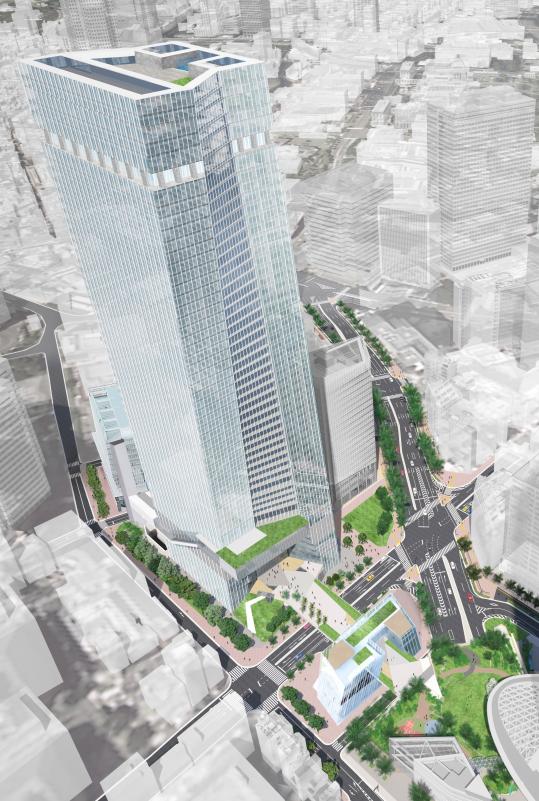
The Ichikawa Station South Exit Area Type 1 Urban Redevelopment Project is a redevelopment project that updates the station block at the south exit of JR Ichikawa Station and integrates residential, commercial, business, public facilities, station squares, and roads into I-Link City. This is an example of a major change in the urban function of the south exit of Ichikawa Station, and it continues to serve as a reference when considering what kind of impact station redevelopment will have on the real estate market.
This article is based on information published as of March 2026.
This project is not a plan that is about to start, but a redevelopment that is already in place. That is why it is important for rental owners and investors to read not the expected value before completion, but what kind of station front value remains after completion, and what they are looking for in terms of the competitiveness of existing properties.
In this article, we will summarize the plan for the Ichikawa Station South Exit Area Urban Redevelopment Project, the facility configuration of I-Link City, the development of the station plaza and public facilities, and suggestions for the real estate market, based on materials published by Ichikawa City.
Key points of this article
- The Ichikawa Station South Exit Redevelopment is a completed redevelopment that integrates residential, commercial, business, and public facilities in an area in front of the station that is approximately 2.6 ha.
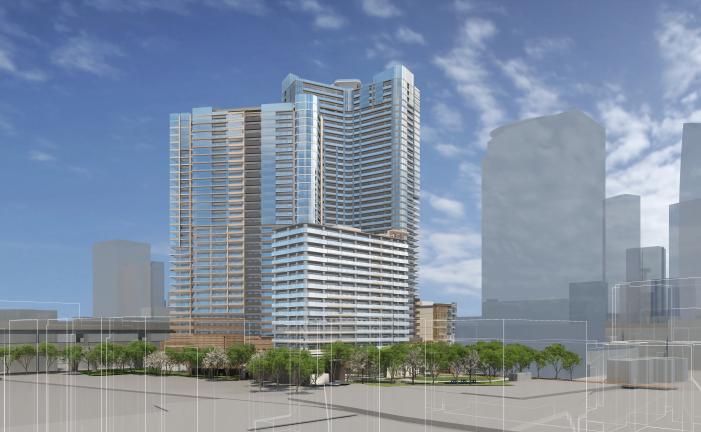
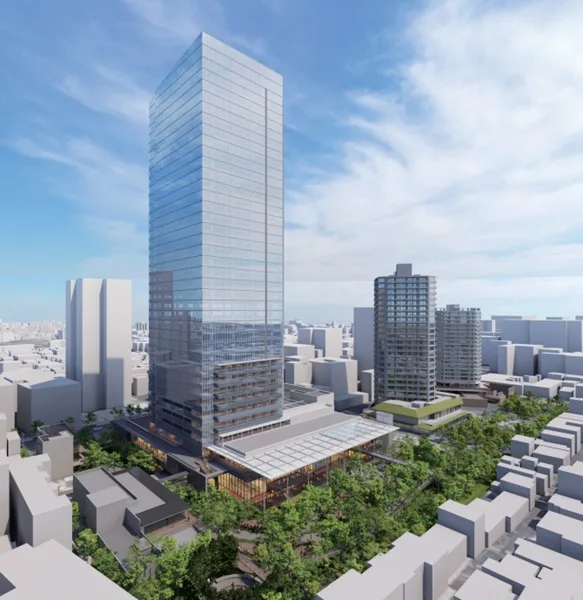
- A total of approximately 970 urban housing units were provided, with Block A having 45 floors above ground and approximately 570 units, and Block B having 37 floors above ground and approximately 400 units.
- Owners need to design the solicitation value by including not only ``near the station'' but also the station plaza, deck, commercial and public facilities, and the view of the city.
What is the Ichikawa Station South Exit Area Urban Redevelopment Project?
The Ichikawa Station South Exit Area Type 1 Urban Redevelopment Project is an urban redevelopment project targeting the station block adjacent to the south exit of JR Ichikawa Station. Ichikawa City pursued this project with the aim of supplying quality urban housing, improving station plazas and roads, rational and healthy advanced use of land, and renewing urban functions.
The main objectives of Ichikawa City are to create a landscape suitable for the station, to develop public facilities such as the station plaza and urban planning roads, to consolidate and utilize land, to improve disaster prevention through fireproofing, to revitalize commerce, and to provide urban housing. It is clear that the plan was not only to build high-rise residential buildings in front of the station, but also to renew the urban infrastructure itself.
Looking at the history of the project, it started with a survey in 1982, followed by a city plan decision in 1993, a business plan decision in 2002, a rights conversion plan approved in 2003, and a designated builder decided in 2005. Block A was constructed by Mitsui Fudosan, Nomura Real Estate Development, and Shimizu Corporation, and Block B was constructed by Taisei Corporation and Okumura Gumi, a designated builder consortium.
As you can see from this timeline, station front redevelopment is not a project that will produce results in a short period of time. This is a project that will change the structure of the city over a long period of time, involving landowner coordination, urban planning, rights conversion, architecture, and public facility development.
I-Link City plan overview
The redevelopment of the south exit of Ichikawa Station aimed to become a station-front exchange city under the name I-Link City. In Ichikawa City's town concept, the letter "I" means I, Ichikawa City, and I love you, and the word "Link" represents the idea of connecting people, the city, nature, history, culture, and safety.
The outline of the plan is as follows.
| Item | A block | B block | Total |
|---|---|---|---|
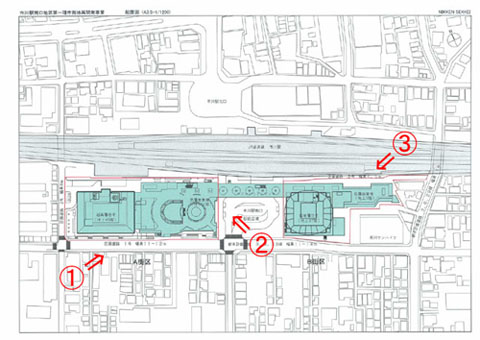
| Enforcement area area | Approx. 2.6ha | ||
| Station Square Transportation Plaza | Approx. 4,220㎡ | ||
| Site area | Approx. 10,440㎡ | Approx. 6,170㎡ | Approx. 16,610㎡ |
| Building area | Approx. 7,000㎡ | Approx. 4,460㎡ | Approx. 11,460㎡ |
| Total floor area | Approx. 86,500㎡ | Approx. 55,210㎡ | Approx. 141,710㎡ |
| Size | 2 floors underground, 45 floors above ground | 2 floors underground, 37 floors above ground | |
| Height | Approx. 160m | Approx. 130m | |
| Main uses | Commercial/Business/Residential | Commercial/Business/Residential | |
| Number of residential units | Approx. 570 units | Approx. 400 units | Approx. 970 units |
| Number of parking spaces | Approx. 410 units | Approx. 190 units | Approx. 600 units |
| Parking spaces Number of wheels | Approx. 2,100 units | Approx. 700 units | Approx. 2,800 units |
Looking only at the scale, the supply of large-scale housing with approximately 970 units stands out. However, the essence of the Ichikawa Station south exit redevelopment is not just about housing supply. It combines a station square, a pedestrian deck, commercial stores, public facilities, and a facility for the elderly, all of which serve as a place to live, work, shop, and socialize in front of the station.
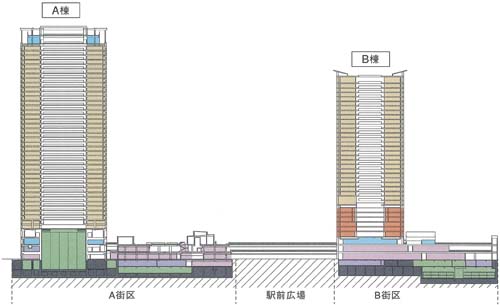
Public facility development and station plaza
The station plaza and road improvements were major pillars of the redevelopment of Ichikawa Station's south exit. Ichikawa City documents indicate that the station square traffic plaza is approximately 4,220m2, and that urban planning roads, subdivision roads, and pedestrian decks are to be developed.
The station square is not just a bus/taxi stand. It is a node that receives traffic such as trains, buses, walking, and bicycles, and at the same time is a starting point for people to gather, meet, and flow into the city. In I-Link City's town concept, the station plaza is positioned as a community space where people can meet and gather.
This point is important when looking at the real estate market. Even if the number of minutes walk from the station is the same, the ease of living will vary depending on the presence or absence of plazas, pedestrian decks, commercial facilities, and public facilities in front of the station. The easier it is to find the station, the easier it is to walk around, the brighter it is, and the more destinations there are, the easier it will be to promote nearby properties.
The meaning left behind on the real estate market at the south exit of Ichikawa Station
Ichikawa Station is a station with easy access to the city center on the JR Sobu Line. As the gateway to Ichikawa City, which is close to Tokyo and borders the metropolitan area across the Edogawa River, there is a strong base of housing demand. With the addition of station redevelopment, the South Exit's appearance has changed from a ``residential area near the station'' to ``a living hub with urban functions in front of the station.''
The supply of approximately 970 urban housing units has created a major comparison point in the surrounding market. When new blocks with high-rise residential buildings, commercial facilities, public facilities, and station plazas are built in front of stations, existing rental properties will no longer be selected simply because they are ``close to the station.'' The cleanliness, management status, facilities, photos, common areas, and ability to explain the surrounding life are compared.
On the other hand, redevelopment in front of the station is also a tailwind for existing properties. By raising awareness of the town, increasing convenience in front of the station, and attracting commercial and public services, it will become easier to appeal to residents in the entire surrounding area. What is important is whether that value can be reflected in the recruitment letter and guide for viewing each property.
When making investment decisions for urban redevelopment, as summarized in the Tokyo Redevelopment Area Major Projects Survey Report, it is necessary to look at not only the scale of the completed building, but also transportation, public space, commerce, and management and operation. The south exit of Ichikawa Station is a concrete example where you can learn about this perspective.
Also, the structure in which station redevelopment affects existing rentals is a theme that is easy to compare with Koiwa Station redevelopment article. While there is competition in the supply of new construction, there is a commonality in that the recognition and convenience of the town also spills over into existing properties.
Practical points that owners should keep in mind
Firstly, the property value after station redevelopment is not determined solely by the number of minutes walk from the station. When station plazas and decks are developed, such as at the south exit of Ichikawa Station, the ease of walking routes, shopping routes, sense of security at night, and ease of movement on rainy days will be evaluated. Recruitment materials must carefully explain the route from the station to the property.
Secondly, it is necessary to improve the impression of common areas in existing properties. As large-scale redevelopments make the entrances to the city more beautiful, the differences in entrances, hallways, lighting, garbage storage, and bicycle parking spaces become more noticeable in older properties. Even if large-scale renovations are difficult, improvements can be made by cleaning, posting, lighting, and updating photos.
Thirdly, convert commercial and public facilities into offering value. The redevelopment of Ichikawa Station's south exit included commercial stores, elderly care facilities, and public utility facilities. Rather than simply writing that nearby facilities are convenient, it would be better to explain how the information connects to daily shopping, government services, family life, and a sense of security for seniors.
Fourth, it is important to have a management system that takes advantage of human resources. Ultimately, it is the on-site management and intermediary staff who convey the value of the town to tenants. If you do not understand the background of redevelopment and the facility configuration, you will not be able to utilize the local value in your recruitment activities. It is necessary for the management company and owner to share the same information and translate it into the strengths of the property.
How to use it for future investment decisions
Although the Ichikawa Station south exit redevelopment project has been completed, it is still useful as a teaching material for investment decisions. When evaluating ongoing redevelopment, you should look not just at the finished version, but also at the balance of roads, plazas, pedestrian spaces, commerce, public facilities, and housing provision. When public space and urban housing are developed as one, like the south exit of Ichikawa Station, the reputation of the city will change over the long term.
On the other hand, the level of competition will also increase in areas after redevelopment. High-rise residential buildings in front of stations and well-organized blocks are the criteria, so existing properties are weak just because they are ``selected because they are cheap.'' It is necessary to have management quality, equipment, photos, recruitment information, and post-movement support in place, and to link the convenience of the city with the property value.
For investors, when purchasing property in redeveloped areas, expectations may already be factored into the price. Please take a calm look at the room for rent increases, management and repair costs, building age, exit liquidity, and surrounding competition. Redevelopment is attractive, but without an operating plan to justify the acquisition price, it is a weak investment.
INA's opinion
The Ichikawa Station South Exit Urban Redevelopment Project is a very easy-to-understand example when considering the impact of station redevelopment on the real estate market. The combination of approximately 970 housing units, a station plaza, commercial and public facilities, and a pedestrian deck has significantly changed the impression of the station and the convenience of living.
However, it is important for owners not to just ride on the fruits of redevelopment. The better the town is, the better the quality of property management will be. Building on the premise of trust and honesty, maintaining the condition of buildings, updating recruitment information, and creating a system that allows on-site human resources to explain the value of the town will lead to long-term asset protection.
Redevelopment increases the value of a town, but it is the day-to-day operations that convert that value into property income. The case of Ichikawa Station South Exit teaches us that when looking at redevelopment in front of a station, we should not only look at the height of the building and the number of units, but also the public space and management.
Frequently Asked Questions
Q1. Has the Ichikawa Station south exit area urban redevelopment project been completed?
Yes. Ichikawa Station south exit redevelopment is a redevelopment project that has already been established as I-Link City. The article treats this as a completed station redevelopment case, rather than an ongoing plan.
Q2. How many housing units will be included in the Ichikawa Station south exit redevelopment?
According to Ichikawa City's plan, there will be approximately 570 units in Block A and 400 units in Block B, for a total of approximately 970 units. Block A is a high-rise building with 45 floors above ground and Block B with 37 floors above ground.
Q3. Does redevelopment also have an effect on existing rental properties?
Yes. Station plazas, commercial facilities, public facilities, pedestrian decks, etc. will increase the convenience of the city, making it easier to use for recruiting properties in the area. However, as comparisons with new station-front housing will become stronger, improvements in management quality and facilities are needed.
Q4. What should I look for when making investment decisions?
In redeveloped areas, check not only the distance from the station, but also the traffic flow in front of the station, proximity to commercial and public facilities, competing properties, acquisition price, repair plans, and exit liquidity. It is dangerous to make purchasing decisions based solely on the popularity of redevelopment.
Reference materials
- Ichikawa City “Ichikawa Station South Exit Area Urban Redevelopment Project”: https://www.city.ichikawa.lg.jp/page/5181.html
- Ichikawa City “Area Map and Plan Summary of Ichikawa Station South Exit Redevelopment Project”: https://www.city.ichikawa.lg.jp/page/4051.html
- Ichikawa City “Ichikawa Station South Exit Redevelopment Building Facility Overview”: https://www.city.ichikawa.lg.jp/page/4006.html
- Ichikawa City “Ichikawa Station South Exit Redevelopment Project Town Concept I-Link City”: https://www.city.ichikawa.lg.jp/uploaded/attachment/17938.pdf