The area around Hikifune Station is about to change dramatically, driven by two forces moving in tandem: a public-sector plan and a private-sector redevelopment project. In September 2025 (Reiwa 7), Sumida Ward formalized its "Tobu Hikifune Station Area Community Development Policy," and that policy now dovetails with a Type 1 Urban Redevelopment Project being advanced by the Urban Renaissance Agency (UR). By the end of 2032, the view from the station is expected to look completely different. For any owner holding land or a building in this area, now is exactly the moment to gather information and start making decisions.
What Is Actually Happening Around Hikifune Station Right Now?
The area where Tobu Hikifune Station and Keisei Hikifune Station sit — two separate railway lines whose stations are within walking distance of each other — occupies an unusual position on the east side of Tokyo. It also has good access to nearby hub stations such as Oshiage (right by Tokyo Skytree) and Kinshicho, making it something like a "transit junction of Tokyo's old downtown," or shitamachi.
Even so, the Hikifune area has, until now, been left out of large-scale redevelopment. Parking lots and vacant lots dot the area around the station, and aging wooden buildings remain standing. The neighborhood clearly has energy — local festivals and events show that — but the full potential of the space in front of the station has never really been unlocked.
That is finally starting to change. Back in 2017 (Heisei 29), the Tokyo Metropolitan Government's "Grand Design for Urban Development" designated the area around Tobu Hikifune Station as one of the wide-area hub locations within the "Higashi-Sumida, Adachi, and Katsushika area." Then, in March 2021 (Reiwa 3), the Tokyo Metropolitan Urban Master Plan designated it as a "redevelopment promotion district," and momentum for a ward-level community development plan had been building ever since.
In September 2025 (Reiwa 7), Sumida Ward's Urban Development Department formally drew up and published the "Tobu Hikifune Station Area Community Development Policy" (source: Sumida Ward Urban Development Department, Elevated Structure and Community Development Promotion Division, Base Development Section, September 2025 (Reiwa 7)). It covers roughly 8.2 hectares to the west of Hikifunegawa-dori Avenue. With this policy now formally in place, the redevelopment project finally has its legal and planning foundation secured.
What Future Does the Community Development Policy Actually Describe?
The vision the new policy sets out is "a comfortable town, kind to everyone, where people can keep living with peace of mind." That may sound abstract at first, but the policy backs it up with three concrete pillar goals and development guidelines for four distinct zones — so the intended future of the area is, in fact, laid out quite specifically.
The three pillar goals are as follows. First, "a lively town shaped by the living environment people choose" — built through mixed-use facility development and a residential environment where people of many generations can keep living. Second, "a town resilient to disaster, comfortable to live in" — achieved by renewing and fireproofing aging buildings and strengthening disaster-preparedness. Third, "a town where everyone can move around safely" — realized through a barrier-free transportation network.
The development guidelines for the four zones matter just as much. In the Station Area Zone, the plan calls for guiding commercial facilities and bicycle parking into place and improving barrier-free access. In the Vibrancy and Exchange Zone (along Hikifunegawa-dori Avenue, on the west side of the station), mixed-use land development centered on the redevelopment project itself is the goal. In the Residential–Commercial Coexistence Zone (the western residential district), the policy calls for preserving a good living environment while maintaining continuity with the commercial district. And in the Roadside Vibrancy Zone (along Mito Kaido Road), the policy is aimed at improving disaster resilience through fireproofing and consolidating buildings.
Which zone your own land or building falls into determines what kind of future use is possible for it, and whether you would even be eligible to take part in any joint rebuilding scheme. It's worth confirming this directly with the ward's contact point (Base Development Section: 03-5608-6262).
What Does the Station-Front Redevelopment Project Actually Involve?
Alongside the community development policy, the "Tobu Hikifune Ekimae District Type 1 Urban Redevelopment Project" (project operator: the Urban Renaissance Agency, UR) has been moving forward rapidly and taking on real shape. The planned site covers roughly 1.7 hectares east of Tobu Hikifune Station, with a building of 14 above-ground floors, roughly 22,154 square meters of total floor space, and a height of about 45 meters. The first and second floors will hold shops and offices, while floors three through fourteen will contain roughly 240 residential units.
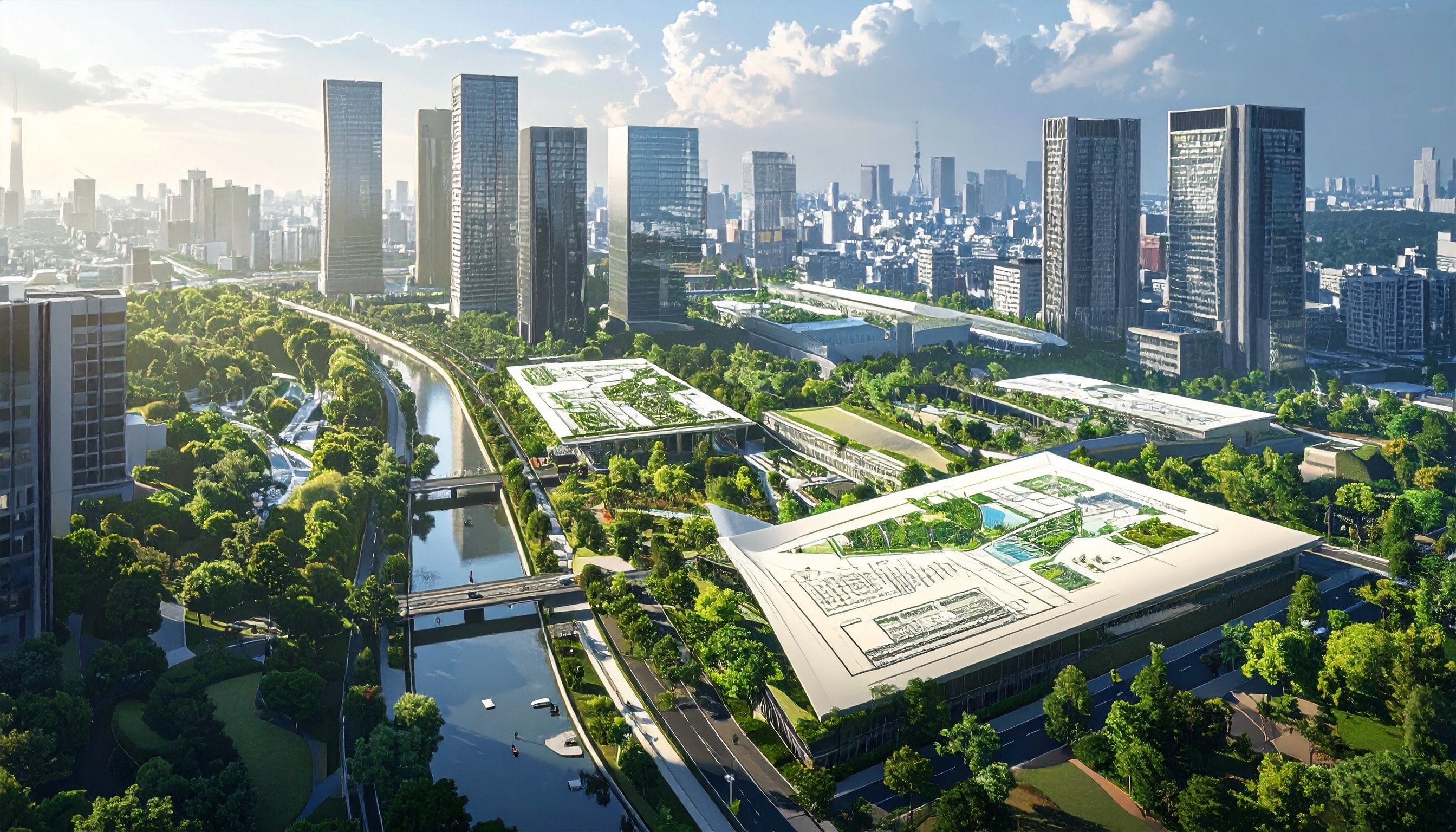
What deserves particular attention in this project is its use of a method known as "plaza-type redevelopment." Rather than simply making the building larger, the plan places a roughly 2,250-square-meter transportation plaza (built to barrier-free standards) and a roughly 4,000-square-meter city-planned park at the very core of the design. The park will double as a place to relax under normal circumstances and as an evacuation site during a disaster. This design philosophy — prioritizing open space and public value rather than simply stacking floor space as high as density limits allow — reflects a broader trend seen in recent Japanese redevelopment projects.
On March 25, 2026, the Urban Renaissance Agency selected Hankyu Hanshin Real Estate and the UD Consultants Group as its project partners and signed an agreement with them. Hankyu Hanshin Real Estate is a major developer based in the Kansai region, and its involvement here is notable in its own right, marking a serious push into eastern Tokyo by a Kansai-based developer (source: UR press release, December 19, 2025).
Here is how the schedule breaks down:
- Within fiscal year 2025: Sumida Ward finalizes the city planning decision
- Fiscal year 2026: the city planning decision for the (tentatively named) Tobu Hikifune Ekimae District Area Plan is expected
- Fiscal year 2027: project authorization from the national government is expected
- Fiscal year 2028: approval of the rights conversion plan is expected
- Fiscal year 2029: demolition of existing buildings and construction start
- End of fiscal year 2032: completion
Given that the rights conversion process is expected to take place across fiscal years 2027 and 2028, 2026 and 2027 represent the critical decision-making window for rights holders and property owners. It is important to prepare on the assumption that this timeline holds.
It's also worth noting that Sumida Ward has budgeted 3.283 billion yen for Hikifune-area-related spending in its fiscal year 2025 (Reiwa 7) budget, covering things like building surveys, basic facility design, and road improvements — a figure that shows just how seriously the ward government is taking this.
For a broader view of redevelopment trends across Tokyo as a whole, see also Major Redevelopment Projects Transforming Tokyo in 2025.
What Other Community Development Projects Are Happening Nearby at the Same Time?
While the redevelopment in front of Tobu Hikifune Station is drawing attention, several other projects are also moving forward in the surrounding area at the same time.
Brillia Hikifune (formally, the Higashi-Mukojima 2-chome 22 District Disaster Prevention Block Improvement Project) is a project led by Tokyo Tatemono and the Metropolitan Area Non-Combustible Building Corporation. A complex consisting of a 10-story, 99-unit condominium building and a neighborhood association hall broke ground in November 2024 and is targeting completion in 2027 (source: Tokyo Tatemono Co., Ltd. press release, November 20, 2024). By tackling the elimination of a dense, wood-built urban district and street improvements at the same time, this project feeds directly into improving the area's disaster resilience.
Around Keisei Hikifune Station too, area plans and urban redevelopment projects tied to a railway grade-separation project are already ahead of schedule. What has happened around Keisei Hikifune Station serves as a useful preview of the kind of shape the redevelopment in front of Tobu Hikifune Station is likely to eventually take.
Public infrastructure plans are spelled out clearly as well. Burying utility poles along Hikifunegawa-dori Avenue, widening Hikifune Takara-dori Street, converting the ward road connecting the east and west sides of the station into a pedestrian-only street, and building out a new north-side ticket gate — all of these public investments are moving forward in tandem with the redevelopment project. Together, they are expected to substantially improve how easily people can move around the whole area, which in turn should raise the value of land and buildings facing these streets.
The Oshiage and Mukojima Area Redevelopment Is a Separate Project from the Tobu Hikifune Ekimae Redevelopment
Some readers may have arrived at this article by searching for keywords like "Oshiage redevelopment" or "Oshiage redevelopment 2030," but that is a separate project from the Tobu Hikifune Ekimae District redevelopment (project operator: the Urban Renaissance Agency, UR) discussed in this article. Around Tokyo Skytree Town, Tobu Railway is using land it owns to plan a union-led (kumiai shiko) redevelopment together with other rights holders, covering Mukojima 1-chome to the west of the area and Oshiage 1-chome to the east. Tobu Railway is aiming to establish a preparatory association within fiscal year 2026, with city planning procedures expected to begin in fiscal year 2028 or later for the Mukojima 1-chome area and fiscal year 2029 or later for the Oshiage 1-chome area, and completion for both is expected sometime in the 2030s (source: Kensetsu Tsushin Shimbun Digital, "Around Skytree, Mukojima and Oshiage Area Redevelopment — Preparatory Association in FY2026 — Tobu Railway," November 25, 2025). Hikifune, Oshiage, and Mukojima are neighboring areas, but the project operators (UR and Tobu Railway), the business schemes, and the progress stages are each different, so please take care not to confuse the two.
What Do the Numbers Say About Land Prices Around Hikifune?
As the redevelopment plan has become more concrete, land prices in the area have also been trending upward. According to the fiscal year 2025 (Reiwa 7) official land price survey (source: Sumida Ward, "Official Land Price Survey"), the ward-wide average for Sumida Ward was 540,272 yen per square meter for residential land (up 9.84% year-on-year) and 1,038,384 yen per square meter for commercial land (up 11.27% year-on-year) — both marking a clear upward trend.
Narrowing in on the area right around Hikifune Station, the benchmark land price (around Higashi-Mukojima) stood at 657,000 yen per square meter as of 2024. The official land price for Hikifune Station averaged 608,000 yen per square meter, up 8.74% year-on-year as of 2024 — a somewhat slower pace than the ward-wide average, but a steady climb nonetheless. Looking at a five-year span, Sumida Ward as a whole has recorded cumulative gains of +17.7% for residential land and +21% for commercial land.
Here's something worth thinking through carefully. The current rise in land prices already partially reflects the market "pricing in" the redevelopment project. That means further price movement is likely as the project passes through project authorization (expected fiscal year 2027) and construction start (expected fiscal year 2029). Whether or not you currently hold the information that the project is still only at the "community development policy stage" can make a real difference to how sharp your judgment is.
For an investment-focused analysis of Tokyo as a whole, see also Report: Major Redevelopment Areas and Projects in Tokyo — Suitability for Investment and Living, and Future Potential.
What Should Landowners and Property Owners Do Right Now?
If you own land or a building in the Hikifune area, 2026 and 2027 are the critical period for gathering information and making decisions. Here is a summary of exactly what to check and what to prepare.
1. Confirm which zone your land or building falls into
Under the community development policy's four zones (Station Area, Vibrancy and Exchange, Residential–Commercial Coexistence, and Roadside Vibrancy), the future direction of development and which project schemes you're even eligible to join will differ. The first step is contacting Sumida Ward's Base Development Section (03-5608-6262) to find out exactly where your land stands.
2. Consider taking part in the redevelopment or a joint rebuild
Land and buildings falling within the "Vibrancy and Exchange Zone" may be eligible to take part in the Type 1 Urban Redevelopment Project. Before the rights conversion plan is approved (expected fiscal year 2028), you would need to formally express your intent to participate and go through rights coordination. It's worth starting to exchange information early with the project operator (UR) and the relevant ward department.
3. Look into rebuilding subsidies for aging or fireproofing renewal
For buildings in the "Roadside Vibrancy Zone" or the "Residential–Commercial Coexistence Zone," rebuilding using Sumida Ward's fireproofing support programs is one option worth considering. With the community development policy now formalized, it's possible the ward's subsidy programs will be expanded further. It makes sense to check the current subsidy terms and think through the timing of any rebuild.
4. Weighing whether to sell or keep renting
Looking at the current rental market, studio and one-bedroom (1K) units around Hikifune typically rent for 70,000–90,000 yen a month, while family-sized units run 110,000–140,000 yen. Once the redevelopment is complete in 2032 and roughly 240 new residential units, along with large-scale commercial and public facilities, come online, demand in the surrounding rental market is likely to shift as well. Whether the right move is to sell or to keep renting is a decision best made with this long-term timeline in mind.
INA's Perspective
What I find most interesting is exactly this moment — while the project is still only at the "community development policy stage." Once project authorization is secured and the rights conversion plan starts moving, the information asymmetry narrows, and more of the redevelopment's upside gets priced into the land. Right now, though, there is still a real gap in understanding between people who have carefully read through the actual government planning documents and people who haven't.
There's a second point worth noting too: the broader spread of redevelopment activity into eastern Tokyo. Central and sub-central areas such as Shibuya, Shinagawa, Shinjuku, and Yaesu used to be where all the redevelopment action was. That wave is now unmistakably reaching eastern Tokyo neighborhoods like Kinshicho, Koiwa, and Hikifune. As we've discussed in detail in How Will Rental Demand Change After the Koiwa Station Redevelopment?, redevelopment in eastern Tokyo is genuinely reshaping the map of real estate investment in Tokyo.
At INA, we also work with property owners in the Hikifune, Higashi-Mukojima, Yahiro, and Kyojima areas. If you're wrestling with concrete questions like "which zone does my land fall into," "how should I think about whether to participate in the redevelopment," or "would selling or continuing to rent out the property serve me better" — we'd be glad to talk it through with you.
Summary
- In September 2025 (Reiwa 7), Sumida Ward formalized its "Tobu Hikifune Station Area Community Development Policy," setting out development guidelines for four zones across roughly 8.2 hectares
- The Type 1 Urban Redevelopment Project led by the Urban Renaissance Agency (UR) is taking concrete shape, with Hankyu Hanshin Real Estate joining as a project partner in March 2026
- The redevelopment adopts an advanced "plaza-type redevelopment" approach, including a roughly 2,250-square-meter transportation plaza and a roughly 4,000-square-meter city-planned park
- The schedule calls for project authorization in fiscal year 2027, construction start in fiscal year 2029, and completion by the end of fiscal year 2032
- Sumida Ward's official land prices are trending upward, up 9–11% year-on-year ward-wide; the area around Hikifune Station is also holding firm, up 8.74% as of 2024
- 2026 and 2027 form the critical window for rights holders and owners to gather information and make decisions
- It's important to start early on confirming "which zone am I in" and considering a joint rebuild or fireproofing subsidy program
Frequently Asked Questions (FAQ)
Q1. What does it actually mean to "participate" in the redevelopment in front of Tobu Hikifune Station?
A. "Participating" in a Type 1 Urban Redevelopment Project mainly refers to the rights conversion process, in which your existing rights to land or a building within the project area are converted into floor space ("rights floor") in the new building once redevelopment is complete. Rather than a cash "sale," you instead receive sectional ownership or leasehold rights in the newly constructed building. This is a fundamentally different technique from another common Japanese urban planning tool that English-speaking readers sometimes confuse it with: land readjustment. Under land readjustment, landowners each give up a portion of their existing land to create roads, parks, and other public space, and in return receive a smaller, but better-serviced and more valuable, replotted parcel of land in roughly the same location — ownership stays horizontal, as land. A Type 1 Urban Redevelopment Project like this one works vertically instead: landowners' rights are consolidated into a single high-rise building, and what an owner ends up holding is floor space inside that building rather than a plot of ground. This particular project is being carried out by a public operator, UR, rather than by a landowner cooperative — many redevelopment projects elsewhere in Japan are instead carried out by an association of the landowners themselves (kumiai shiko), which changes who bears the financial risk and how decisions get made, but the underlying rights conversion mechanism is the same either way. Whether to participate is entirely up to the rights holder, but it's important to start discussions early with UR and the relevant ward department ahead of the approval of the rights conversion plan (expected fiscal year 2028).
Q2. Does this affect land and buildings located outside the redevelopment area?
A. They are not directly subject to rights conversion, but the indirect impact can still be significant. Once the redevelopment is complete, increased foot traffic and commercial demand in the area may push up rental demand and land prices in the surrounding neighborhood. In addition, for buildings located in the "Vibrancy and Exchange Zone" or the "Roadside Vibrancy Zone," the ward is also promoting voluntary renewal through joint rebuilding or fireproofing subsidy programs, so it's worth actively gathering information on these options.
Q3. Should I consider selling now, or is it better to wait?
A. There's no one-size-fits-all answer, but the decision essentially comes down to two things: how much of the redevelopment's upside is already priced into the land, and how you plan to use the proceeds if you do sell. Right now, the project is still only at the community development policy stage, and further price movement is likely as it passes through project authorization (expected fiscal year 2027), construction start (expected fiscal year 2029), and completion (fiscal year 2032). It's generally the case that market expectations tend to build up the most between construction start and completion, but the right call still depends heavily on the specifics of your own property. For a simulation tailored to your own situation, please feel free to consult with INA.
Q4. How is "plaza-type redevelopment" different from a conventional redevelopment project?
A. A conventional urban redevelopment project tends to focus mainly on maximizing floor-area ratio through a taller, larger building. A "plaza-type redevelopment," by contrast, is defined by placing open space — a roughly 2,250-square-meter transportation plaza and a roughly 4,000-square-meter city-planned park — at the very heart of the project. It places heavy emphasis on the park functioning as a disaster-response site, barrier-free plaza design, and creating a space where people naturally gather in front of the station, aiming for a balanced mix of housing, commerce, and public space. You could say it reflects a design philosophy aimed at making this old downtown area into "a town people want to keep living in."
Sources and References
- Sumida Ward, "Tobu Hikifune Station Area Community Development Policy" (formalized September 2025 / Reiwa 7)
- Tobu Hikifune Station Area Community Development Policy (Summary Version) (PDF)
- Tobu Hikifune Station Area Community Development Policy (Full Version) (PDF)
- Urban Renaissance Agency (UR) Press Release (December 19, 2025): Project Partner Selected for the Tobu Hikifune Ekimae District Project (PDF)
- Urban Renaissance Agency (UR), "Hikifune Ekimae District (East Core Hikifune)"
- Tokyo Tatemono Co., Ltd., "Higashi-Mukojima 2-chome 22 District Disaster Prevention Block Improvement Project — Brillia Hikifune Breaks Ground" (PR TIMES, November 2024)
- Sumida Ward, "Official Land Price Survey"