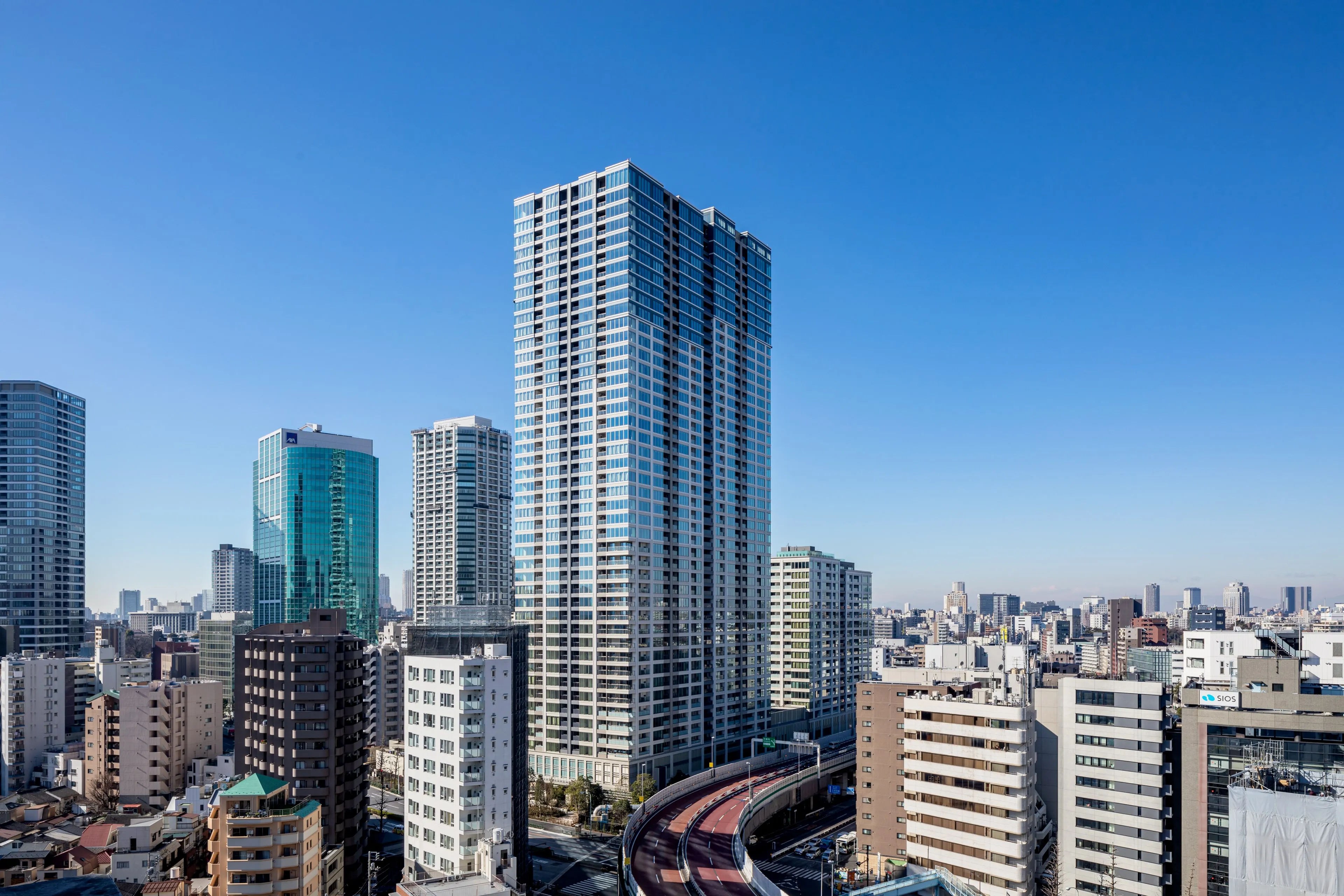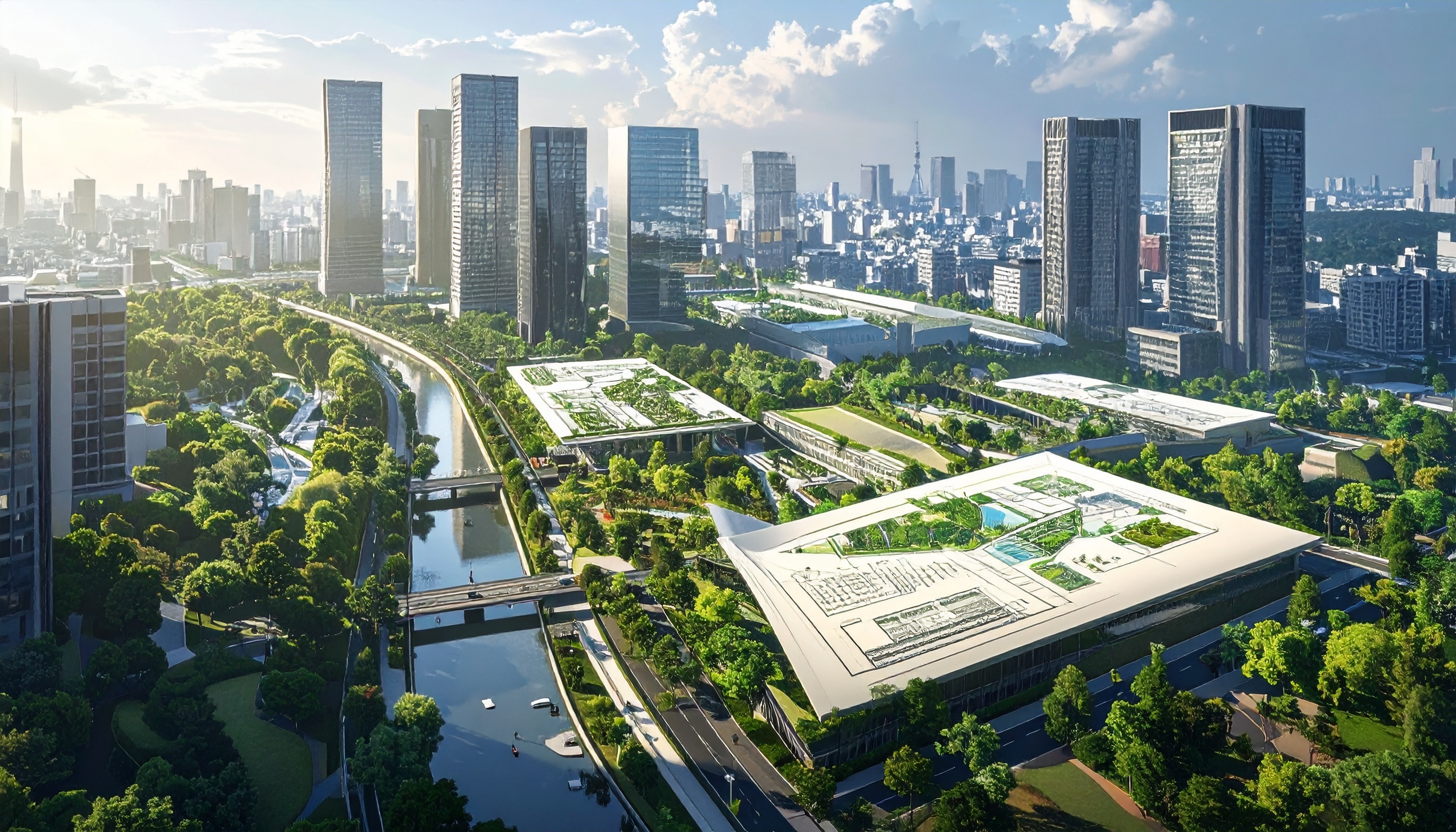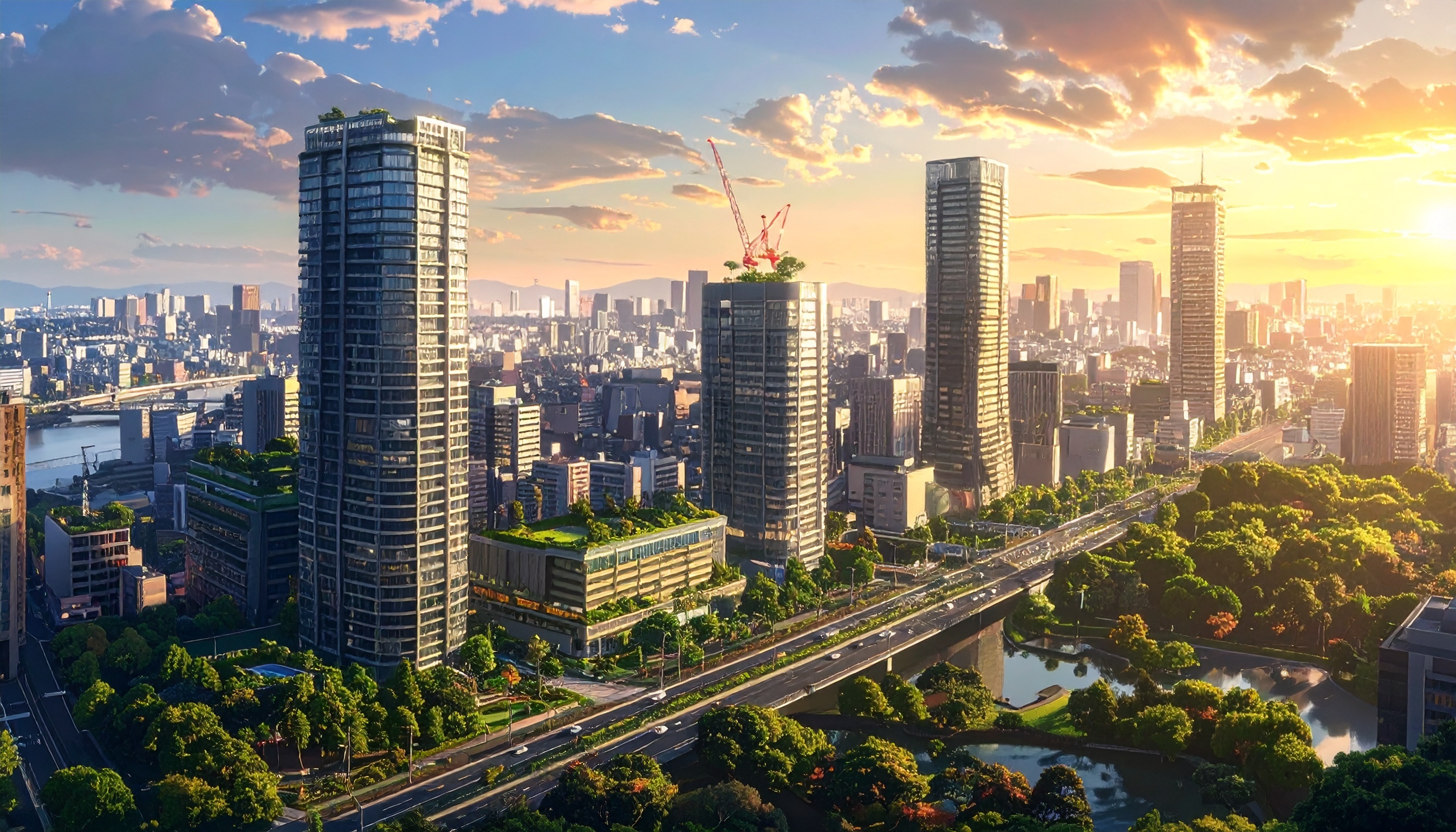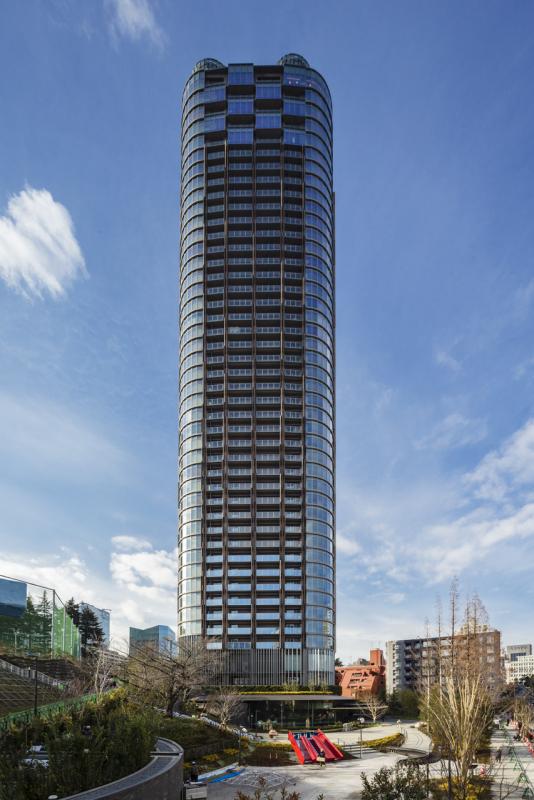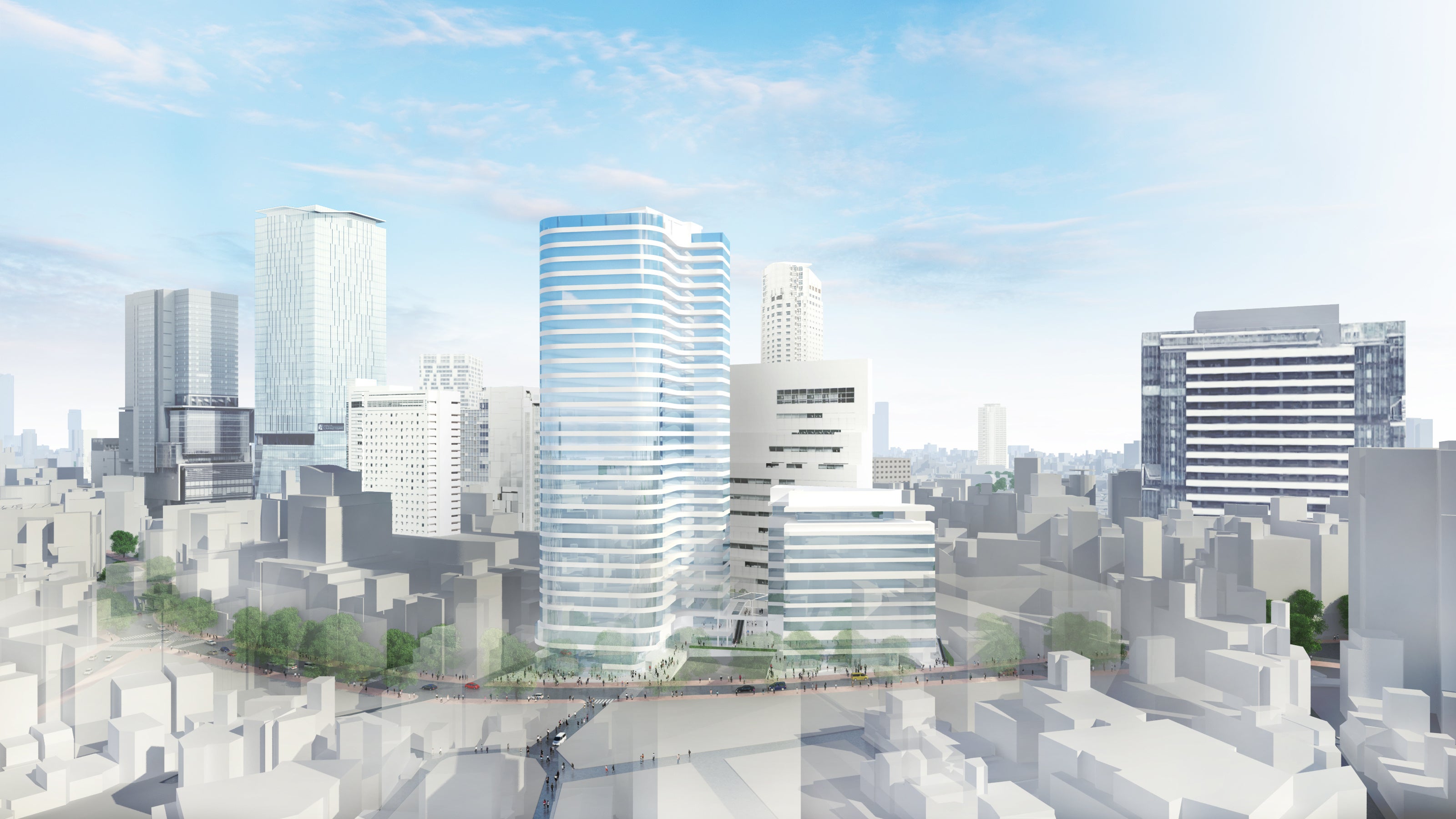
As of March 2026, underground structural work is advancing steadily along Dogenzaka in Shibuya, Tokyo. The Dogenzaka 2-chome South District Category I Urban Redevelopment Project (道玄坂二丁目南地区第一種市街地再開発事業) has about eleven months left until its scheduled completion at the end of February 2027. Japanese commentary sometimes nicknames the west side of Shibuya Station “Shibuya’s Upper West,” a positioning metaphor for a more adult face of the district — not a New York story, and not a copy of Manhattan’s Upper West Side. What is actually rising here is a uniquely Japanese statutory rebuild: a 30-story, roughly 155-meter mixed-use tower connected directly to Shibuya Mark City. At a total project cost of about ¥76.7 billion (approx. USD 511 million as of August 2026, at 1 USD ≈ 150 JPY), this is not the story of one building going up. It is an event that will recast the real estate market across the Shibuya area. With one year left before completion, this article sets out the full picture of the project and what it means for nearby investment.
Construction Status as of March 2026
Construction on the Dogenzaka 2-chome South District Category I Urban Redevelopment Project started on January 16, 2024. Before that, existing buildings were demolished from February through December 2023. Work is now under way on the steel frame, reinforcement, and formwork for basement levels 3, 2, and 1. Construction records taken as of February 2026 show that the underground structure has entered its main phase, and the project is expected to shift from there into above-ground framing.
A remaining schedule of about eleven months is extremely tight for a mixed-use high-rise of this height. Mitsubishi Estate Co., Ltd. (三菱地所) has joined as a participating association member, and Toda Corporation (戸田建設) is the general contractor, so the program demands unusually precise construction management. Design is by a joint venture of Mitsubishi Jisho Design (三菱地所設計) and Yamashita Sekkei (山下設計), with design supervision by Atsushi Kitagawara Architects (北川原温建築都市研究所). That lineup is not the roster of a purely yield-driven building. It is the roster of a landmark meant to function in Shibuya for a long time.
Project Overview: A Two-Building Mixed-Use Development
The Dogenzaka 2-chome South District Category I Urban Redevelopment Project sits at Dogenzaka 2-chome 10-ban and adjoining lots in Shibuya City, Tokyo (渋谷区道玄坂2丁目38番地) — a numbered city-block district on the slope west of Shibuya Station. The implementer is the Dogenzaka 2-chome South District Urban Redevelopment Association (道玄坂二丁目南地区市街地再開発組合), with Mitsubishi Estate Co., Ltd. participating as a member. The site area is about 6,720 square meters, total floor area about 87,100 square meters, and total project cost about ¥76.7 billion (approx. USD 511 million).
The buildings are organized as two towers: an office building and a hotel building. The office tower has 30 floors above ground, three basement levels, and two penthouse floors. It stands about 155 meters tall, and leasable area on each typical floor exceeds 1,500 square meters. It connects directly to Shibuya Mark City, so tenants can reach Shibuya Station without stepping into the rain. The hotel tower has 11 floors above ground, two basement levels, and one penthouse floor, and stands about 60 meters tall.
This is the point U.S. and U.K. investors most often misread. A Category I urban redevelopment project (第一種市街地再開発事業) is not a U.S. rezoning, and it is not a Business Improvement District (BID) rebuild. A rezoning changes what may be built; a BID pools assessments for streetscape, security, and marketing. Neither converts a dense patchwork of Japanese land rights into a single 155-meter tower. Under Japan’s Urban Renewal Act (都市再開発法), rights holders — landowners, leaseholders, and some tenants — form a redevelopment association. Their existing rights are converted, through kenri henkan (権利変換, rights conversion), into floor area and co-ownership in the new building. A developer such as Mitsubishi Estate joins as a participating association member (参加組合員), supplying capital and expertise rather than arriving as the sole owner of an assembled site. U.S. urban renewal often cashes owners out through purchase or eminent domain. Rights conversion keeps them in. That is why Japanese Type I projects spend years on consensus before a shovel hits the ground — and why, once rights are converted, title in the finished building is unusually clean.
Mitsubishi Estate and Toda Corporation's Lineup — A First Foray into Shibuya Station-Area Redevelopment
For Mitsubishi Estate Co., Ltd. (三菱地所), the participating association member, the Dogenzaka 2-chome South District Category I Urban Redevelopment Project carries particular significance. The company has built its track record mainly around the Marunouchi area, alongside projects elsewhere in Tokyo such as Yotsuya, Tamachi, and Toyosu, but this project marks its first participation in a large-scale redevelopment around Shibuya Station. Construction is being carried out by Toda Corporation (戸田建設), and the main construction work through to completion involves a team of multiple contractors, including Toda Corporation. It stands as a symbolic case of a major developer long rooted in Marunouchi moving into the Shibuya area.
Land Prices and Market Conditions in Shibuya’s Dogenzaka
To read what redevelopment will do, you first have to know where land prices already stand. According to the 2025 official land prices (公示地価, kōji chika), the average for commercial land in Shibuya City was ¥8.42 million per square meter (approx. USD 56,100), up 13.34% year on year — a rise that stands out even inside Tokyo. The per-tsubo price on Dogenzaka was about ¥56.45 million per tsubo (approx. USD 376,000 per tsubo, a traditional Japanese unit of about 3.306 square meters; change +7.36%). That is already among the highest levels in Japan.
The 2026 official land prices then showed Tokyo’s all-use average up 2.8% year on year, the strongest stretch in 35 years, since the bubble era. Recovering inbound tourism, expanding office demand from foreign firms, and the formation of an “area premium” around redevelopment have stacked on top of one another, and capital has kept flowing into Shibuya and Dogenzaka. Completion of this Category I project could add further acceleration to that trend.
We look at Shibuya’s real estate market in more depth in “The Full Picture of Shibuya Station-Area Redevelopment and Its Impact on Property Values.” Understanding how land prices form when several redevelopments move together is the starting point for any investment decision here.
Japan’s official land prices, published each January by the Ministry of Land, Infrastructure, Transport and Tourism (国土交通省, MLIT), are not a U.S. county tax assessment and not a CoStar or listing average. They are a statutory benchmark on standard lots, used for tax and transaction reference. Investors who treat them as “the market” will misread both the level and the lag. On the ground in Tokyo, brokers still quote tsubo. A Dogenzaka figure of ¥56.45 million per tsubo is easier to compare once restated in dollars, but the unit you will actually hear in a meeting has not changed.
How TRUNK(HOTEL) DOGENZAKA Signals a Luxury Turn
The hotel tower will be occupied by “TRUNK(HOTEL) DOGENZAKA (provisional name),” operated by Take and Give Needs Co., Ltd. (テイクアンドギヴ・ニーズ, T&G). The room count is 120 to 130, and room rates are positioned at ¥50,000 to ¥300,000 (approx. USD 330 to USD 2,000) — a luxury boutique hotel, not a limited-service flag. Opening is scheduled for summer 2027.
What sets the hotel apart is the depth of its facilities: a rooftop pool and bar, a rooftop restaurant, all-day dining, a specialty restaurant, a theater room, a spa, and a gym. It is being positioned as a luxury boutique hotel where guests can experience “the refined chaos of Shibuya.” In Shibuya’s brand shift from a youth district to a place adults also want to spend time, it is likely to become a symbolic property. Unlike a typical U.S. limited-service hotel plugged into an office podium to fill a brand pipeline, this is a high-rate, high-amenity key count meant to pull spend into Dogenzaka itself.
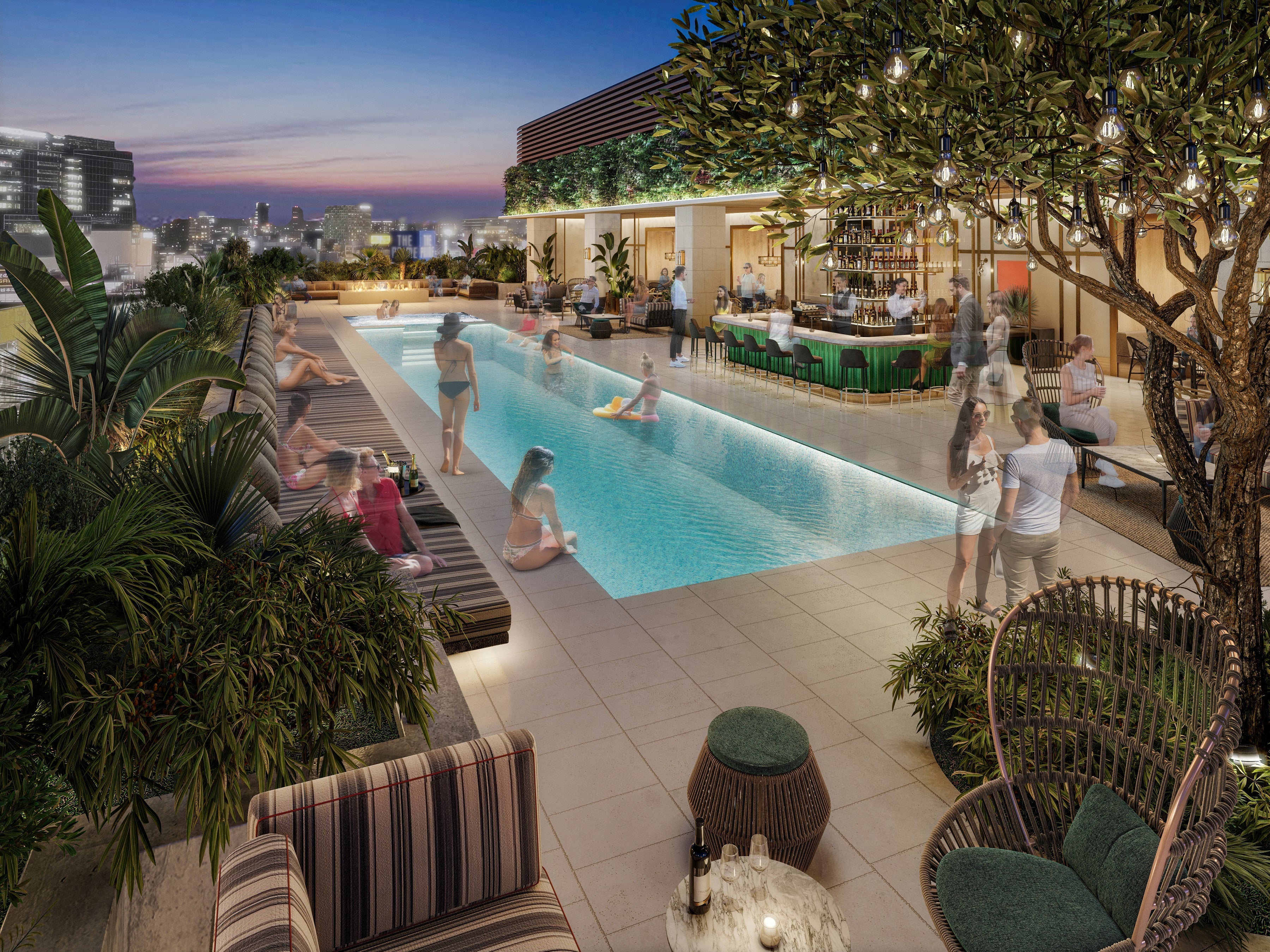
A high-rate hotel lifts the brand value of the whole district. A flow forms in which affluent guests and international travelers stay, then use nearby restaurants and retail, and Dogenzaka’s appeal as commercial land rises further. The effect on real estate value is unlikely to stop at office demand. It can reach commercial tenant rents and, in time, nearby residential property as well.
Public Contribution: Plaza and Greenway Create New Urban Space
What separates this Category I project from a purely private development is the scale of its public contribution (公共貢献). A plaza of about 850 square meters and a greenway of about 50 meters (the north–south network linking Dogenzaka 1-chome and 2-chome) will be built, improving circulation from the station area toward Dogenzaka. A temporary stay facility for stranded commuters (帰宅困難者一時滞在施設) is also planned, so the complex will serve as a refuge function in a major disaster — a Tokyo requirement that became non-negotiable after the 2011 earthquake, and one with no real equivalent in a typical U.S. BID streetscape package.
The direct connection to Shibuya Mark City secures a covered route from Shibuya Station. Fitting out public space of this kind raises the number of people who linger in the surrounding blocks, and that footfall underpins occupancy in both retail and office. As a textbook case of city government, a redevelopment association, and a developer working inside a Type I scheme, the project is likely to influence redevelopment plans in other districts as well. U.S. rezonings often extract public benefit through incentive zoning or BID assessments after the fact. Here the plaza, the greenway, and the stranded-commuter shelter are built into the scheme itself.
In the Shibuya area, several large projects are moving in parallel with Dogenzaka 2-chome South. They include the Shibuya 2-chome West District redevelopment, which we cover in “The Core of International Competitiveness Shaping Shibuya’s Future — Outlook for the Shibuya 2-chome West Category I Urban Redevelopment Project,” and Shibuya Sakura Stage. The combined effect of these projects is what raises Shibuya’s international competitiveness as a whole.
Actions Real Estate Investors Should Watch
The last year before completion is a decisive window for acquiring property around the site. Before the project is finished and the market has fully priced in the “area premium,” it is worth surveying current asking levels on nearby existing office, retail, and residential buildings. Wait until prices have already risen after completion, and returns tend to thin out.
Demand for office space with a direct Shibuya Station connection remains strong from IT firms, startups, and foreign companies. A floor plate of more than 1,500 square meters can serve mid-size through large occupiers, so the range of possible tenants is wide. Vacancy after completion will still move with domestic and overseas economic cycles, so the supply-demand balance has to be read on a long horizon.
Watch the change in pedestrian flow once the hotel opens, too. Districts that luxury-hotel guests actually visit tend to attract food and retail tenants aimed at affluent customers. Investment strategy here has to keep in view the possibility that commercial tenant rents across Dogenzaka will rise over the medium to long term.
The practical opportunity for a U.S. or U.K. investor is not buying a slice of the Type I rights conversion itself — those rights belong to the association’s members. It is surveying neighboring buildings before the area premium is fully capitalized. Japan allows non-residents to hold freehold land and buildings anywhere in the country, without a local partner, which is already a sharper contrast with many Asian markets than with New York. What differs from a U.S. gateway is timing. In Manhattan or London, forward leasing and cap-rate compression often price a trophy completion years before opening. Around Shibuya Station, visible completion still moves asking prices. The months through February 2027 are that window. Non-resident landlords should also budget for Japanese withholding on rent and on sale proceeds, then settle the difference on the annual return — a cash-flow shape that does not match a typical U.S. 1031 or UK non-resident landlord filing.
My View
What I feel as I watch the Dogenzaka 2-chome South District Category I Urban Redevelopment Project is the strength of Shibuya’s capacity to adapt. The district that once broadcast youth culture is turning into a global hub for business and lifestyle. I read the scale — ¥76.7 billion (approx. USD 511 million) and 30 stories — not as a development statistic, but as a long-term conviction about this area.
From a market point of view, Shibuya and Dogenzaka already sit at some of the highest land-price levels in Japan. That does not mean they have peaked. Districts where inbound demand continues, foreign-firm office demand expands, and several redevelopments raise value across a whole surface at the same time are scarce even inside Japan. What position post-completion Shibuya establishes inside Tokyo will become clearer only from 2027 onward.
That is why we think the essential task is not to cheer or flinch at every short-term price move, but to read the structural change in the area on a long horizon. At INA&Associates, we believe that judgment grounded in reliable data and calm analysis is what produces real strength in real estate investment.
Summary
As of March 2026, the Dogenzaka 2-chome South District Category I Urban Redevelopment Project is in underground structural work, about eleven months from its scheduled completion at the end of February 2027. The mixed-use tower — 30 stories, about 155 meters, total cost about ¥76.7 billion (approx. USD 511 million) — is a two-building composition: an office tower connected directly to Shibuya Mark City, and a luxury hotel tower. The development is expected to have a large effect on real estate values across the area.
The average official land price for commercial land in Shibuya City has already reached ¥8.42 million per square meter (approx. USD 56,100), up 13.34% year on year. After completion, formation of an area premium could push prices on nearby properties still higher. This last year before completion is a moment that asks investors for a strategic decision. Reading the structural change in the area accurately, and moving on a long horizon, is what leads to results.
Frequently Asked Questions (FAQ)
Q1. When will the Dogenzaka 2-chome South District Category I Urban Redevelopment Project be completed?
A. Completion is scheduled for the end of February 2027. The hotel tower is scheduled to open in summer 2027. As of March 2026, underground structural work is under way, and the project is about eleven months from completion.
Q2. Who is the implementer, and who is the participating association member?
A. The implementer is the Dogenzaka 2-chome South District Urban Redevelopment Association, with Mitsubishi Estate Co., Ltd. joining as a participating association member. Design is by the Mitsubishi Jisho Design / Yamashita Sekkei joint venture, design supervision is by Atsushi Kitagawara Architects, and construction is by Toda Corporation.
Q3. How are land prices moving in Shibuya and Dogenzaka?
A. In the 2025 official land prices, the Shibuya City commercial average was ¥8.42 million per square meter (approx. USD 56,100), up 13.34% year on year, and the Dogenzaka per-tsubo price was about ¥56.45 million per tsubo (approx. USD 376,000 per tsubo; change +7.36%). Tokyo’s 2026 official land prices also showed an all-use average of +2.8%, the strongest stretch in 35 years since the bubble era, and the upward trend is continuing.
Q4. How should a real estate investor act?
A. The last year before completion is the stage before the “area premium” is fully priced into the market. Survey asking levels on nearby existing office, retail, and residential buildings now, keep the change in pedestrian flow from the hotel opening in view, and build an investment strategy on a long horizon.
Sources and References
- Mitsubishi Estate (三菱地所), “Dogenzaka 2-chome South District Category I Urban Redevelopment Project” construction-start press release (January 16, 2024)
- Mitsubishi Estate (三菱地所) construction-start press-release PDF (January 16, 2024)
- PR TIMES, “TRUNK(HOTEL) DOGENZAKA (provisional name)” press release by Take and Give Needs (テイクアンドギヴ・ニーズ)