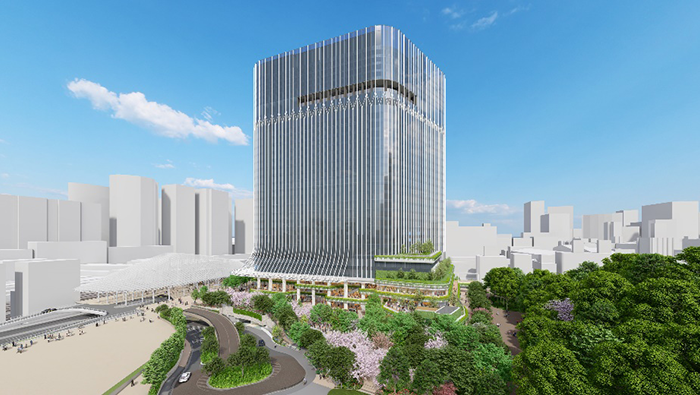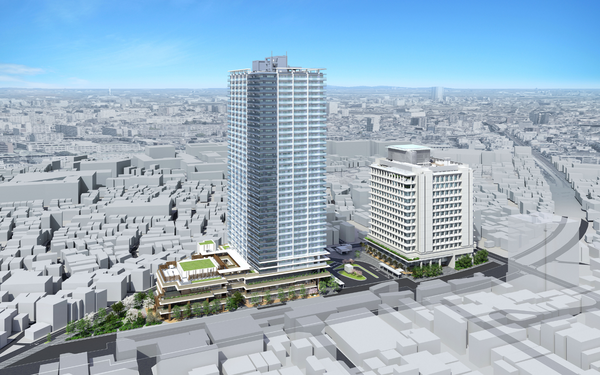
Jiyugaoka is a town that represents the Jonan area of Tokyo, where the opulence of a commercial area and the calmness of a residential area coexist. In front of the station, the facility of the ``Jiyugaoka 1-29 District Type 1 Urban Redevelopment Project'' was completed on July 31, 2026, and further consideration for redevelopment is continuing on the east side.
This article is based on information published as of October 2025.
From a real estate investment perspective, redevelopment is not just about adding new buildings. The flow line in front of the station, commercial concentration, pedestrian environment, disaster prevention, housing supply, rent level, and expectations for sales prices will change in a complex manner. The important thing is not to view redevelopment news directly as a factor for price increases, but to determine which value will be reflected in the property and at what timing.
Key points of this article
- In the Jiyugaoka 1-29 district, the commercial, business, and residential complex "JIYUGAOKA MUSE SQUARE" was completed in front of the station on July 31, 2026.
- Redevelopment will affect the safety, disaster prevention, pedestrian environment, and commercial concentration in front of the station.
- When making investment decisions, we look at expectations before opening, actual demand after opening, and the impact on surrounding rents.
- Jiyugaoka is not a large-scale business cluster like Shibuya, but a town with a strong brand of housing and lifestyle culture.
- Construction schedule delays, construction costs, interest rates, and changes in surrounding competition must be confirmed as risks.
What are Jiyugaoka's strengths?
Jiyugaoka's strength is not just the power of the station. The Tokyu Toyoko Line and Oimachi Line intersect, and in addition to convenient transportation with easy access to Shibuya, Yokohama, and Oimachi, the area offers the pleasure of walking around town, a concentration of individual stores, and a calm residential area.
When investing in real estate, it is important to consider not only the distance from stations and the age of buildings, but also the reasons why tenants choose a particular city. In the case of Jiyugaoka, the combination of shopping, dining, education, calm living environment, and brand image supports a wide range of demand from singles, DINKS, and families.
However, the more popular the area, the higher the acquisition price. It is difficult to invest solely in pursuit of yield; it is necessary to make investment decisions that emphasize long-term asset value, rent maintenance, and vacancy resistance.
What will change with the redevelopment of Jiyugaoka 1-29 district?
The Jiyugaoka 1-29 district is a Type 1 urban redevelopment project located in front of Jiyugaoka Station. According to published materials from the Tokyo Metropolitan Government Bureau of Urban Development and the project entity, a complex facility including commercial, business, and residential facilities was developed in an area of approximately 0.5 ha; building construction started in November 2023, and the facility was completed on July 31, 2026.
| Item | Contents |
|---|---|
| Business area | Jiyugaoka 1-29 district |
| Implementation area | Approx. 0.5ha |
| Total floor area | Approx. 46,000 m2 |
| Building scale | 15 floors above ground, 3 floors underground, approximately 60m in height |
| Number of housing units | Approximately 170 units |
| Main functions | Commercial, business, residential, parking/bicycle parking |
By bringing together commercial, business, and residential functions in front of the station, the impression of Jiyugaoka as a gateway will change. In particular, if pedestrian space and disaster prevention are improved, it will affect the ease of getting around and the length of stay in the city.
The commercial facility "JIYUGAOKA MUSE SQUARE" opened on September 17, 2026 with approximately 60 stores, and the rental residences started accepting move-ins on August 1 of the same year. The flow of people in front of the station may change significantly depending on the opening tenants and facility management.
Points to note when looking at Jiyugaoka Higashi District
The Jiyugaoka Higashi District needs to be viewed from a longer-term perspective than the 1-29 District. The east side of the station faces issues such as aging buildings, narrow streets, disaster prevention, and pedestrian environment. If redevelopment progresses, the overall balance in front of the station may change.
However, redevelopment takes a long time from conception, preparatory association, urban planning, rights conversion, construction start, and completion. When making investment decisions, it is dangerous to factor in all unconfirmed plans into the price.
| Items to look at | Impact on investment decisions |
|---|---|
| Progress of urban planning | Feasibility and timing outlook |
| Rightholder agreement | Risk of construction delay |
| Construction costs | Plan changes and impact on profitability |
| Commercial route | Impact on station crowd flow and store rent |
| Housing supply | Competitive environment for condominium sales and rentals |
Unfinished redevelopment creates anticipation. On the other hand, if those expectations are already reflected in prices, additional upside potential may be limited.
How does redevelopment affect real estate prices?
There are multiple channels through which redevelopment affects real estate prices. Business in front of the station will be strengthened, the pedestrian environment will be improved, disaster prevention will be improved, awareness of the town will be improved, and the number of people who want to move in will increase. When these factors overlap, they have a positive effect on rents and sales prices.
However, not all properties rise equally. The impact will vary depending on the distance from the station, age of building, management condition, floor plan, and target demographic.
| Property type | Expected impact | Points to note |
|---|---|---|
| Condominiums near stations | Maintaining asset value and strengthening rental demand | Acquisition prices are high and yields tend to be low |
| Rental properties within walking distance of the station | Vacancy resistance and rent maintenance | Loss of competitiveness due to outdated equipment |
| Commercial properties | Demand due to increased flow of people | Check tenant industry and ability to pay rent |
| Old property | Room for renovation | Repair costs and exit strategy are important |
In Jiyugaoka, the value of a property is determined not only by its newness after redevelopment, but also by whether it harmonizes with the existing streetscape and brand.
Risks that investors should check
When investing in redevelopment areas, look at the risks as well as the expectations.
- Possibility of delay in construction period
- Possibility of changes to plans due to rising construction costs
- Possibility of purchaser's financing ability decreasing due to rising interest rates
- Comparison of used properties in the surrounding area may become difficult due to the supply of new construction
- Possibility of acquisition price becoming too high due to high expectations
Redevelopment can be a long-term tailwind, but it does not guarantee short-term gains. Investors need to make decisions based on not only the appearance of the town after redevelopment, but also the ongoing rent, repair costs, loan repayments, and exit price.
Checklist to see when investing in Jiyugaoka
- Did you check not only the walking distance from the station but also the actual route from the ticket gate to the property?
- Will the flow of people after redevelopment flow toward the property?
- Will there be competition with surrounding new construction/new construction supply?
- Can the current rent be maintained even when re-hiring?
- Have you checked the management status, repair history, and impression of the common areas?
- Are redevelopment expectations factored into the acquisition price too much?
- Is the property a viable option even if held for a long time?
Rather than being an area aiming for high yields in the short term, Jiyugaoka is an area suited to the idea of protecting asset value over the long term due to the town's brand and residential demand.
Frequently asked questions (FAQ)
Q1. Will real estate prices increase with the redevelopment of Jiyugaoka?
A. It can be an upward factor, but the impact will vary depending on the property. You need to make a decision by looking at the distance from the station, age of building, management condition, rent level, and acquisition price.
Q2. What can be done with the redevelopment of the 1-29 district?
A. According to the published materials, the complex facility "JIYUGAOKA MUSE SQUARE", which includes commercial, business, and residential functions, was developed; it was completed on July 31, 2026, and the commercial facility opened on September 17 of the same year. The impact on the commercial functions and pedestrian environment in front of the station is attracting attention.
Q3. When should I buy a redevelopment area?
A. Immediately after the plan is announced, before construction begins, before opening, and after opening, expectations that are factored into the price change. Please judge whether it is undervalued based on profitability and exit price, not on redevelopment news.
Q4. Is Jiyugaoka suitable for beginner investors?
A. Since it is a popular area, you can expect vacancy resistance, but the acquisition price is high and yields tend to be low. Carefully check your financial plans and long-term holding assumptions.
Citations/References