2026 Edition: What Is the Tobu Hikifune Station Front District Type 1 Urban Redevelopment Project? Explaining the Plan and Practical Impact
The Tobu Hikifune Station Front District Type 1 Urban Redevelopment Project is not merely about replacing the buildings in front of the station. It is an urban renewal effort that redesigns transport connectivity, pedestrian flow, and disaster resilience at the same time. On April 27, 2026, it was announced that Hankyu Hanshin Real Estate and U.D. Consultants had been selected as the project partners for the UR Urban Renaissance Agency, making the direction of strengthening Hikifune’s role as a hub even clearer.
Key points in this article
- The planning area is part of Higashimukojima 2-chome, Sumida Ward, and covers about 1.7 ha. Completion is scheduled for fiscal 2032 (Reiwa 14).
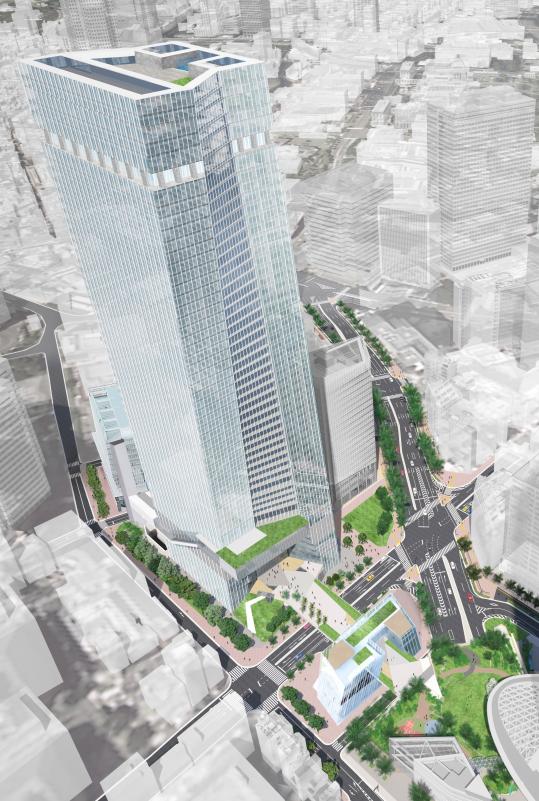
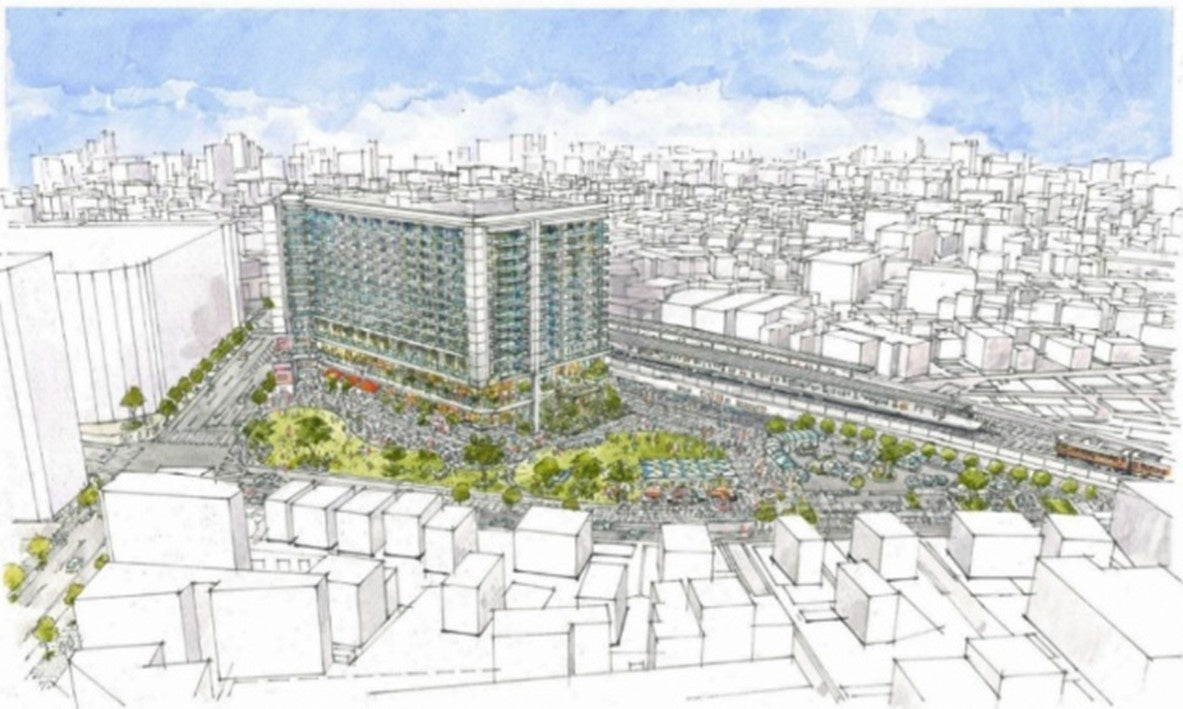
- As a "plaza-type redevelopment," it will deliver a traffic plaza of about 2,250 m² and an urban park of about 4,000 m², updating the station forecourt and pedestrian routes together.
- For owners, reading how circulation patterns change and reassessing use suitability comes before looking at market rent levels.
- Whether a redevelopment phase succeeds is determined less by the building’s age than by the quality of people flow and operational management.
What Is the Tobu Hikifune Station Front District Type 1 Urban Redevelopment Project?
The Tobu Hikifune Station Front District Type 1 Urban Redevelopment Project is a plan that uses the Type 1 urban redevelopment framework to advance public facility development and private development in an integrated way. Hikifune Station’s front area is positioned in Sumida Ward’s Urban Master Plan as a wide-area hub in the northern part of the ward, so renewing the station-front functions directly affects the value of the entire area.
The important point here is not to view redevelopment as a "point-by-point replacement." The station forecourt, pedestrian routes, road improvements, and disaster resilience all change at the same time, which means the framework for evaluating property value itself is updated. For projects like this, I believe the first thing to check is how people actually walk, before looking at the drawings.
Why Is the Hikifune Station Redevelopment in 2026 Important?
2026 is the milestone year in which the plan moved from the concept stage into the project-implementation phase. In response to UR Urban Renaissance Agency’s call for a project partner, Hankyu Hanshin Real Estate and U.D. Consultants applied jointly, and the "project partner agreement" was signed on March 25, 2026 (Hankyu Hanshin Real Estate announced the release on April 27, 2026). As the execution structure became more concrete, the area’s expectations and the timing of investment decisions began to change.
At first glance, it may seem that there is still little confirmed information. But precisely for that reason, early action is possible. In practice, owners who redesign leasing conditions and circulation assessment in advance tend to achieve higher conversion rates than those who wait and move all at once after the figures are finalized.
For example, in another project in Sumida where station-front circulation was improved, the units that emphasized "walkability from the ticket gate" filled first, even though the usable floor area was the same. It was not aggressive rent setting, but the precision of the everyday route that determined the leasing success rate.
Project Overview (within the scope confirmed by public materials)
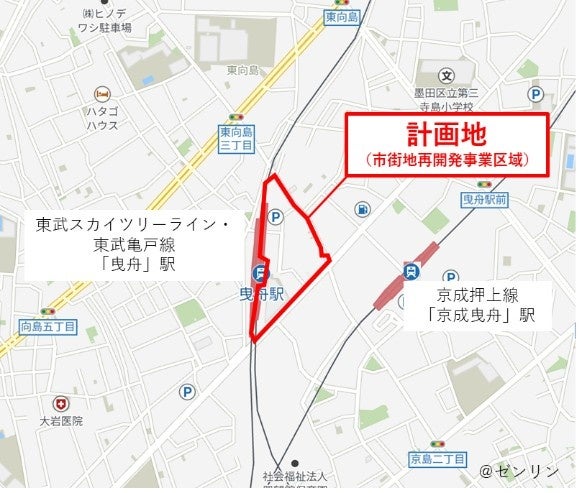
Below is a summary of the main items that can be confirmed from official materials as of May 2026 for the Tobu Hikifune Station Front District Type 1 Urban Redevelopment Project.
| Item | Details |
|---|---|
| Project name | (provisional) Tobu Hikifune Station Front District Type 1 Urban Redevelopment Project |
| Location | Part of Higashimukojima 2-chome, Sumida Ward, Tokyo |
| Planning area | about 1.7 ha |
| Scheduled implementing body | UR Urban Renaissance Agency (Independent Administrative Institution, Urban Renaissance Agency) |
| Project partners | Hankyu Hanshin Real Estate Co., Ltd. and U.D. Consultants Co., Ltd. (joint application) |
| Agreement | signed on March 25, 2026 (Hankyu Hanshin Real Estate released its announcement on April 27, 2026) |
| Public facilities | Traffic plaza of about 2,250 m², urban park of about 4,000 m² |
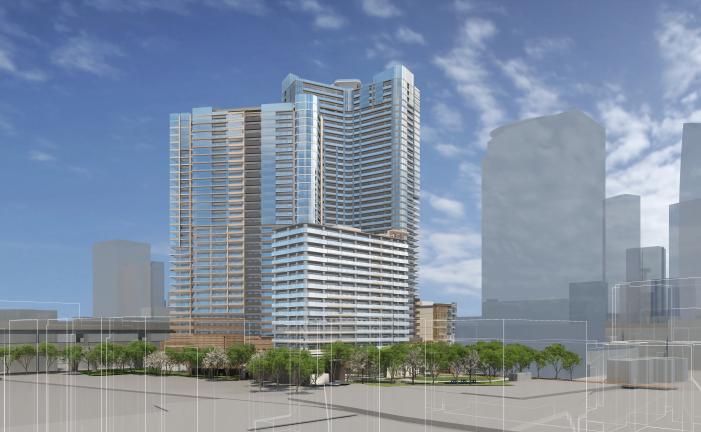
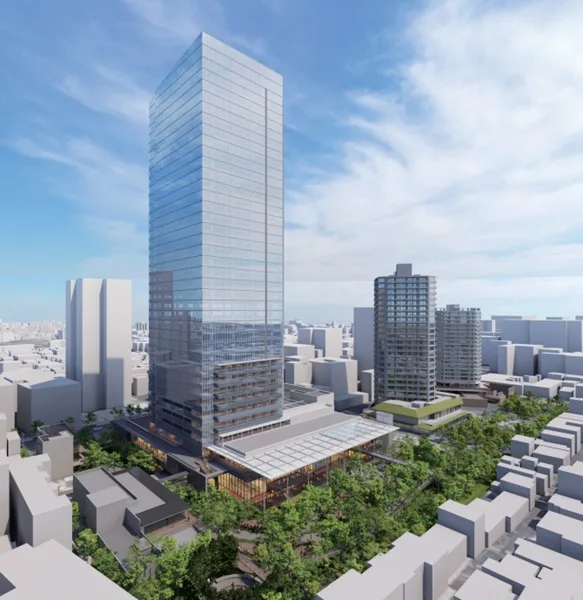
| Main uses | Residential, commercial, and others (detailed ratios are to be confirmed) |
| Positioning | wide-area hub under Sumida Ward’s Urban Master Plan |
| Scheduled completion | fiscal 2032 (Reiwa 14) |
The gross floor area, height and number of floors, and the number of housing units are not yet publicly confirmed within the official materials available. Some media outlets have reported preliminary figures, but when treating this as operational documentation, official finalized values should take priority. Aligning data around "information we can stand behind" rather than "the fastest information" is what builds long-term trust.
What Will Public Facilities and the Station Forecourt Development Change?
This project is positioned as a "plaza-type redevelopment project," and its essence lies in changing how the station-front area is used. In real estate practice in particular, public facilities and urban infrastructure can change the prerequisites for leasing operations.
- Traffic plaza (about 2,250 m²): If stopping, boarding, and alighting become easier, visitor dwell time increases and the value of commercial staying power rises.
- Urban park (about 4,000 m²): A consolidated open space in front of the station improves the quality of circulation and dwell time.
- Road and pedestrian flow: When conflicts are reduced and circulation improves, visibility and closing speed for first-floor units are affected.
- Improved disaster resilience: Bettering the problems of dense urban neighborhoods directly strengthens safety appeal in residential uses.
- Stronger transport connectivity: As transfer convenience improves, even small station-adjacent units gain more use options.
Questions like "it’s new, but it still doesn’t lease" or "the location is good, but rent negotiations are tough" cannot be solved by equipment alone. In many cases, improvement opportunities appear when circulation, visibility, and accessibility are reexamined instead.
Owner Practice in Light of the Surrounding Development
The Tobu Hikifune Station Front District Type 1 Urban Redevelopment Project is best judged together with the renewal around it, rather than as a standalone case. I recommend advancing in three stages:
- Reset leasing conditions: Update leasing terms to reflect time-of-day foot traffic and circulation, not just market averages.
- Redesign renovation priorities: Invest first in elements that affect circulation, such as common-area signage, entrances, and frontage visibility.
- Branch exit strategies by conditions: Define decision criteria for holding, repurposing, or selling at each milestone.
What matters here is human capital and the operating structure. In redevelopment phases, outcomes differ depending on whether site managers, leasing teams, and construction coordination teams can work in sync. Raising decision speed and accuracy as a form of human-capital investment, not just equipment investment, is directly tied to sustainable growth.
If needed, proceed step by step with circulation diagnostics for each owned property, redesign of leasing strategy, and review of the operating structure. Preparing correctly matters more than moving quickly.
Frequently Asked Questions (FAQ)
Q1. What is the main point of the Tobu Hikifune Station Front District Type 1 Urban Redevelopment Project?
A. The key point is the redesign of station-front functions. Not only the newness of the buildings, but also the simultaneous creation of public space with a 2,250 m² traffic plaza and a 4,000 m² urban park affects leasing demand.
Q2. When is completion scheduled?
A. The published materials indicate fiscal 2032 (Reiwa 14). During the period until completion, it is practical to gradually evaluate circulation within owned properties and revise leasing conditions.
Q3. Will rents definitely rise if redevelopment progresses?
A. It cannot be said that they will definitely rise. Only when the quality of people flow, competing supply, and use alignment all come together does an upward movement in rent become realistic.
Q4. When is the right time to review the management structure?
A. It is effective to review it at each project milestone. Reassess the operating structure at the stages of agreement signing, rights conversion, and construction start.
Citations and References
- Hankyu Hanshin Real Estate: "(provisional) Tobu Hikifune Station Front District Type 1 Urban Redevelopment Project concludes a 'project partner agreement' with the UR Urban Renaissance Agency" (April 27, 2026)
- UR Urban Renaissance Agency: "(provisional) Tobu Hikifune Station Front District Type 1 Urban Redevelopment Project, project partner agreement signed" (March 25, 2026)
- Sumida Ward Urban Master Plan