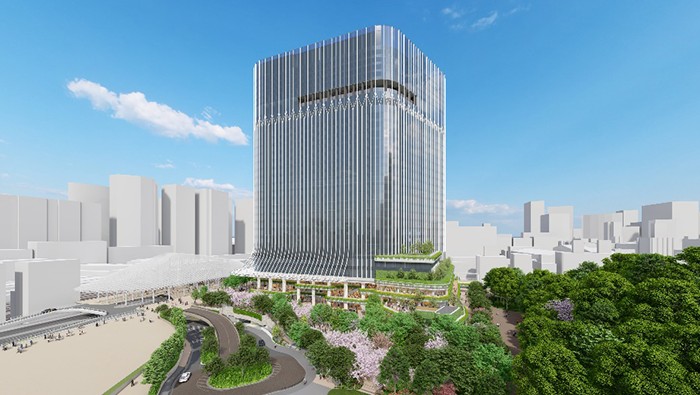
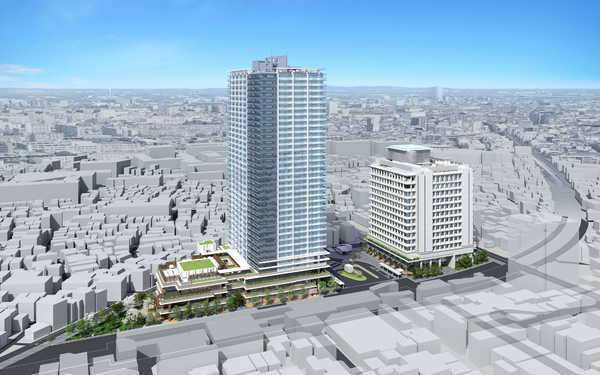
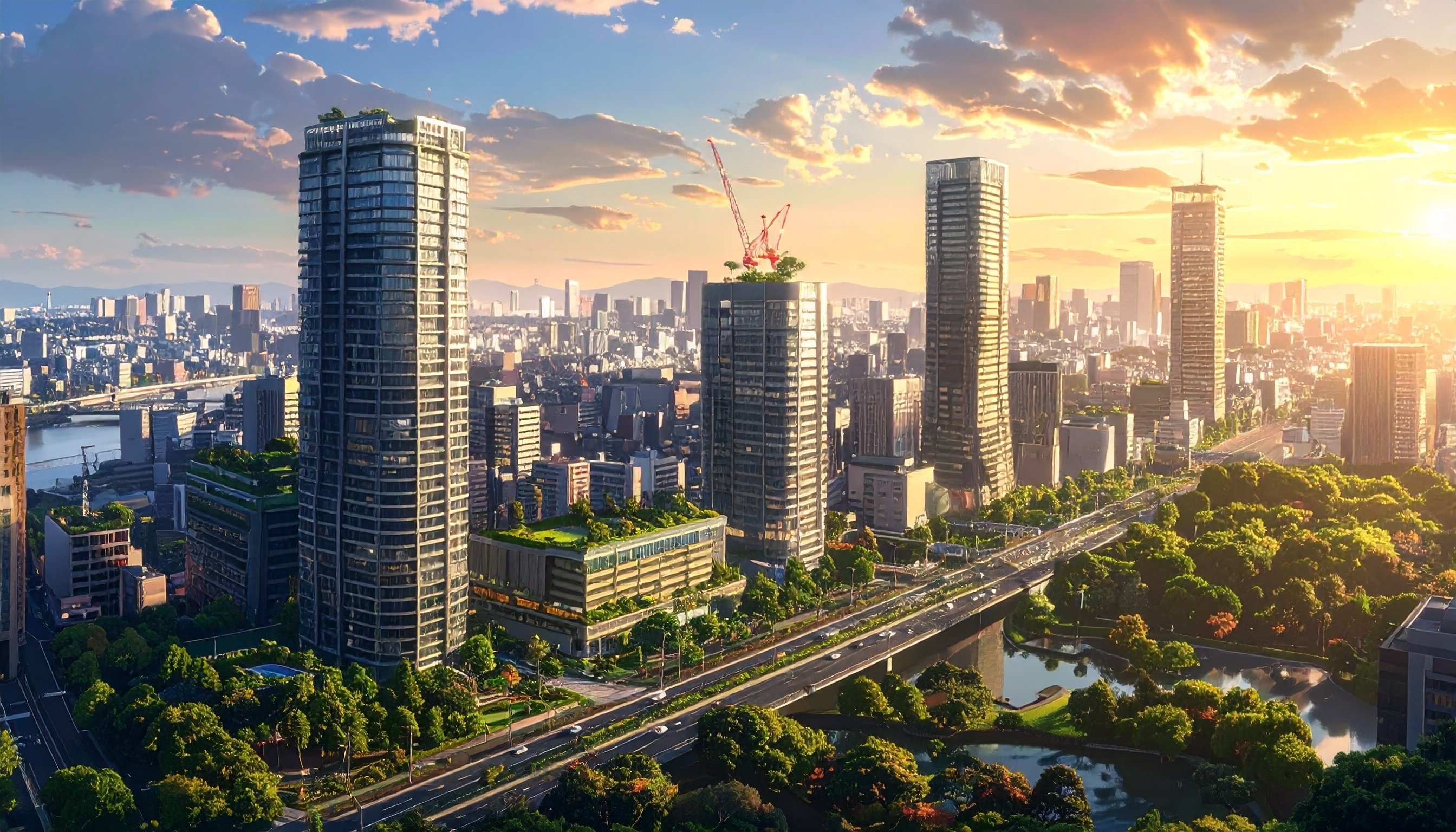
In central Osaka, large-scale redevelopment is moving forward on several fronts at the same time, centered on Umekita (うめきた, the area on the north side of Osaka Station), Nakanoshima and the area around Namba. Moments like this, when the basic framework of a city is being redrawn, are an important turning point for reviewing asset strategy, both for people who already own property and for those considering an acquisition. At INA&Associates Inc., we make a point of viewing these changes calmly from the perspective of long-term asset value, rather than treating them as mere topics of conversation.
For international readers, it helps to know what makes this situation distinctively Japanese. Osaka is one of Japan's major commercial centers and the hub of the Kansai region, yet it is often less familiar to overseas investors than Tokyo. Its redevelopment is led by private railway companies, developers and local governments working within Japan's own urban planning system, and the city is reshaping several districts in parallel rather than building one flagship project. In this article, we organize the effects of redevelopment in central Osaka on the property market and explain how to position assets and how to protect and grow them. Because we value trust and honesty, we will frankly share not only the advantages but also the points that require caution.
The Overall Picture of Redevelopment in Central Osaka
A defining feature of Osaka's redevelopment is that it is not confined to one particular district; instead, several hubs are advancing while connecting with one another across a wider area. Looking at the overall picture first makes the position of each individual area clearer.
Unlike cities where one landmark scheme, such as a single waterfront district, defines the redevelopment story for a decade, Osaka's changes are spread across multiple districts with different characters. For an overseas investor, this means the question is not simply "Is Osaka rising?" but "Which part of Osaka, and for which type of demand?"
The Spread of Major Redevelopment Hubs
The Umekita district on the north side of Osaka Station is being developed as a new face of the city center, combining green space with mixed-use facilities. In addition, several hubs with different characters are moving forward in parallel: the concentration of cultural, medical and business functions in Nakanoshima; Namba, Shin-Imamiya and other southern areas, where tourism and daily life intersect; and the reorganization of space along Midosuji (御堂筋, Osaka's main north-south boulevard, lined with offices and flagship stores).
These projects are planned together with stronger transfer functions at key nodes of the rail network, and they differ from conventional one-off redevelopments in that they are a reorganization connected along lines and across areas, not development at isolated points. That is why, rather than making judgments based only on trends in a single area, you need a perspective that sees them as a change in how people move across the city as a whole.
Links with Wide-Area Transport Infrastructure
One of the biggest factors determining the value of redevelopment is the change in transport convenience. New rail access and stronger transfer functions on existing lines can lift residential and commercial demand in surrounding areas. In fact, we believe that for long-term asset decisions, understanding how this transport framework will change is more fundamental than how new an individual building is.
This reflects a deep feature of Japanese cities. In many US and Australian markets, value is closely tied to car access, highways and parking. In Japan's large cities, a large share of daily trips is made by rail, and the convenience of the nearest station shapes rents and prices to a degree that can surprise investors used to car-oriented markets.
The Fundamental Impact of Redevelopment on Property Values
Redevelopment does not necessarily push up the value of all surrounding property evenly. Understanding how its effects arise is the first step toward avoiding excessive expectations or anxiety.
The Mechanism: A Change in the Structure of Demand
When large-scale development increases the new supply of offices, retail space and housing, the working population and the number of visitors tend to rise, deepening rental demand in the surrounding area. On the other hand, a large volume of new supply creates competition with existing properties and can reduce the relative competitiveness of older buildings. Because demand and supply increase at the same time, gaps between winners and losers are likely to emerge even within the same area.
Investors from markets with tight planning restrictions on new supply, such as parts of the United Kingdom, may expect redevelopment to create scarcity. In Japan, where large new buildings can be added in redeveloped districts, the competitive pressure on existing stock is a more important part of the picture.
Effects That Differ Along the Timeline
The effects of redevelopment do not appear all at once after completion. Over the stages of plan announcement, construction and post-opening maturity, the market moves through phases such as expectations running ahead, adjustment due to increased supply, and real demand taking root. We believe that, rather than reacting to short-term price movements, making judgments calmly with a long-term perspective is the most important thing in building assets.
Characteristics and Points of Caution by Area
Even within central Osaka, the nature of demand and the risks differ greatly by area. Here we organize the main differences in character. What is shown here reflects only general tendencies, and on-site examination is indispensable when judging an individual property.
| Character of the area | Main sources of demand | Strengths | Points to note |
|---|---|---|---|
| New hub north of Osaka Station | Large-company offices and demand for high-quality housing | Brand power and status as a transport hub | Acquisition prices tend to be high |
| Cultural and medical clusters such as Nakanoshima | Professionals, research institutions and corporations | Stable real demand and high prestige | Limited uses lead to differences in liquidity |
| Namba and the southern daily-life and retail area | Tourists, single-person households and residents | Broad demand and resilience | Easily affected by economic conditions and tourism trends |
| Reorganization along Midosuji | Brand retail and offices | Symbolic status and boulevard frontage value | Coordination of regulations and joint development tends to take a long time |
The last row reflects a common Japanese situation. Central Japanese cities often have many small, separately owned plots, and redevelopment frequently requires several owners to combine their land and buildings. That process can take far longer than in markets where a single owner controls a large site.
Looking Through "Locational Prestige" and "Flexibility of Use"
When evaluating an area, we focus on two axes: the prestige of the location and the flexibility of use. Prime locations tend to show firm price floors even during economic downturns, while properties whose uses are skewed toward specific industries tend to be vulnerable to changes in the environment. It is essential to look at the balance between the two and judge whether the property can be held for a long time.
Building an Asset Strategy: Holding, Acquiring and Selling
During a redevelopment phase, the strategy you should take changes depending on what you own now and how you intend to move from here. Below, we set out the way of thinking for each of three typical positions.
Compared with markets where investors mainly trade in and out of listed property funds, Japanese investment property is often held directly for long periods and passed down within families. That makes decisions about timing and restructuring especially important.
If You Already Own Property
If you already own property close to the city center, first determine whether the change in demand brought about by redevelopment is a tailwind or a headwind for your property. If it is a tailwind, increase competitiveness by upgrading equipment and reviewing the tenant mix; if it is a headwind, plan the timing of your exit systematically. Doing nothing is also an option, but it should be a judgment made only after fully understanding the current situation.
If You Are Considering an Acquisition
When considering an acquisition, carefully check whether prices have run ahead on pre-opening expectations alone. The basics are to confirm that the income and expenses still work even with conservative assumptions about future rents and occupancy, and to put together a financing plan that is not overstretched. In some cases, rather than the very center of attention, looking at relatively undervalued surrounding areas to which the benefits spill over can improve long-term investment efficiency.
If You Are Considering Selling or Restructuring
A phase in which redevelopment attracts attention is also a good opportunity to review your holdings and restructure them into a form that is easier to pass on to the next generation. However, the higher the attention, the more important it is not to rush into selling. We recommend looking for the best timing within an overall plan that includes the tax burden and where to reinvest.
Checkpoints to Confirm in Investment Decisions
Below are the minimum items you should check when considering an individual property, arranged as a procedure. Going through them in order reduces failures caused by oversights.
For readers used to due diligence in the United States or Europe, most items will look familiar, but several depend on Japan-specific systems, such as zoning districts (用途地域, yōto chiiki, which set the permitted uses for each area) and the floor area ratio (容積率, yōseki-ritsu, the maximum total floor area relative to the site area).
- Confirm the current transport access and future plans (whether there will be new stations or strengthened lines) using official public materials
- Understand the volume of new supply nearby and how it competes with existing stock
- Estimate expected rents and occupancy conservatively, and test whether the income and expenses work
- Check urban planning constraints such as zoning districts and floor area ratios, and the property's future potential
- Examine physical risks closely, including the building's legal compliance, earthquake resistance and repair history
- Picture the exit (future buyers and liquidity) before you acquire
Earthquake resistance deserves special mention for overseas investors. In Japan it is a routine part of every acquisition review rather than a niche concern, and it directly affects financing, insurance and the property's future liquidity.
The Principle: Set the Numbers "Conservatively"
Making aggressive projections that assume rising rents or full occupancy, based on expectations for redevelopment, is a typical entry point to failure. We recommend plans that can withstand conservative assumptions, such as rents staying flat or falling slightly and vacancy periods being on the long side. That is why having a margin, so that even if assumptions turn out wrong the damage is not fatal, is the key to protecting assets over the long term.
Risks That Are Often Overlooked During Redevelopment
The more good news is talked about, the more risks tend to hide in the background. Because we value trust and honesty, we share the downsides frankly as well.
Oversupply and Fading Expectations
When large-scale developments are concentrated, supply can temporarily exceed demand, and rents and prices may enter an adjustment phase. There is also always the risk that initial expectations fade because of delays or changes to plans. It must not be forgotten that investments based on hype are the most vulnerable to such adjustments.
Changes in Costs and Regulations
Construction costs, interest rates and the tax system greatly affect the real return on an asset. In recent years, prices for materials and labor costs have continued to rise, making repairs and reconstruction heavier than before. Because institutional rules may also be revised, a financing plan with room to spare and regular checks by professionals are indispensable.
For investors who have long viewed Japan as a low-interest-rate market, this point is worth emphasizing. Unlike the assumption of permanently low borrowing costs, it is safer to plan for financing conditions that can change over the holding period.
The INA&Associates Perspective
We regard real estate not as "something whose price movements you try to predict," but as "an asset that delivers value to everyone involved with it over the long term." This stance does not change even in the glamorous phase of redevelopment.
What we value is building up choices that make sense to everyone, whether owners, users or the local community, without being swept along by short-term market sentiment. Our belief that people are our greatest asset applies equally to the real estate business: an asset retains its value over the long term only when there is solid operation supporting the property and relationships of trust with everyone involved. We face new phases without fear of failure, while keeping honesty and a long-term perspective as the foundation of our judgments. That is our basic stance toward the changes in central Osaka.
We continue to publish broader market analysis and thinking on asset strategy in our real estate network category. We would be pleased if you could refer to it as well.
Summary
Redevelopment in central Osaka is a major trend that redraws the city's framework across wide areas, and it is a good opportunity for property owners to review their asset strategy. At the same time, redevelopment does not lift everything nearby evenly; as demand and supply increase together, differences emerge between areas and between individual properties. That is why it is essential to look for the fundamentals by focusing on changes in the transport framework, to set the numbers conservatively, and to estimate risks honestly. We believe that facing the market calmly with a long-term perspective, rather than chasing short-term price movements, is the proper way to protect and grow assets in times of change.
For international investors, Osaka offers a way to diversify Japan exposure beyond Tokyo. The same discipline applies, however: understand the Japan-specific systems behind each district, and judge each property on its own merits.
Frequently Asked Questions
Will any property near a redevelopment area rise in value?
No, values do not necessarily rise evenly. Redevelopment lifts demand but also increases new supply, so some properties may become relatively less competitive depending on their age and use. It is important to assess the prestige of the location and the flexibility of use, and to judge each case individually.
Is it better to acquire before or after a redevelopment is completed?
There is no single answer. Before completion, expectations tend to run ahead of prices, with a risk of overpaying. After completion, real demand is easier to see, but it may already be priced in. In either case, we recommend making the decision based on whether the investment still works under conservative income and expense assumptions.
What should be given the most weight in an investment decision?
Centered on the current state of transport access and how it will change, comprehensively check the surrounding supply situation, conservatively estimated income and expenses, urban planning constraints, the building's physical risks, and the liquidity of the exit. It is important not to rely on hype alone and to build a plan that can withstand assumptions turning out wrong.
How should I review the central-city property I currently own?
First, determine whether the change in demand brought about by redevelopment is a tailwind or a headwind for your property. If it is a tailwind, increase competitiveness by upgrading equipment and reviewing the tenant mix; if it is a headwind, plan the timing of your exit systematically. If you are unsure, we recommend having a professional examine the current condition of the property.