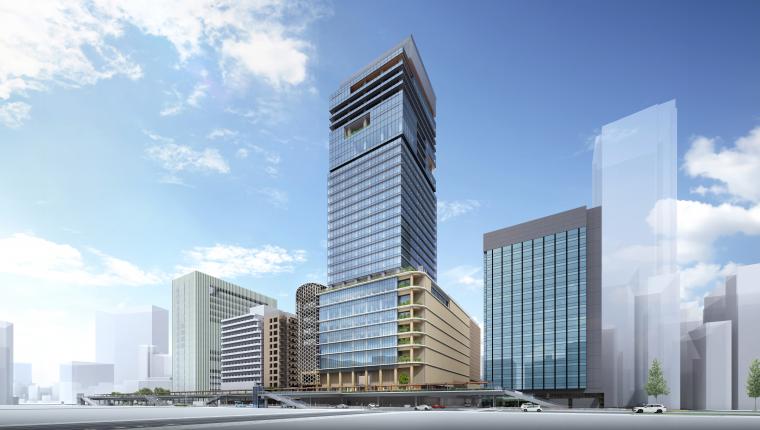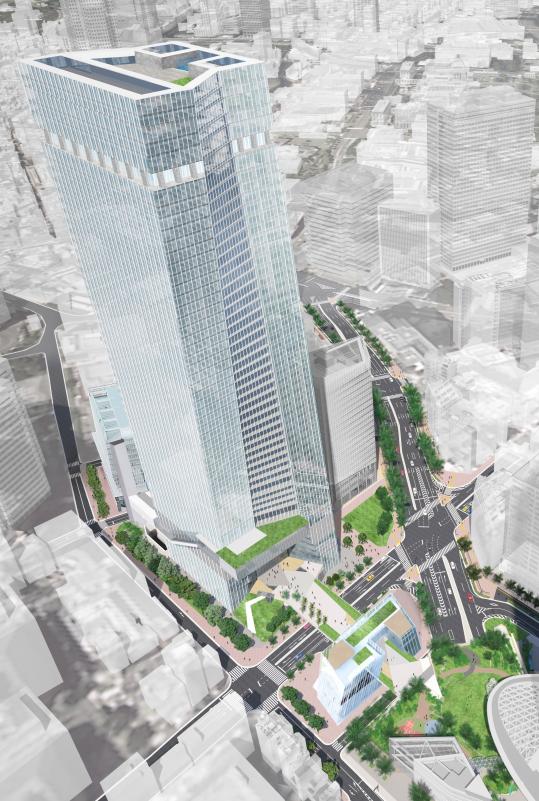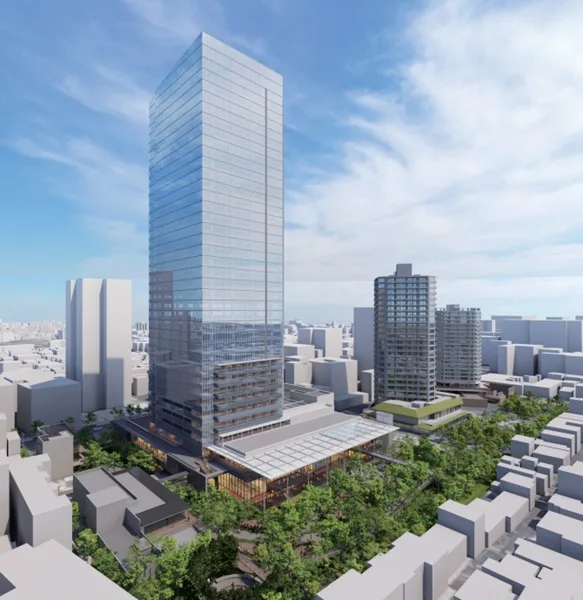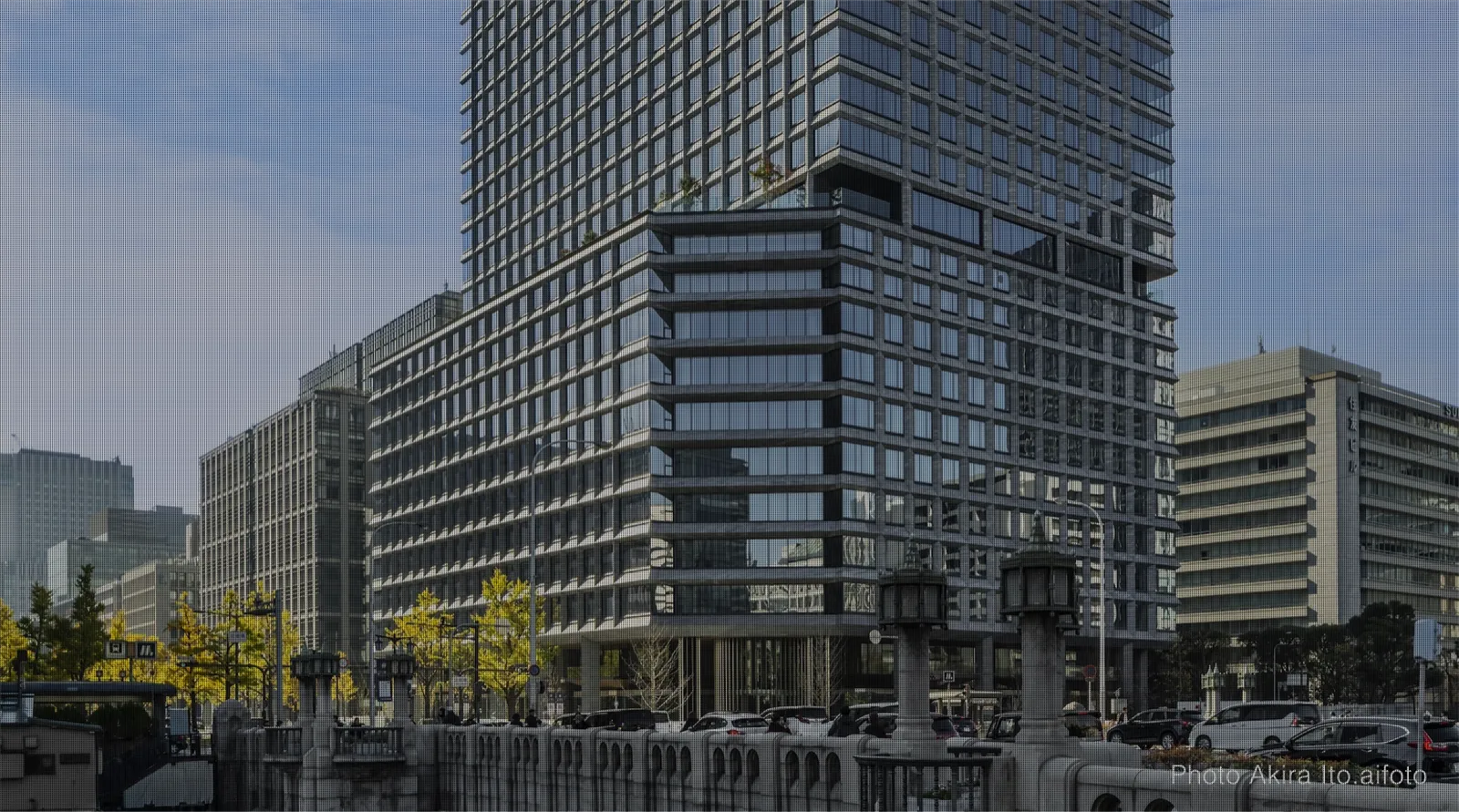
In Yodoyabashi, the business core of central Osaka, the station-connected large mixed-use building “Yodoyabashi Gate Tower” will grand open on July 9, 2026. The key point is not simply that new floor space is being added to the market. By operating office, retail, and public-benefit functions as one, it could create chain reactions in company location decisions, area circulation, rent assessments, and ultimately even investment decisions across central Kansai. This article organizes the facts based on the official announcement and the market impact from a real-estate practice perspective.
Key Points
- Yodoyabashi Gate Tower will grand open on July 9, 2026, and 29 stores, including commercial and public-benefit mixed-use zones, will open in phases.
- The project is the core of the Yodoyabashi Station West District Class 1 Urban Redevelopment Project, and its direct station connection and high transport convenience will serve as a base that brings together employment, consumption, and corporate activity.
- In Osaka’s office market, comprehensive evaluation that includes work environment, circulation paths, and talent retention is becoming more important than a simple comparison of rent levels.
Why is Yodoyabashi Gate Tower drawing attention now?
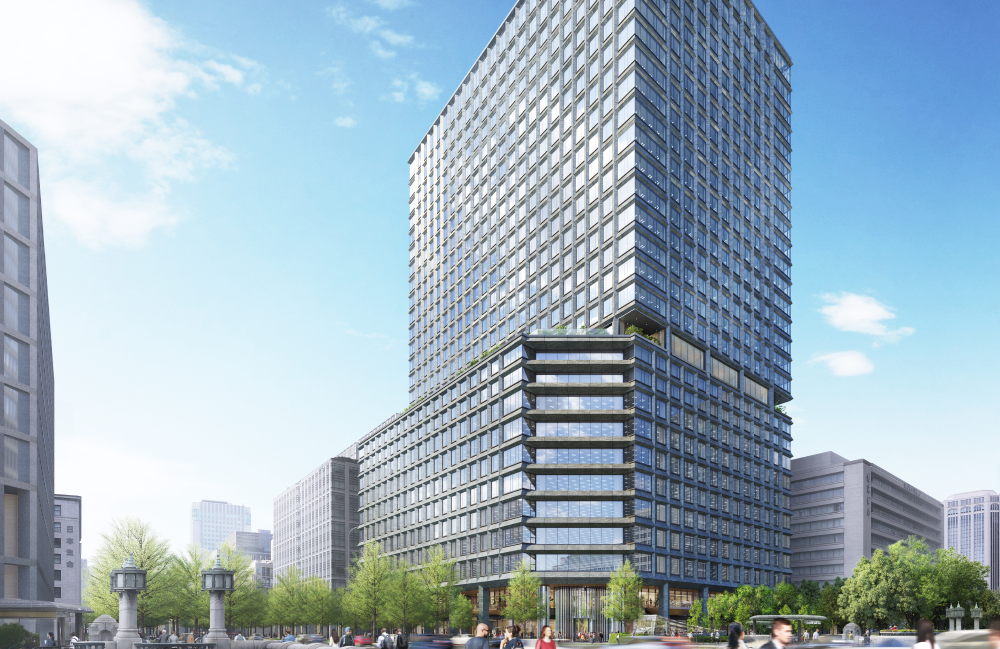
The first reason is the scale of the building specification being delivered. The official announcement describes a 29-story above-ground and 2-story underground mixed-use building, with a commercial zone and a public-benefit mixed-use zone in addition to offices. The differentiator from conventional downtown buildings is that it is designed not only as office space, but also around the value of time spent by the people who work there.
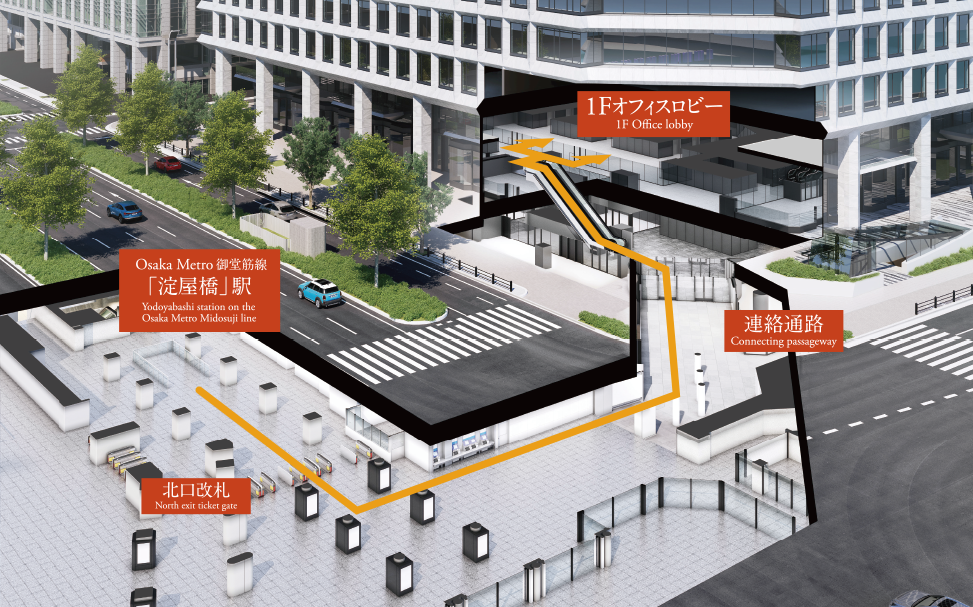
The second reason is the strength of the direct station connection. Being directly linked to Yodoyabashi Station on the Midosuji Line and the Keihan Main Line should benefit not only commuting convenience but also visit-based business and recruiting activities. For companies, “access” is both a benefit and a productivity factor.
The third reason is the continuity of downtown restructuring. This is not a Yodoyabashi-only story; by creating a node that encourages broader circulation toward Kitahama, Honmachi, and Umeda, the project could also spill over into property valuations in surrounding areas.
How should the facts about the grand opening be understood?
The most important point in the published information is that the grand opening date is Thursday, July 9, 2026. For market participants, that becomes the reference date for tenant strategy and revenue planning.
The plan also calls for 29 stores across the commercial zone, from B1 to the 2nd floor, and the public-benefit mixed-use zone on the 11th floor. The design clearly aims not only at office-worker demand, but also at nearby workers and visitors.
The development is led by the Yodoyabashi Station West District Urban Redevelopment Association together with the participating members (Daiwa House Industry, Sumitomo Corporation, and Kanden Realty & Development), so the execution structure as a redevelopment project is clear. From the standpoint of continuity and implementation strength, that is a practical source of confidence.
Can the impact on the office market be measured by rent alone?
The short answer is no. Future downtown office evaluations will increasingly be compared on a combined score that includes access, comfort for longer stays, supporting services, recruiting competitiveness, and BCP readiness.
When a mixed-use asset like Yodoyabashi Gate Tower begins operating, older offices can enter a phase where they are “less likely to be chosen even within a comparable rent band.” As a result, simple rent discounts are not enough; strategic CAPEX such as common-area upgrades, equipment renewal, and additional worker-oriented features becomes necessary.
That said, not every existing building becomes disadvantaged. Mid-sized buildings with similar location characteristics can differentiate themselves through faster decision-making and flexible layout responses. In other words, this opening is not an event that uniformly determines winners and losers; it is a turning point that calls for sharper strategy by asset.
How will the Yodoyabashi area change from a commercial and circulation perspective?
In Yodoyabashi, where the working population is dense, lunch, after-work, and short-meeting demand overlaps. A 29-store lineup can function as a receptacle that captures this dispersed demand without missing it.
In addition, the direct station connection reduces the stress of moving around in rainy weather, which quietly increases visit frequency. As circulation rises, secondary effects spread more easily to street-level shops and existing commercial properties in nearby blocks.
In real-estate practice, the quality of this foot traffic cannot be ignored. In tenant leasing, a data-based perspective matters not only for weekday daytime population, but also for dwell time, visit purpose, and event pathways. Yodoyabashi Gate Tower is positioned as a symbolic project that accelerates this use of data.
What should investors and owners decide?
First, redefine the positioning of your owned properties. You need to determine whether the asset competes with the “premium of direct station connectivity” or can build a complementary relationship with it.
Second, incorporate the contribution to talent acquisition into your KPIs. Corporate tenants care not only about rent, but also about the effect on hiring and retention. In other words, an office is not a cost item; it is a vessel for growth investment.
Third, prioritize renewal investment. Rather than renovating the entire building all at once, it can be more efficient in some cases to proceed in stages, starting with measures that directly improve experience value, such as shared lounges, meeting functions, and circulation improvements.
If these three points are addressed, this large new supply becomes not a threat but an opportunity to redesign asset value.
FAQ
Q1. When is the grand opening?
A. According to the official announcement, it is Thursday, July 9, 2026.
Q2. What is the facility composition?
A. It is a 29-story above-ground, 2-story underground mixed-use building that includes a commercial zone and a public-benefit mixed-use zone in addition to offices.
Q3. How many commercial tenants are planned?
A. The official release says a total of 29 stores are planned, mainly in the commercial zone from B1 to the 2nd floor and in the zone on the 11th floor.
Q4. What is the practical issue for property owners?
A. The key is not just rent adjustment, but redesigning the experience value through renewal of common areas, service functions, and support for talent acquisition.
References