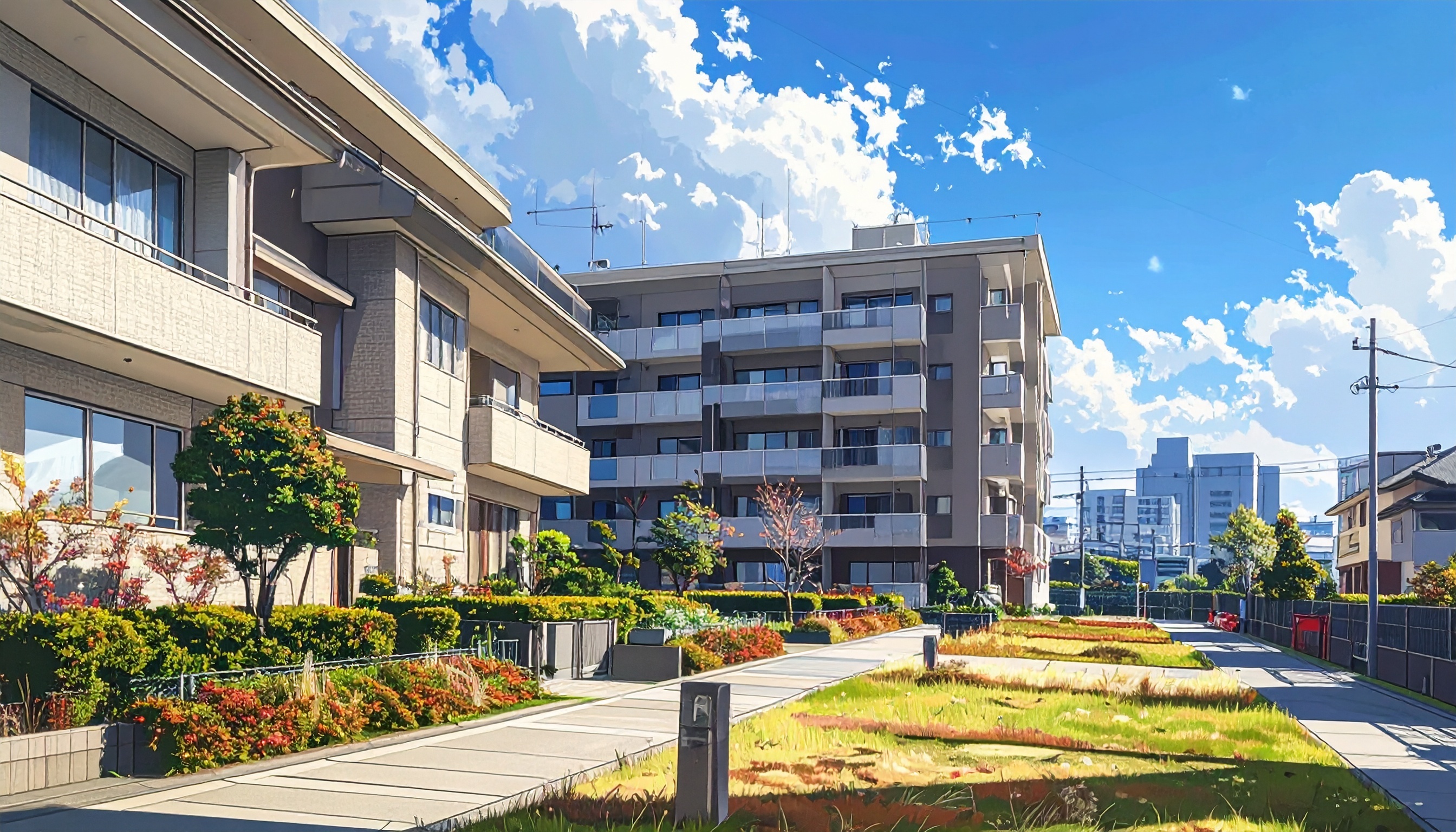
Today, as a real estate professional, I will explain the theme of "valuable locations" in a society experiencing population decline.
Japan's total population stood at 123.34 million as of May 1, 2025, representing a reported decline of 600,000 from the same month the previous year. This major tide of population decline is beginning to have a profound impact on the real estate market, and many people are likely feeling anxious about the future value of their assets.
However, just because the population is declining does not mean that the value of all real estate will fall equally. Rather, amid these structural changes in society, the polarization between properties that maintain or even increase in value and those that do not will become increasingly pronounced. And the single most important factor that determines that value is "location."
In this article, we will explain the current state of the real estate market in an era of population decline based on data, and clearly outline from a professional perspective seven specific points for identifying "valuable locations" that will maintain and enhance asset value well into the future. By reading this article through to the end, you will gain the knowledge needed to make informed real estate decisions with an eye toward the future.
The Current State and Challenges of the Real Estate Market in a Declining Population Society
To properly understand the impact of population decline on the real estate market, it is first essential to objectively grasp Japan's demographic trends and the accompanying changes in the market.
The Reality of Japan's Population Decline
According to the Statistics Bureau of Japan's Ministry of Internal Affairs and Communications, Japan's total population has been declining for 16 consecutive years, with the Japanese national population falling by 892,000 year-on-year as of May 2025—an accelerating rate of decrease. Even more concerning is the decline in the working-age population (ages 15–64), which forms the core of economic activity. Projections by the National Institute of Population and Social Security Research estimate that by 2040, the working-age population will decline by more than 30% in many regional cities. This shift in population structure is directly translating into reduced housing demand, particularly in rural areas, and is fundamentally reshaping the real estate market.
Polarization of the Real Estate Market Is Accelerating
Population decline is not causing real estate values to fall uniformly across the country. Rather, it is accelerating the polarization of the real estate market. On one hand, in major metropolitan areas such as the Tokyo region, where population inflows continue, real estate prices have kept rising on the back of robust housing demand. On the other hand, in rural areas where population decline is severe, property prices continue to fall due to weakening demand.
Emblematic of this polarization is the vacant property problem, which continues to worsen nationwide.
What Is "Urban Spongification"?
In recent years, a phenomenon known as "urban spongification" has become a growing concern even in urban areas. This refers to a condition in which vacant homes and empty lots are scattered sporadically throughout city centers—much like a sponge—creating a patchwork of gaps despite the urban setting.
This spongification leads to inefficiencies in public services and a deterioration of daily convenience, ultimately eroding the overall appeal of entire communities. In such circumstances, a strategic perspective for identifying locations that will remain "in demand" well into the future becomes indispensable for maintaining asset value.
Seven Points for Identifying Valuable Locations
Even in a society experiencing population decline, not all real estate values will fall. In fact, locations that meet certain conditions have the potential to maintain or even increase in value due to their scarcity. Here, we outline seven key points for identifying "valuable locations" with strong asset value.
Point ① High Transportation Convenience
Transportation convenience is the most fundamental factor in assessing real estate value. In particular, distance from the nearest train station is critical—generally, properties within a 10-minute walk are highly regarded. Stations served by multiple rail lines or those with easy access to central urban areas offer strong commuting and schooling convenience, ensuring stable demand. It is fair to say that such properties are unlikely to see significant fluctuations in value over time.
Point ② Availability of Daily Life Service Facilities
Whether commercial facilities, medical institutions, educational facilities, and other amenities essential to daily life are within walking distance also greatly affects the value of a location. For these daily life service facilities to operate sustainably, a certain catchment population is required.
| Facility Type | Standard Catchment Population Benchmark |
|---|---|
| Urban Convenience Store | Approx. 3,000 people |
| Grocery Supermarket (2,000–3,000 m² scale) | 10,000–30,000 people |
| Drug Store (1,000–1,500 m² scale) | 10,000–30,000 people |
Even amid population decline, areas where sufficient population density can be expected to sustain these facilities are considered to offer high daily convenience and are more likely to maintain their asset value.
Point ③ Alignment with Compact City Policy
Many local governments across Japan are currently formulating Location Normalization Plans based on the "Compact City Policy" promoted by the Ministry of Land, Infrastructure, Transport and Tourism. These plans aim to create sustainable cities by concentrating residential areas and urban functions (such as commerce, healthcare, and welfare) within specific zones in response to population decline.
These plans primarily designate the following two zones:
- Urban Function Inducement Zones: Areas where medical and commercial facilities are concentrated to maintain core urban functions.
- Residential Inducement Zones: Areas where residents are encouraged to live in order to maintain a certain population density and ensure access to life services.
Whether a property you are considering falls within these designated zones is extremely important information when predicting its future asset value. If a property is located within a planned zone, it is more likely that public services and daily convenience will be maintained well into the future.
Point ④ Presence of Redevelopment and Future Potential
Areas where station-front redevelopment or large-scale infrastructure improvements are planned can expect an increase in the area's appeal and convenience, leading to potential appreciation in real estate values. This is because redevelopment can give rise to new commercial facilities, improved road networks, and an overall boost to the region's potential. It is important to monitor redevelopment trends by checking urban planning information published by local governments. In particular, redevelopment projects accompanied by relaxation of floor-area ratios can significantly enhance the utility value of land.
Point ⑤ Sustainability of Population Density
As noted earlier, maintaining a certain population density is necessary to sustain daily life service facilities. The Residential Inducement Zones established under Location Normalization Plans exist precisely for this purpose. In areas where the population is thinning out, the withdrawal of businesses and the reduction of public services are more likely to occur. Whether stable population density can be expected over the long term serves as a barometer for measuring the sustainability of a given area.
Point ⑥ Building Quality and Energy Efficiency
Not only location, but also the quality of the building itself significantly affects asset value. Interest in energy efficiency continues to grow, particularly as compliance with energy conservation standards for newly built homes has been made mandatory starting in 2025. Properties that meet at least the current Thermal Insulation Performance Grade 4 standard—and especially those with Grade 5 or higher performance, which may become the future benchmark—will be at an advantage in maintaining asset value. This also relates to the eligibility conditions for the mortgage tax deduction, making it an essential point to verify before purchasing.
Point ⑦ Proper Maintenance and Management
Whether appropriate maintenance is being carried out—such as the operational status of the homeowners' association for condominiums or regular upkeep for detached homes—is also indispensable for preserving asset value. Whether the building's repair history and future repair plans are clearly documented, and whether such information is stored as "housing history records (ie-karute)," can work in your favor at the time of sale. A well-maintained property offers significant peace of mind to prospective buyers.
Choosing a Location with Future Rental Demand in Mind
In a society experiencing population decline, it is extremely important to view real estate not only as a personal residence but also as a potential rental asset. Here, we discuss strategies for selecting a location with future rental demand in mind.
Growing Trend of Single-Person and Elderly Households
While Japan's total population is declining, a different dynamic emerges when looking at the number of households. According to projections by the National Institute of Population and Social Security Research, although Japan's total number of households is expected to begin declining after peaking in 2023, the proportion of single-person households will continue to rise, projected to reach approximately 40% of all households by 2040. Households consisting of individuals aged 65 and over are similarly on an upward trend.
This shift in household composition signals a qualitative change in demand within the rental market. Demand is expected to shift away from the traditional family-oriented market toward compact housing suited to single occupants and the elderly.
Floor Plans and Amenities with High Rental Appeal
To respond to these changing demands, it is important to provide floor plans and amenities suited to the target demographic. Single occupants and elderly residents tend to prefer functional, easy-to-manage compact units.
| Target Demographic | Recommended Floor Plans and Amenities |
|---|---|
| Single Occupants | ・Studio, 1LDK ・Free internet connectivity ・Parcel delivery locker ・Robust security (auto-lock, security cameras) |
| Elderly Residents | ・1LDK, 2DK ・Barrier-free design (handrails, step elimination) ・Elevator ・Emergency call system ・Coordination with nearby medical and welfare facilities |
These amenities enhance tenant satisfaction and contribute to stable rental operations. In particular, attention to security and barrier-free accessibility will become important differentiating factors in the rental market going forward.
Strategy for Utilizing Property as a Rental Asset
If you are planning to use a property as a rental asset in the future, the fundamental principle remains the same: choose a location in urban areas or their surrounding suburbs where population decline is less likely, with strong transportation and daily convenience. The "Seven Points for Identifying Valuable Locations" outlined earlier align directly with the conditions for locations with high rental demand.
Furthermore, as the aging of society progresses, locations that are well-suited to receiving home care and other in-home services will also gain in appeal. Areas close to care service providers and easily accessible for service personnel represent a living environment where elderly residents can feel secure. Selecting a location that can adapt to these structural social changes from a long-term perspective is a sound strategy for maintaining and enhancing the asset value of real estate.
Summary: What Makes Real Estate Stand Out in an Era of Population Decline?
In this article, we have explained how to identify "valuable locations" that can be expected to maintain and enhance asset value amid the significant social shift of population decline, based on seven specific points.
In addition to traditional key factors such as transportation convenience and availability of daily life service facilities, the coming era will require an understanding of alignment with compact city policies led by national and local governments, as well as the ability to interpret the future potential of redevelopment. The quality of the building itself and its maintenance condition are also indispensable factors in guaranteeing its value over the long term.
Just because the population is declining does not mean the real estate market as a whole is cause for pessimism. Rather, this is an era in which people's criteria for "where they want to live" are becoming clearer, and the distinction between locations that are chosen and those that are not will become increasingly stark. We are confident that using the seven points introduced in this article as a compass for making informed real estate decisions with the future in mind will help protect and grow the valuable assets of each and every one of our readers.
Purchasing or selling real estate is, for many people, one of the most significant decisions of their lives. To make the optimal choice suited to your individual circumstances, objective advice from a professional can be extremely valuable. At INA&Associates Co., Ltd., our real estate professionals are committed to providing tailored recommendations suited to each client's unique situation. If you have any concerns or questions regarding real estate, please do not hesitate to contact us.
Frequently Asked Questions (FAQ)
Q1. Can real estate investment still serve as an effective means of asset building even with a declining population?
A1. Yes, it can. However, location selection becomes more important than ever. Even as the population declines, trends such as the concentration of people in urban areas and the increase in single-person households are expected to continue. If you can invest in high-quality properties in areas where this demand is anticipated, stable returns and maintained asset value can be expected.
Q2. Will real estate in rural areas inevitably lose its value without exception?
A2. Not necessarily. Even in rural areas, locations that serve as prefectural capitals or regional hub cities and function as transportation nodes can expect population inflows from surrounding areas, making them more likely to maintain their value. Additionally, areas designated as "Residential Inducement Zones" under a municipality's Location Normalization Plan are worth attention, as they can be expected to maintain daily life convenience into the future.
Q3. Where can I check a municipality's "Location Normalization Plan"?
A3. These plans are published on the websites of each municipality (city, ward, town, or village). Try searching with keywords such as "(municipality name) Location Normalization Plan." Plan maps typically use color coding to indicate Urban Function Inducement Zones and Residential Inducement Zones, allowing you to check which zone a property you are considering falls within.
Q4. What is a home's "energy efficiency performance grade"?
A4. It is an index that indicates a building's energy-saving performance, evaluated using two metrics: "Thermal Insulation Performance Grade" and "Primary Energy Consumption Grade." All newly built homes receiving building confirmation on or after April 2025 are required to comply with at least Thermal Insulation Performance Grade 4 and Primary Energy Consumption Grade 4. The higher the grade, the better the insulation and energy-saving performance—resulting not only in reduced utility costs, but also in an advantage when it comes to asset value assessment.
Q5. What can individuals do to maintain the asset value of their existing real estate?
A5. First and foremost, it is important to practice proper ongoing maintenance. For detached homes, conduct regular inspections and repairs of exterior walls and roofing. For condominiums, actively participate in homeowners' association activities and verify that long-term repair plans are being properly implemented. Additionally, updating the floor plan and amenities through renovation or remodeling to better suit contemporary lifestyles can also contribute to maintaining and enhancing asset value.